| # | Product | Our Rating | ||
|---|---|---|---|---|
| 1 |  | Best OverallREDMOND Goat Mineral Supplement (5 lb) | ★★★★★ | Check Price |
| 2 |  | Wholesome Harvest 16% Goat Feed (10 lb) | ★★★★☆ | Check Price |
| 3 |  | Manna Pro Goat Treats | ★★★★☆ | Check Price |
No, goats can’t eat everything. This is one of the biggest myths in the livestock world, and it gets repeated so often that a lot of people take it as fact.
Can goats eat everything?
Goats are actually picky browsers, not the garbage disposals people make them out to be. They prefer variety and will choose shrubs, weeds, bark, and leaves over grass almost every time.
The “goats eat anything” myth comes from the way they use their mouths to explore the world. A goat will mouth a tin can, a shirt sleeve, or a cardboard box out of curiosity, but most of the time it spits the object right back out.
What it’s actually going for on that tin can is the glue holding the label, which contains trace minerals.
Their browsing instinct means they’re always sampling new plants and testing different textures. Despite the myth, goats don’t eat meat and are strict herbivores.
Their mobile upper lips are incredibly sensitive and help them sort through vegetation before they bite.
What are the advantages of a goat’s diet?
Goats are browsers by nature, which means they eat the leaves, twigs, and bark of trees and shrubs rather than just grazing on grass. This gives them an advantage because they can pull nutrients from tougher plant material that cattle and sheep would pass up.
Their four-chambered rumen breaks down fibrous plant matter more thoroughly than most livestock stomachs can manage. Browse is also generally lower in harmful toxins than some lush pasture grasses, which helps goats avoid the bloat issues that plague cattle on rich spring growth.
Safe treats like apples can supplement their browse diet nicely.
How the four-chamber stomach works
A goat has a rumen, reticulum, omasum, and abomasum. The rumen is the largest chamber and acts like a fermentation vat where billions of bacteria, protozoa, and fungi break down tough plant fiber.
Food gets swallowed into the rumen first, then the goat regurgitates it and chews it again as cud. A healthy goat spends around 8 hours a day chewing cud, and if yours stops chewing, that’s one of the earliest signs something is wrong.
The reticulum catches foreign objects like rocks and wire before they move deeper into the system. The omasum absorbs water and nutrients, and the abomasum works like a true stomach with acid digestion similar to ours.
Understanding how the four-chamber stomach works helps explain their impressive plant-processing abilities.
What goats can’t break down
Goats lack the ability to digest meat, dairy, or any animal protein. They also can’t handle large amounts of grain because their rumen is designed for slow fermentation of fibrous plants, not quick-digesting starches.
Too much grain throws off the microbial balance in the rumen and can cause acidosis, a condition where acid levels spike and damage the rumen wall. Bloat is another risk when goats eat the wrong foods, and it can kill quickly if you don’t catch it.
Goats can also eat cotton in its raw form, but processed fabrics are dangerous.
Processed textiles, baling twine, plastic bags, and hardware cloth are all things goats will mouth out of curiosity. None of these pass through their system safely.
What plants are poisonous to goats?
Despite their reputation, plenty of plants are toxic to goats. Azaleas, rhododendrons, and mountain laurel can all cause fatal poisoning, sometimes from just a few mouthfuls.
Foxglove, hemlock, and nightshade are also on the no-go list. Avocado leaves and fruit can cause heart failure, and wild cherry leaves release cyanide when they wilt after a storm breaks branches into the pasture.
Loose baling twine, plastic bags, and rubber bands can also cause intestinal blockages if swallowed.
Walk your fence line regularly and learn what’s growing within reach. If a goat does eat something toxic, the symptoms can include drooling, staggering, labored breathing, and diarrhea, and you’ll need a vet fast.
What to feed a goat
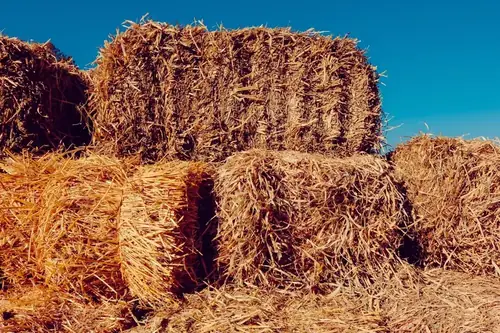
Good quality grass hay or mixed hay should be the foundation of any goat’s diet. Understanding what kind of hay goats actually need prevents both waste and health issues.
Alfalfa hay works well for pregnant or lactating does but is too rich for most other goats.
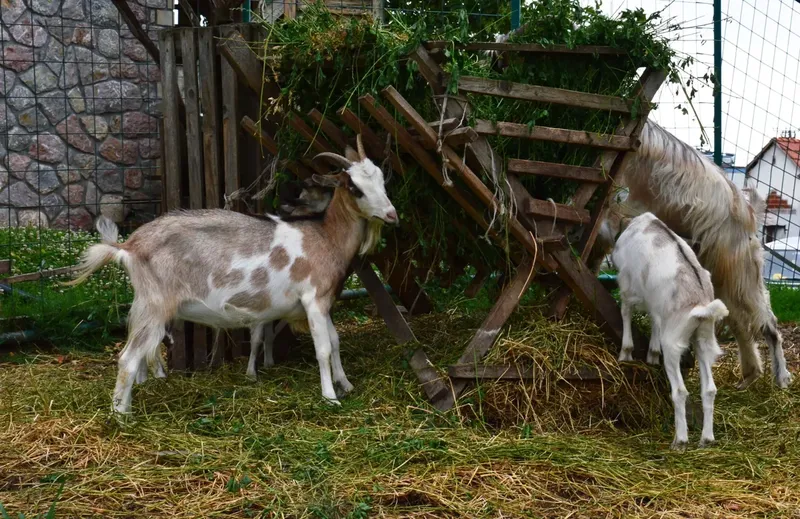
Fresh browse is what goats love most: brush, weeds, tree branches, and shrubs. Offer a loose goat mineral mix free-choice and always provide clean water.
Grain should be limited and used mainly for milking does, growing kids, or goats that need extra calories.
What not to feed a goat
Avoid feeding moldy hay or grain, as mold can cause listeriosis which is often fatal. Dog food, cat food, and chicken feed are all harmful to goats because of the copper and other ingredients formulated for different species.
Never feed lawn clippings, as the fermentation that starts immediately after cutting can cause deadly bloat that needs emergency treatment. Avocado, rhubarb leaves, and anything from the nightshade family should be kept well away from your goats.
What are the nutritional requirements of goats?
Goats need a diet built on quality hay or browse as the foundation, with supplemental grain like oats for animals that are growing, pregnant, or lactating. Their rumen needs a steady supply of fiber to function properly.
A loose mineral mix formulated for goats should be available free-choice at all times, and you should never substitute cattle mineral salt as a permanent replacement. This mineral should contain copper, selenium, and zinc at levels appropriate for your region since deficiencies in any of these can cause serious health problems over time.
Fresh, clean water is non-negotiable. A goat will refuse to drink from a dirty bucket faster than almost any other livestock animal, and dehydration sneaks up quickly in hot weather.
Why sudden diet changes are dangerous
The rumen microbiome needs time to adjust whenever you switch feeds. If you swap from hay to a grain-heavy ration overnight, the wrong bacteria can overpopulate and produce excess gas and acid.
Make any feed change over 7 to 10 days by mixing the new feed in gradually. Increase the ratio a little each day so the microbial population has time to shift without crashing.
Adding apple cider vinegar to their water can help support healthy rumen pH during transitions.
What are common health problems in terms of feeding goats?
Bloat is the most immediate feeding-related danger. It happens when gas builds up in the rumen faster than the goat can release it, often after gorging on rich grain or lush wet pasture.
Even moldy hay can trigger serious digestive problems if it goes undetected.
Grain overload is another common emergency. A goat that breaks into the feed room and eats its fill of grain can develop acidosis, which throws off the pH in the rumen and can be fatal within hours.
Malnutrition from an unbalanced diet leads to slower, more chronic problems like poor coat quality, weak kids, low milk production, and increased parasite susceptibility. Keeping the diet consistent and balanced prevents most of these issues before they start.
How to stop goats from eating everything
Give them plenty of good browse and they’ll leave most other stuff alone. A goat with access to brush, hay, and various weeds is a satisfied goat that isn’t going to chew your jacket.
Boredom is the real culprit behind most destructive mouthing behavior.
Fencing off your garden, flower beds, and any areas with toxic plants is the most reliable solution. You can’t train curiosity out of a goat, but you can manage their environment so there’s nothing dangerous within reach.
Store feed bags, tools, and chemicals behind solid doors that goats can’t open.
Final Thoughts
Goats don’t eat everything. They’re selective, curious browsers that use their mouths the way we use our hands, and that behavior gets mistaken for indiscriminate eating.
Their four-chamber stomach is a specialized fermentation system built for plant fiber, not a garbage disposal. Stick to hay, browse, and leafy greens as the core diet.
Keep grain limited, make feed changes slowly, and pick up any trash or hardware from your pasture before your goats find it first.
Feed them a diverse diet of hay, browse, and the right minerals, keep toxic plants out of their reach, and lock up the grain room. The picky goat that turns its nose up at yesterday’s hay is actually doing itself a favor.
Frequently Asked Questions
Goats can't eat everything because they're herbivores. This means that their diet consists mainly of plants and there are also some things that they should avoid eating altogether, such as poisonous plants and small stones that could cause blockages in their digestive system.
Goats are browsers, meaning that they prefer to eat the leaves and twigs of trees and shrubs. This diet gives them a number of advantages.
There are some disadvantages to a goat's diet as well. since browse is less calorie-dense than grass, goats typically require more food to maintain their body weight. This can be a challenge in areas where browsing is scarce.
Goats do well on hay, browse (leaves, twigs, bark), clover, chicory, and most pasture plants. Quality hay or alfalfa provides the fiber their rumen needs, with supplemental grain for growing, pregnant, or lactating animals.
Goats can't digest metal, plastic, rubber, or any processed materials. They also can't handle meat, dairy, or large amounts of grain. Too much grain causes rumen acidosis, and processed textiles or baling twine can create fatal intestinal blockages.
Make any feed changes over 7 to 10 days by mixing new feed in gradually. Keep hay as the foundation of the diet, pick up trash from your pasture, and limit grain to small supplemental amounts.