| # | Product | Our Rating | ||
|---|---|---|---|---|
| 1 |  | Best OverallWeaver Leather Livestock Goat Collar | ★★★★★ | Check Price |
| 2 |  | Manna Pro Goat Treats | ★★★★☆ | Check Price |
| 3 |  | HoAoOo Pet Training Clicker with Wrist Strap | ★★★★☆ | Check Price |
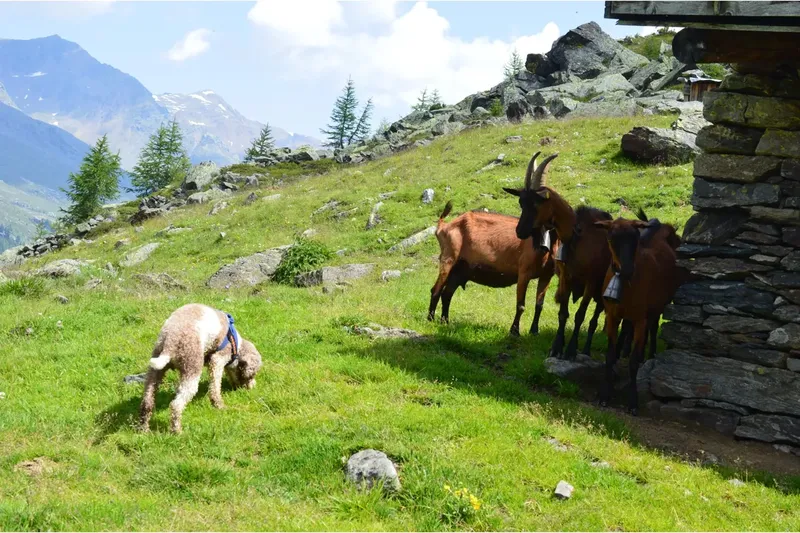
A farm where a loyal dog naps in the sun while the goats browse nearby is a picture nearly every keeper imagines. The reality, though, depends entirely on which dog is in that picture.
Dogs and goats sit on opposite sides of an ancient predator and prey line. Whether that line turns into a friendship or a tragedy comes down to breed instinct, early training, and how carefully you manage their first weeks together.
This guide walks through which breeds bond well with goats, which ones to watch closely, and the exact steps for a safe introduction. You’ll also learn the warning signs that tell you to step in before trouble starts.
Can goats and dogs really be friends?
Goats and dogs can absolutely form genuine, affectionate bonds. Plenty of farms have a dog that grooms the goats, sleeps in the barn with them, and grows visibly anxious when the herd is moved.
The catch is that dogs are descended from predators and goats are prey animals. A dog’s instinct to chase, nip, or grab a fast-moving target is hardwired, and that instinct is called prey drive.
Goats, for their part, read sudden movement and direct stares as threats. A startled goat will bolt, and a bolting goat triggers the very chase instinct you want to avoid.
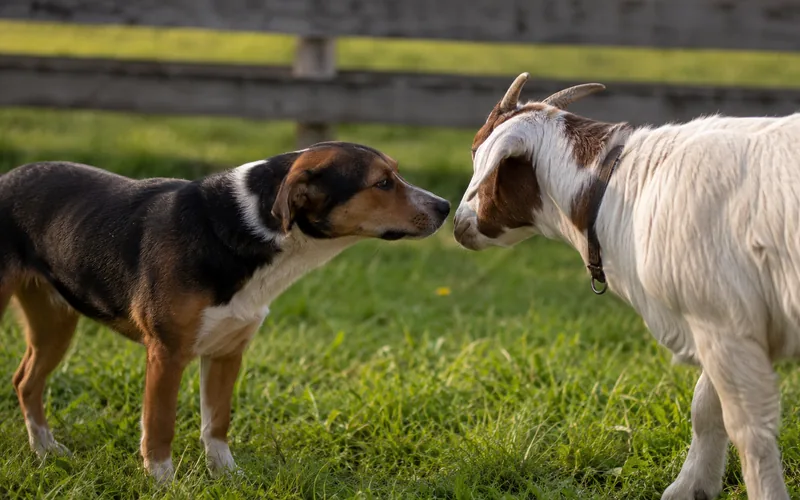
This is why the friendship is real but conditional. Calm, well-handled animals on both sides make it far more likely, while a high-energy dog and a flighty goat can be a dangerous mix.
Goats that have been gently handled from a young age tend to stay calmer and steadier when a new dog enters their space.
Why a dog is not a substitute for goat companions
The short answer is no. A dog cannot replace a goat’s need for the company of its own kind.
Plenty of people get a dog hoping it’ll keep a single goat from being lonely. It’s one of the most common mistakes new owners make.
Goats are herd animals, and they need the company of their own kind to feel secure. A lone goat with only a dog for company will often still cry, pace, and show signs of stress.
A dog can become a treasured friend, but it speaks a different language. Goats communicate through body posture, browsing together, and shared rest, and another goat reads those signals instinctively.
If you keep goats, plan to keep at least two. Goats genuinely form real bonds with the animals and people around them, yet a companion goat meets a social need that no dog can fully replace.
Best dog breeds for living with goats
The safest dogs around goats are livestock guardian dogs, often shortened to LGDs. These breeds were developed over thousands of years to live among flocks and guard them from predators.
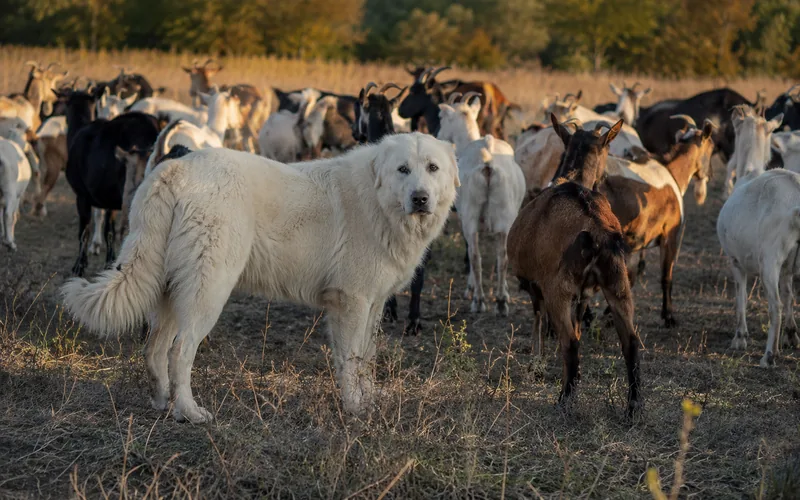
A true guardian breed bonds with the goats as its family. Instead of chasing the herd, it patrols the perimeter, sleeps among the animals, and drives off predators like coyotes and stray dogs.
The most reliable livestock guardian breeds include:
- Great Pyrenees, calm, patient, and one of the most popular goat guardians in North America.
- Anatolian Shepherd, independent and powerful, suited to large open pastures.
- Maremma Sheepdog, an Italian breed known for gentle, attentive guarding.
- Komondor, the corded Hungarian breed bred to blend in with the flock.
- Kangal, a Turkish guardian famous for deterring large predators.
- Akbash, agile and watchful, often used with goats and sheep alike.
Even these breeds need some guidance, though. A guardian puppy has to be raised with goats and corrected for rough play so its protective drive grows in the right direction.
Dog breeds that need extra caution
Put simply, herding breeds, sighthounds, and high-prey-drive hunting dogs need the closest supervision around goats.
Outside the guardian group, many wonderful family dogs are a poor match for an unsupervised life with goats. The issue is rarely temperament toward people and almost always prey drive or herding instinct.
Herding breeds like Border Collies, Australian Shepherds, and Heelers are intelligent and trainable. They were bred to control livestock by stalking and nipping, however, and that pressure can frighten or injure goats.
Sighthounds and high-drive hunting breeds deserve the most caution. Greyhounds, Huskies, and many terriers carry a strong instinct to chase and seize small, fast animals.
That doesn’t mean these breeds can never coexist with goats. It does mean constant supervision, secure separation, and an honest acceptance that some dogs will never be trustworthy off leash near the herd.
Temperament within a breed varies widely, so judge the dog in front of you. A laid-back individual from a high-drive breed can still surprise you the moment a goat sprints.
Does age matter when raising them together?
Age is one of the strongest predictors of whether goats and dogs become lasting friends. The earlier the bond forms, the more natural it usually feels to both animals.
Guardian breeders often place puppies with goats between eight and sixteen weeks old. During this window a dog imprints on the herd and learns to treat goats as family rather than playthings.
Pairing a young kid with a calm, mature dog can work just as well. A gentle adult dog often tolerates a bouncing kid better than a puppy does, since two youngsters together tend to wind each other up.
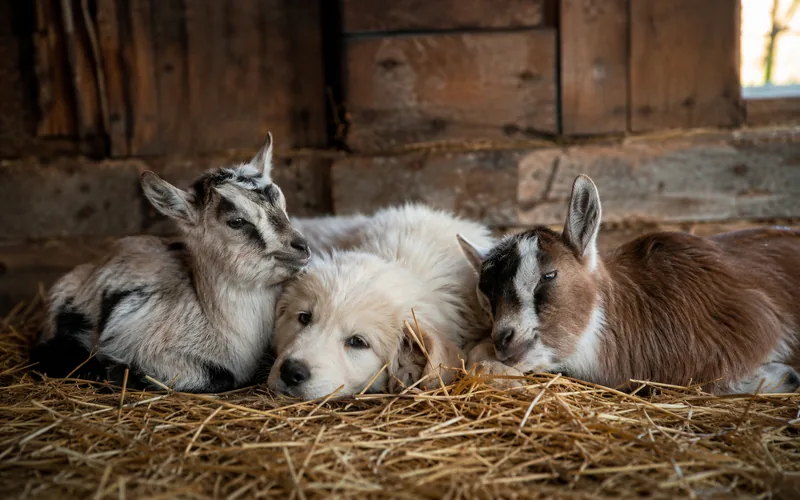
Adopting an older dog is not a dealbreaker, but it does change the math. An adult with an unknown history needs slower introductions and honest assessment, because a fully formed prey drive is much harder to redirect than a puppy’s curiosity.
How to introduce a dog and goat safely
In short, go slow: start with a barrier between them, then move to leashed, supervised sessions over several weeks.
A careful introduction is the single biggest factor in whether the relationship works. Rush it, and that’s how most goat injuries happen.
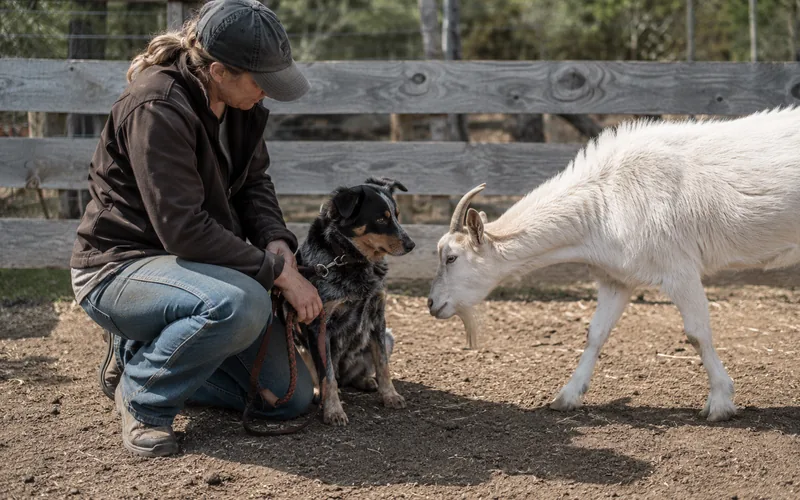
The goal is to let both animals grow familiar while the dog stays fully under your control.
Start with a barrier between them
Begin by letting the dog and goats see and smell each other through a sturdy fence or gate. Keep these sessions short and reward the dog for staying calm rather than fixating.
Keep the dog leashed for early meetings
Once both animals are relaxed at the fence, move to leashed, in-person sessions. Hold the leash firmly, let the goats approach on their own terms, and keep the dog sitting or lying calmly rather than lunging.
Increase supervised time gradually
Extend the sessions only as the dog proves it can ignore the goats. Build from ten or fifteen minutes up to longer stretches over many days, and never leave them loose together until the dog has been reliable for weeks.
Warning signs you should separate them
Here’s what matters: step in the instant your dog stalks, stares hard, stiffens, or fixates on the herd.
Reading your dog’s body language is what keeps introductions safe. Trouble nearly always shows up in posture before it shows up in action.
Step in and separate the animals the moment you see any of these signals:
- A hard, fixed stare locked onto a goat, often called the predatory stare.
- A low crouch or stalk, with the body tense and ready to spring.
- Stiffening or freezing when a goat moves quickly.
- Excited barking, lunging, or whining aimed at the herd.
Good signs are just as clear. A dog that lies down calmly, looks away from the goats, and keeps loose, relaxed muscles is telling you the introduction is going well.
Watch the goats too. A startled goat can clear a four-foot fence in a single leap and injure itself trying to escape a dog it does not trust.
Remember that goats are not defenseless either. A cornered goat may rear up, headbutt, or even give a hard bite, so a tense standoff is risky for both animals.
Farm setup for safe coexistence
The essentials are secure fencing, a goat-only retreat, separate feeders, and nighttime separation for pet dogs.
The right physical setup turns a fragile truce into a stable, lasting friendship. Good fencing and clear separate spaces remove most conflicts before they start.
Even a bonded guardian dog benefits from a layout that lets each species rest, eat, and retreat without pressure.
| Setup element | Why it matters |
|---|---|
| Secure perimeter fencing | Keeps the dog contained and blocks outside predators that trigger chasing |
| A goat-only retreat area | Gives goats a safe space the dog cannot enter when they want distance |
| Separate feeding stations | Prevents food-guarding conflicts between species |
| Nighttime separation for pet dogs | Removes risk during unsupervised hours when prey drive peaks |
| Shaded, dry shared space | Encourages calm coexistence rather than crowding and stress |
Build these habits early and keep them consistent. A predictable routine helps both animals settle into roles they understand, the foundation of any real friendship between a dog and a goat.
Final Thoughts
So, can goats and dogs be friends? Yes, and that bond can be one of the most rewarding parts of farm life, but it’s never automatic.
Choose the right breed, respect the predator and prey instincts at play, and take introductions slowly under close supervision. Pair that patience with smart fencing and separate spaces, and a dog and your goats can share a pasture safely for years.
When in doubt, manage for the worst-case instinct rather than the best-case hope. That mindset is what keeps the goats safe and lets a genuine friendship grow on its own time.
Frequently Asked Questions
Livestock guardian breeds are the safest match, including the Great Pyrenees, Anatolian Shepherd, Maremma Sheepdog, Komondor, Kangal, and Akbash. These dogs were selectively bred over centuries to live among livestock and treat goats as part of their flock rather than prey.
Another goat is a goat's ideal companion because goats are herd animals that communicate and feel safe with their own kind. When a second goat is not possible, sheep, horses, donkeys, and bonded livestock guardian dogs can fill the social gap, though they do not fully replace goat company.
Only once a dog has proven reliable over weeks or months of supervised contact, and even then a trained guardian breed is the safest candidate. Pet dogs with any prey drive should always be separated from goats when no one is watching, especially at night.
Most pet dogs will not. Guarding is an instinct bred into livestock guardian dogs, not something a typical family dog learns on its own. Herding breeds may control goats but still chase them, and many breeds simply see goats as something to play with or hunt.