
The virus behind a goat’s crusty lip sores has turned up in 12-year-old dried scabs.
That finding comes from the MSD Veterinary Manual, and it explains why one scabby kid can keep a barn infected for years.
So when you ask whether a goat can get a cold sore, the better question is what those sores are and how far they’ll spread.
Our Top Goat Health Essentials
| # | Picture | Product | Our Rating | Check Price |
|---|---|---|---|---|
| 1 |  | Best OverallProbios Probiotic Oral Gel for Goats | Check Price | |
| 2 |  | Manna Pro Goat Electrolyte Powder | Check Price | |
| 3 |  | Nutri-Drench Goat & Sheep Supplement (8 oz) | Check Price |
Can Goats Get a Cold Sore?
Goats get something that looks a lot like a cold sore: sore mouth, also called orf or contagious ecthyma. The Maryland Small Ruminant Page calls it the most common skin disease of sheep and goats.
But sore mouth isn’t a cold sore at all.
It’s caused by orf virus, a parapoxvirus from the pox family. The MSD Veterinary Manual says orf mainly hits the lips of young animals and is often more severe in goats than in sheep.
And it’s common. In fact, a 2011 USDA NAHMS survey found 43.7% of U.S. sheep operations had soremouth in the previous 3 years.
So if you see blisters or crusty scabs on the lips, assume sore mouth until a vet says otherwise.
Runny nose and a cough instead? That’s a respiratory problem, covered under cold weather and goat illness.
What Causes Sores on a Goat’s Mouth?
Most sores on a goat’s mouth are caused by orf virus, which gets in through tiny cuts and scrapes on the lips. The Maryland extension page notes that abrasions from forage are usually enough for infection.
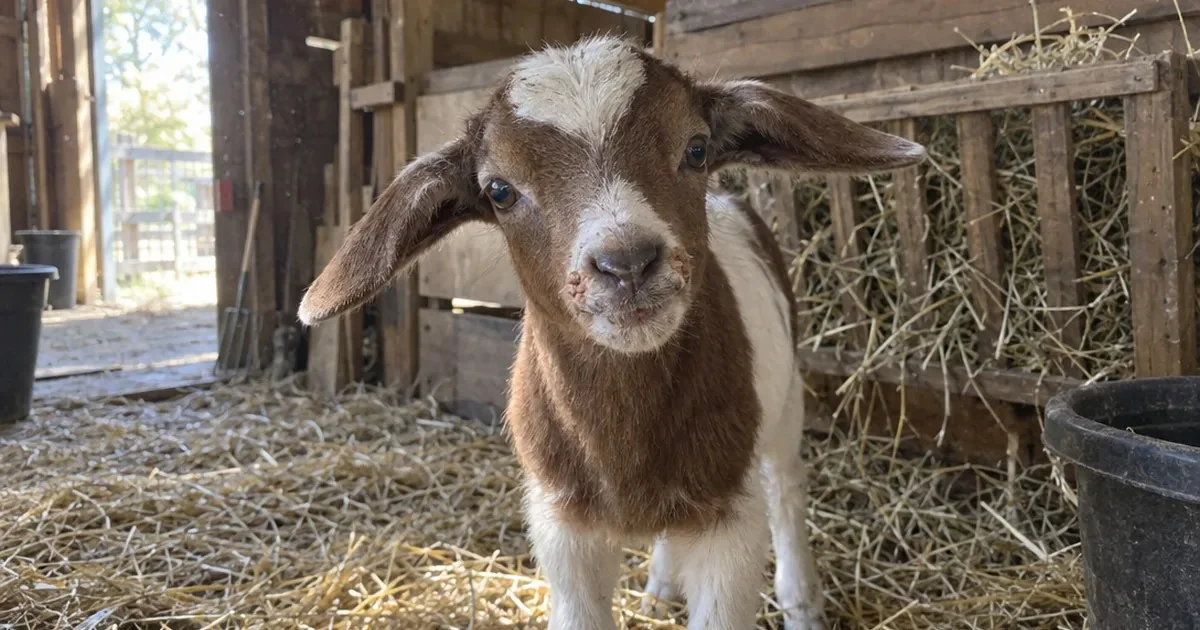
Young animals get hit hardest, since kids haven’t met the virus and their immune systems are still developing.
What Sore Mouth Looks Like on a Goat
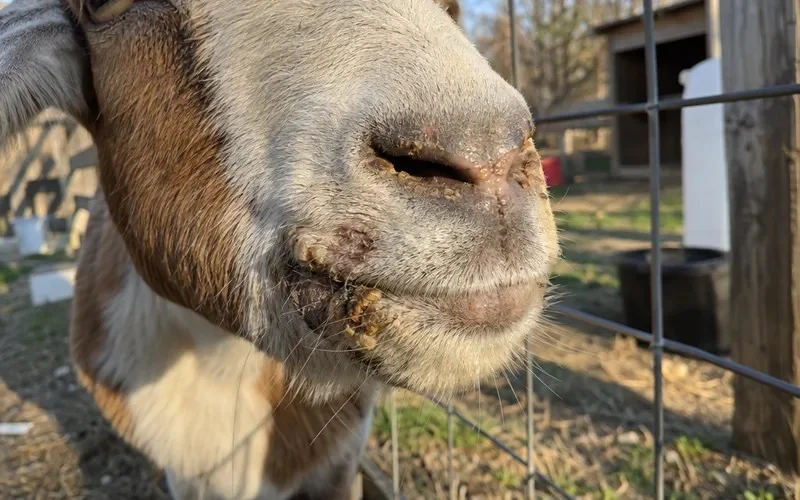
Sore mouth starts as small blisters that turn into pus-filled bumps and then thick, crusty scabs, about 2 to 3 days after a goat is exposed. Susan Schoenian of University of Maryland Extension lists where the lesions show up:
- The lips and nostrils, where most sores appear
- The ears and eyes
- The feet and lower legs
- The udder and teats
- The genital area
The virus sticks mostly to bare-skinned areas and can’t spread through the rest of the body.
Your vet can usually spot it by sight, since the MSD Veterinary Manual calls the lesions characteristic. A PCR test confirms it.
If the animal is also limping, check its feet and lower legs for the same scabs.
How Goats Catch Sore Mouth
Goats catch sore mouth through direct contact with an infected animal or with contaminated equipment, fences, feed and bedding. The Maryland page says nearly all exposed animals in a herd that’s never had it will get sick.
It usually gets in one of these ways:
- Nose-to-nose contact with an infected animal
- Shared bottle nipples, which cause serious outbreaks in bottle-raised kids
- Shows, where animals touch noses and judges check them
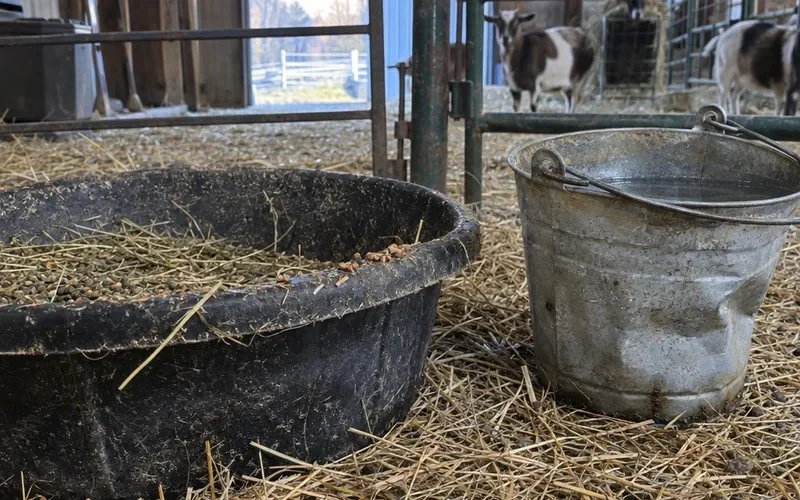
- Fences, feeders and bedding carrying scabs
- Carriers that look healthy
- Vaccinating a herd that never had the disease
The scabs are the real problem.
According to the MSD manual, orf virus has been recovered from dried crusts after up to 12 years. So every scab that drops in the barn can start a new case later.
How Long Sore Mouth Lasts
Sore mouth usually lasts 1 to 4 weeks in goats, and then the scabs drop off and the skin heals without scarring. That timeline comes from the Maryland Small Ruminant Page.
What can stretch it out?
The scabs can pick up staph bacteria or draw blowflies and maggots. So check the sores every day for pus, swelling or fly eggs.
How to Treat Sore Mouth in Goats
Sore mouth in goats has no cure, because antibiotics don’t touch the virus. The MSD Veterinary Manual says treatment focuses on secondary infections while the disease runs its course.
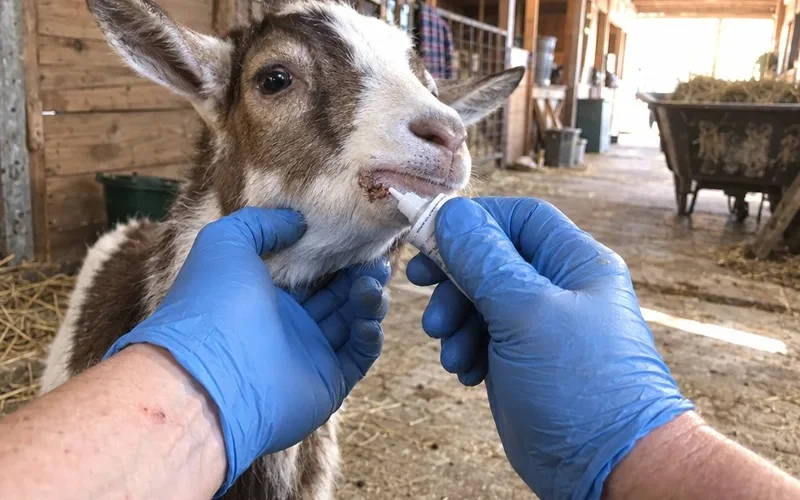
In fact, Schoenian writes that treatment is usually unrewarding: lesions take about 1 month to heal either way. Treated goats may recover only slightly quicker.
Here’s what to do instead:
- Put on disposable gloves before you touch the sores.
- Give the patient its own bucket, feeder and bottle, since the virus rides on equipment.
- Leave the scabs alone, because pulling them off can delay healing, cause scarring and expose your hands.
- Use a salve or antibiotic cream only if the sores look infected or draw maggots.
- Make sure it keeps eating and drinking.
If the infection gets severe, your vet may prescribe systemic antibiotics. Ask for the weight-based dose and the milk and meat withdrawal times before you give a shot.
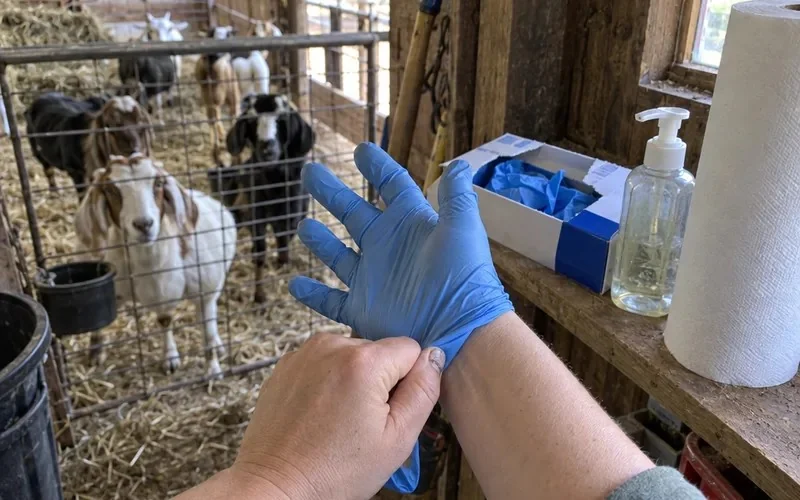
Pro Tip: Keep a box of disposable gloves in your goat first aid kit so they’re there when the first sore shows up.
Can Baby Goats Nurse With Sore Mouth?
Some kids with sore mouth keep nursing, but the Maryland Small Ruminant Page warns the sores may hurt too much for young kids to suckle or eat dry feed. Those kids can become undernourished and may need to be fed by hand.
If a kid stops sucking, switch to bottle feeding with its own nipple until the scabs clear. And if an adult goes off its feed, run through the usual reasons a goat stops eating.
Nursing kids can also spread the sores to their mother’s teats and udder. Once secondary bacteria get in, those teat sores can lead to serious mastitis and the loss of an udder half.
An udder salve keeps teat scabs soft, and your vet can use intramammary antibiotics to help prevent mastitis.
Note: Never move a kid with sore mouth onto a clean doe. It can infect her udder too.
Can You Catch Sore Mouth From a Goat?
Yes, people can catch sore mouth from infected goats, recently vaccinated goats and the live vaccine itself. The sores usually appear on the hands, last up to 2 months and usually heal without scarring, according to the Maryland Small Ruminant Page.
The MSD manual adds that human orf lesions can show up on the face and are usually mild, but they can be painful and distressing.
The problem? Doctors often miss it.
Physicians usually suspect orf only when you mention animal contact, so say it up front.
Here’s what to say: “I raise goats, and one has sore mouth. Could this sore on my hand be orf?”
Protect yourself with disposable gloves every time you handle an animal with sores, and wash your hands right after.
Goats can pass other infections to people too, so the glove habit pays off twice.
Should You Vaccinate Goats for Sore Mouth?
Only vaccinate goats for sore mouth if the disease is already on your farm. The Maryland page warns that the live vaccine introduces the disease to the premises and means re-vaccinating every year.
Why so cautious? The vaccine is live virus, and it doesn’t give strong or long-lasting immunity, though it may make cases milder or shorter.
It can also infect you, so wear gloves when you give it. Keep freshly vaccinated animals apart, too, or they’ll spread the virus.
Decide it with your vet when you plan your vaccine schedule.
When Mouth Sores Might Be Something Worse
Foot-and-mouth disease, bluetongue and peste des petits ruminants can all cause mouth sores that look like sore mouth. The MSD Veterinary Manual flags them when many animals are sick and other signs show up.
Sore mouth usually stays on the skin, and most adults keep eating. So if several animals get sores at once and seem sick beyond the lips, call your vet the same day.
How to Keep Sore Mouth Out of Your Herd
The best way to keep sore mouth out of your herd is to keep a closed, virus-free herd and quarantine every new goat until sore mouth is ruled out. That advice comes from the Maryland soremouth guide.
It’s not foolproof, since some healthy-looking goats carry the virus.
Once it’s on your farm, rake old scabs out of pens and feeders, and keep each kid’s bottle nipple to itself.
Key Takeaway: Hygiene and smart vaccination are how vets control sore mouth, since there’s no drug that cures it.
The Bottom Line
A goat’s cold sore is usually sore mouth, and it heals on its own in 1 to 4 weeks.
Your job is to keep it from spreading to other animals and to you.
This week, put disposable gloves in the barn and check every newcomer’s lips before it joins the others.
Frequently Asked Questions
Can I put Neosporin on a goat with sore mouth?
Neosporin isn’t named in the veterinary sources, but the Maryland Small Ruminant Page says treating a goat with sore mouth usually means putting a salve or antibiotic cream on the sores. It only helps with secondary infection, so ask your vet which ointment to use.
Can a goat get sore mouth more than once?
Yes, a goat can get sore mouth more than once, because there are different strains of the virus. Repeat infections usually come several years apart and tend to be milder, according to the Maryland Small Ruminant Page.
Is sore mouth in goats contagious to humans?
Yes, sore mouth in goats is contagious to humans who touch infected goats, recently vaccinated goats or the live vaccine. The sores usually appear on the hands and can last 2 months, so wear disposable gloves.
What are some common viral diseases that affect goats' mouths?
Sore mouth (orf) is the most common viral cause of mouth sores in goats. Foot-and-mouth disease, bluetongue and peste des petits ruminants cause similar sores, so call your vet when several animals get sick at once.