| # | Product | Our Rating | ||
|---|---|---|---|---|
| 1 |  | Best OverallProbios Probiotic Oral Gel for Goats | ★★★★★ | Check Price |
| 2 |  | Manna Pro Goat Electrolyte Powder | ★★★★☆ | Check Price |
| 3 |  | Nutri-Drench Goat & Sheep Supplement (8 oz) | ★★★★☆ | Check Price |
Search “vinegar and goats” and you’ll hit two very different stories on the same page. One crowd swears a splash of apple cider vinegar keeps their herd healthy, while alarming forum threads claim vinegar can kill a goat outright.
Both things trace back to real events, and the gap between them is entirely about dose and method. Once you understand that, the answer to whether your goats can drink vinegar becomes simple.
Can goats drink vinegar?
Goats can drink diluted apple cider vinegar with no trouble at all. The dose most keepers land on is 1 to 2 tablespoons of raw ACV per gallon of drinking water.
At that dilution the acidity is so mild that many goats drink it eagerly, and a few actually seem to prefer it to plain water. The vinegar people worry about is apple cider vinegar, and raw, unfiltered ACV is the version worth using.
White vinegar is a different story, and we’ll get to that below. For day to day use, think of ACV as a gentle water additive, not a medicine.
Will vinegar kill a goat?
A splash of vinegar in the water bucket will not kill a healthy goat, full stop. Those scary rumors trace back to a slaughter practice used in a few parts of the world, where a large volume of vinegar gets forced down the throat.
The danger there isn’t the vinegar chemically poisoning the animal. It’s that goats panic around liquids and are prone to aspirating fluid into their lungs when something is poured in fast.
Goats naturally dislike getting wet, partly because they need sure footing and partly because they breathe and swallow through a shared space at the back of the throat. Force a lot of any liquid into a goat quickly and you risk drowning it, whether that liquid is vinegar or water.
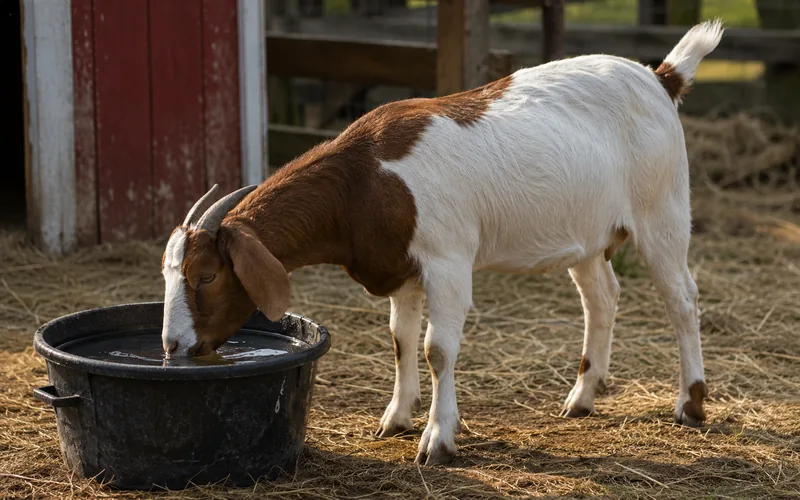
None of that applies to a diluted drink the goat sips on its own terms. Your goats choosing to lap up ACV water are in no danger whatsoever.
Benefits of apple cider vinegar for goats
In short, apple cider vinegar’s main perks for goats are steadier rumen digestion, easier hydration, and drinking water that stays fresher for longer.
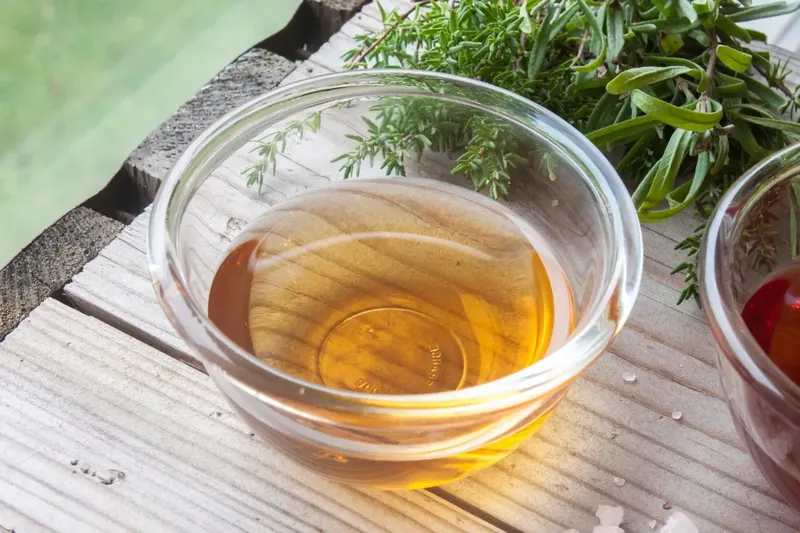
The main reason experienced keepers reach for ACV comes down to rumen support. Apple cider vinegar is rich in acetic acid, one of the volatile fatty acids the rumen produces during normal fermentation.
A stable, slightly acidic rumen keeps the beneficial microbes working efficiently, which is also your best everyday defense against bloat. Raw ACV with the “mother” still floating in it carries live enzymes and bacteria that pasteurized vinegar simply doesn’t have.
Beyond digestion, ACV’s biggest practical win is hydration. Goats are famously picky drinkers, and a small amount of vinegar makes water more appealing while helping it stay fresher for longer in the bucket.
Owners also report shinier coats, steadier appetites, and fewer flies around goats on regular ACV. Some even use it as a mild parasite aid, though it is no substitute for a real deworming routine.
Now, let’s be honest about the evidence here. Rigorous studies are thin and most of the support is anecdotal, yet decades of farm experience give these claims some weight, and the downside risk is essentially zero.
Apple cider vinegar vs. white vinegar
Stick with raw apple cider vinegar and leave white vinegar for cleaning. White vinegar is harsher, has a sharper smell, and lacks the fermentation byproducts that make raw ACV useful in the first place.
Offer white vinegar water and most goats will simply walk away from it. If your goal is rumen and hydration support, unfiltered ACV with the mother is really the only version that makes sense.
White vinegar still earns its keep around the barn for scrubbing water buckets and sanitizing feeders. Just keep it out of the drinking water.
How much vinegar to give goats
The everyday maintenance dose is 1 to 2 tablespoons of raw ACV per gallon of water. Start at the low end and build up over a week or two so the goats adjust to the taste.
For larger containers, the ratio scales cleanly. Use the chart below as a quick reference for whatever setup you’re running.
| Water amount | Raw ACV to add | Best for |
|---|---|---|
| 1 gallon | 1 to 2 tablespoons | A single bucket, daily use |
| 5 gallons | About 1/3 to 2/3 cup | Small herd bucket |
| 20 gallons | 1 to 2 cups | Stock tank as the main water source |
| 50 gallons | 2.5 to 5 cups | Large trough for a big herd |
There’s no need to be surgical about it. These amounts are gentle enough that a little over or under makes no meaningful difference to the goat.
How to add vinegar to your goats’ water
Getting goats onto ACV water is mostly about easing them into the taste. A rushed change often just means a bucket of water they refuse to touch.
- Add a small splash, around 1 tablespoon per gallon, to a full, clean bucket.
- Keep a second bucket of plain water beside it so the goats always have a choice.
- Over the next week or two, work the dose up to 2 tablespoons per gallon.
- Refresh the ACV water daily and scrub the bucket regularly, since the mother can build up a film.
Some keepers push palatability further with a splash of molasses, which doubles as antifreeze for the mix once winter hits. A crushed garlic clove or two steeped in the ACV is another old-time trick for extra appeal.
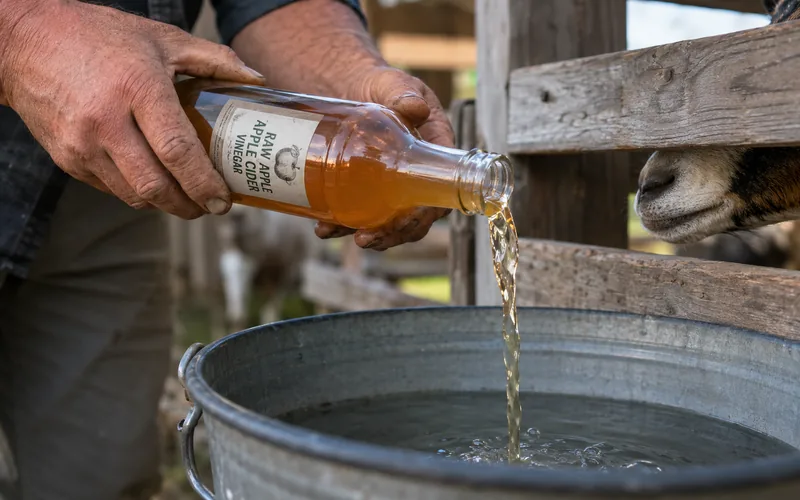
Whatever mix-ins you use, keep an eye on intake for the first few days to confirm the whole herd has taken to the new routine.
When not to give goats vinegar
Put simply, skip the vinegar for goats with diarrhea, any dehydrated or sick animal, and kids under about four weeks old.
Vinegar is safe for most goats most of the time, but a few situations call for plain water instead. Skip the ACV whenever the acidity could work against you.
Hold off if a goat already has loose, watery stool, since extra acid can aggravate an upset gut and worsen fluid loss. The same goes for any dehydrated or sick animal that simply needs to rehydrate.
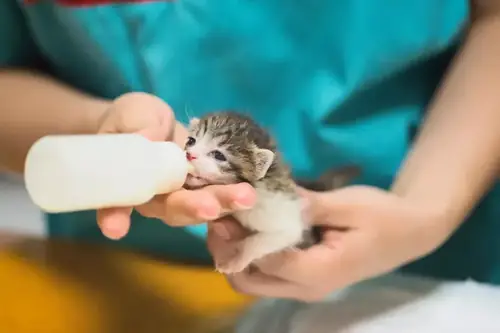
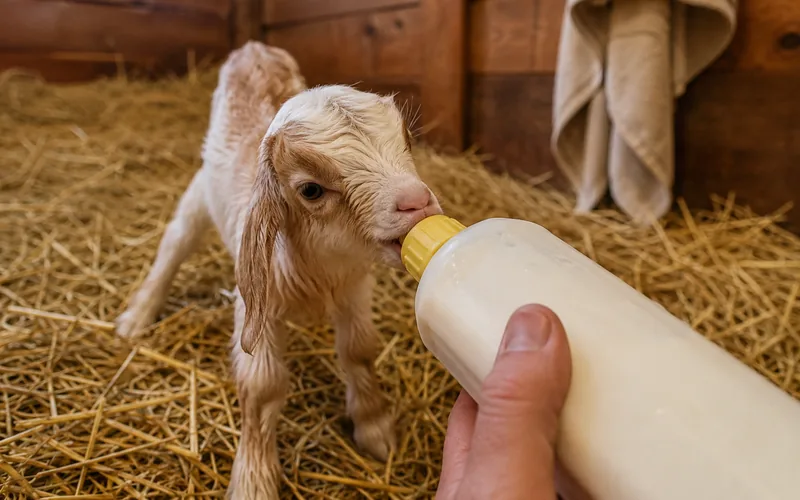
Very young kids are another exception worth flagging. Their rumen isn’t developed enough to gain anything from ACV, so they do far better on plain milk and electrolytes until they’re eating solid feed.
Finally, don’t lean on vinegar to solve a problem it can’t fix. It supports a healthy rumen, but unlike free-choice baking soda it won’t rescue an acute case, and baking soda itself can create urinary problems in wethers when left out constantly.
Used with a little common sense, apple cider vinegar is one of the cheapest, lowest-risk additions you can make to a goat’s feeding routine. Offer it diluted, offer plain water alongside, and let the goats decide.
Frequently Asked Questions
There's no solid research showing ACV reliably kills internal parasites. Some farmers believe a mildly acidic gut is less hospitable to worms, but ACV is a supplement, not a dewormer. Use it alongside a proper deworming routine, not in place of one.
A small amount of diluted white vinegar will not poison a goat, but it's harsher, smells stronger, and lacks the beneficial bacteria found in raw ACV. Most goats will refuse water that has white vinegar in it, so save it for cleaning buckets.
The fear comes from stories of vinegar being used to drown goats during slaughter in some regions. That involves force-feeding large volumes into the lungs, not a splash in the water bucket. A normal dilution is completely different and perfectly safe.
Start with 1 tablespoon of raw ACV per gallon of drinking water and work up to 2 tablespoons per gallon over a couple of weeks. For a large stock tank, use roughly 1 to 2 cups per 20 gallons.
Hold off on vinegar for kids under about 4 weeks old. Their rumen isn't developed enough to benefit, and they do better on plain milk and electrolytes. Wait until they're actively eating hay and grain before introducing ACV.