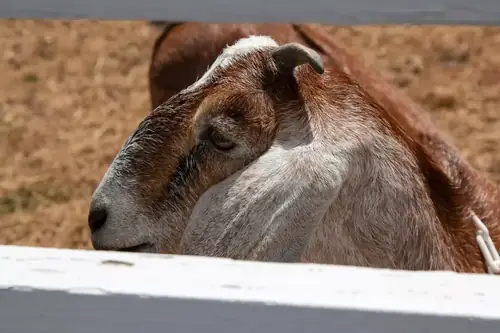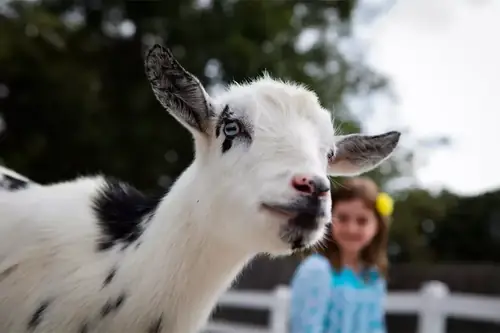
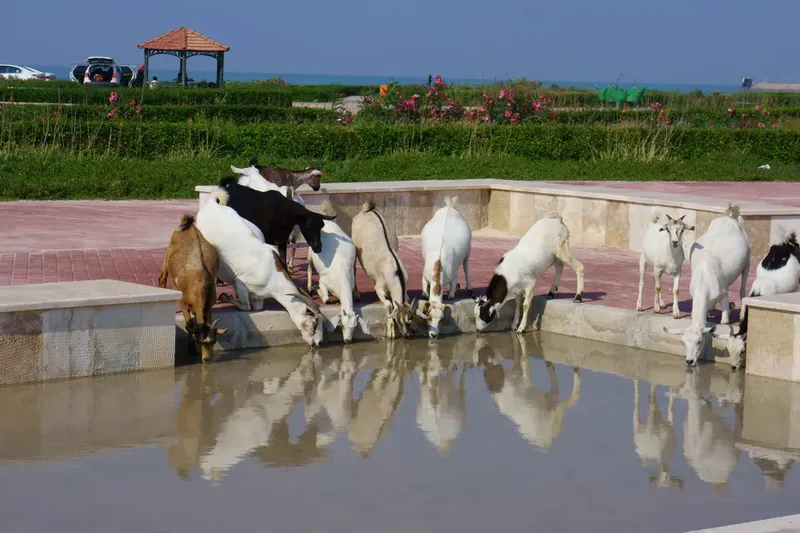
Picture a spring thunderstorm rolling across your property while your goats press against the far side of the barn, refusing to step outside even after the rain tapers to a drizzle. That stubborn avoidance of moisture is one of the most recognizable goat behaviors on any farm.
Yet scattered across the Mediterranean, the Caribbean, and the highlands of Central Asia, feral goat populations routinely paddle through open ocean channels, ford swollen mountain rivers, and navigate flooded lowlands without hesitation. The disconnect between what domestic goats do on a daily basis and what the species is physically equipped to handle is far larger than most owners realize.
If you’re managing a herd near ponds, creeks, stock tanks, or flood-prone pasture, that gap matters. What follows covers the evolutionary roots of the swimming reflex, the body mechanics that keep a goat afloat, the real medical dangers water creates, and exactly what to do if one of your animals ends up soaked.
Where Does the Goat’s Swimming Instinct Come From?
In simple terms, every goat is born knowing how to swim. The paddling motion fires automatically the second the animal’s hooves lose contact with solid ground, driven by a motor pattern that predates domestication by tens of thousands of years.
All domestic goat breeds trace their ancestry to the bezoar ibex (Capra aegagrus), a wild caprine that inhabited the Zagros Mountains spanning modern-day Iran, Turkey, and the southern Caucasus. Bezoar ibex populations lived in terrain shaped by seasonal snowmelt, flash floods, and rapidly rising river systems that could cut off grazing territory with no warning.
Individuals that could paddle across a swollen ravine reached new forage and breeding partners on the other side. Those that balked at the water’s edge faced starvation or genetic isolation during months when alternative routes stayed impassable.
That pressure played out across thousands of generations. The paddling reflex got buried so deep in the genetic code that every descendant still carries it, whether the breed has lived near open water recently or not.

Domestication began roughly 10,000 years ago in the Fertile Crescent region. Early herders selected for milk yield, meat production, coat quality, and temperament, not for swimming performance.
Water-crossing ability was never deliberately bred out, but it also stopped being reinforced by survival pressure once goats lived in managed pastures with controlled water access. The reflex persisted because it cost nothing metabolically to maintain, even when it went unused for an animal’s entire lifetime.
That’s why a Boer goat raised on a bone-dry West Texas ranch paddles with the exact same coordinated stroke as a Kri-kri goat swimming between rocky islands off the coast of Crete. The behavior doesn’t require practice, conditioning, or any prior exposure to water during development.
It sits in the nervous system waiting, and it activates on demand.
What Happens Inside a Goat’s Body During Swimming?
The short answer is that a goat relies on rumen gas for buoyancy and its muscular hind legs for propulsion, but fatigue and hypothermia set in far faster in water than on land. Knowing what those systems actually do explains both how goats stay afloat and why the effort wears them out so quickly.
The rumen, the largest of a goat’s four stomach compartments, does a lot of the heavy lifting here. Microbial fermentation of plant fiber inside it produces a steady output of methane and carbon dioxide gas.
That trapped gas pocket acts as a biological flotation chamber, generating passive buoyancy that keeps the goat’s torso elevated in the water.
A goat that recently consumed a large meal of hay or leafy browse has a bigger gas load and floats higher. A goat on an empty stomach sits lower in the water and must work harder to keep its nostrils above the surface.
How Do a Goat’s Legs Work During Swimming?
Each leg extends forward and sweeps backward in an alternating rhythm that mirrors a canine paddle stroke. The muscular hind legs generate the majority of forward thrust, while the front legs handle directional steering and help stabilize pitch.
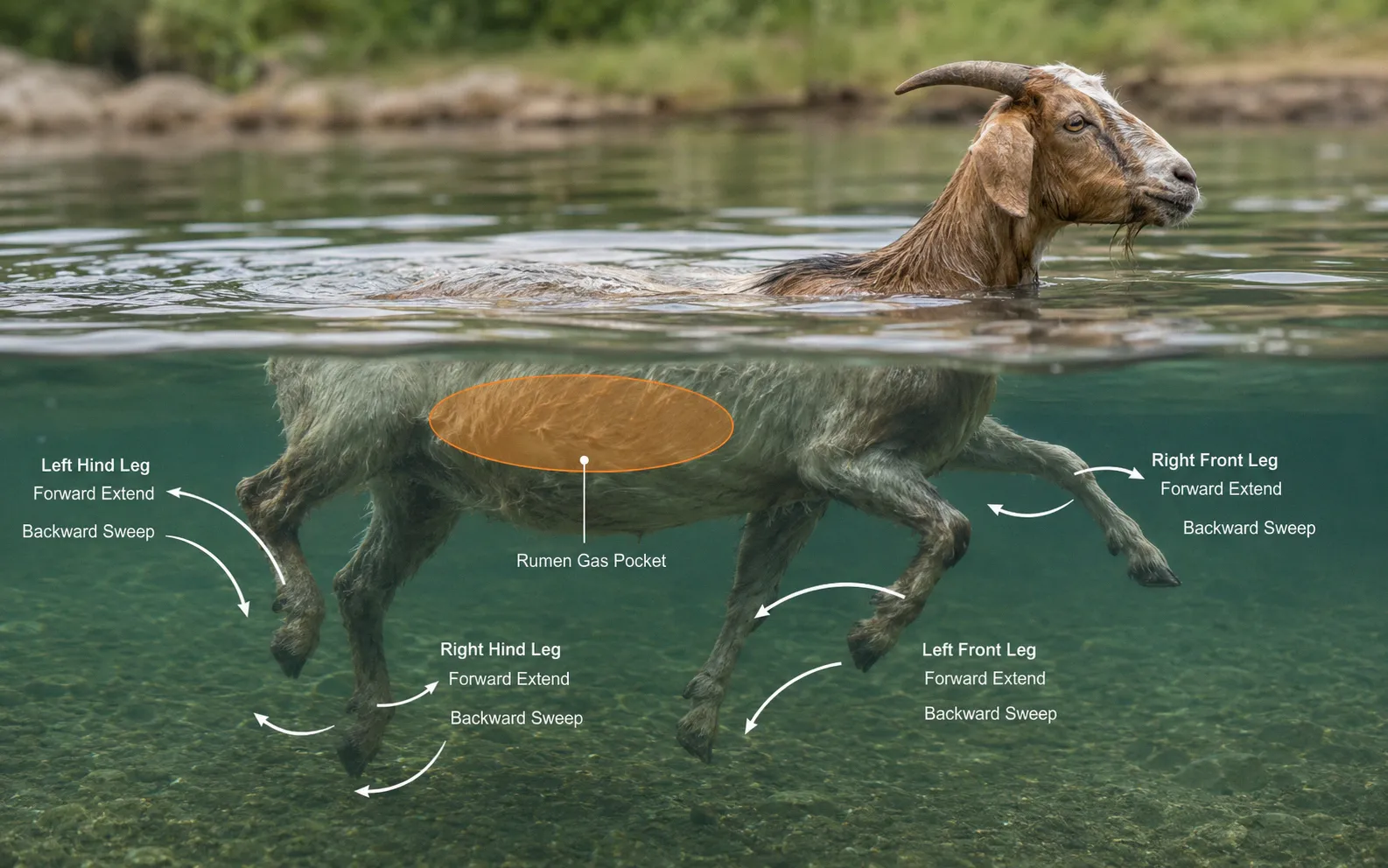
Each cloven hoof spreads apart under the pressure of each stroke. That splaying creates a wider surface area per kick, functioning like a crude paddle, the same anatomical trait that lets goats scale near-vertical rock faces on dry land.
The hard keratin outer wall of each toe provides the rigid edge of the paddle, while the softer inner pad gives grip if the hoof contacts a submerged rock or the pond bottom during exit.
Why Does Swimming Exhaust a Goat So Quickly?
Lung capacity matters more in water than on land. Goats possess relatively large lungs for their body size, and a deep inhalation before or during swimming expands the chest cavity enough to provide measurable additional lift.
Rumen gas, lung volume, and body fat percentage all feed into how well a particular goat floats. The variation between individuals is big enough that two animals of the same breed can behave very differently in identical water conditions.
Here’s where things get dangerous: core temperature regulation starts failing almost as soon as a goat goes under. Water pulls heat from a mammal’s body roughly 25 times faster than air at the same temperature.
A goat’s metabolic system responds by diverting blood flow to vital organs and burning through glycogen reserves at an accelerated rate, which is why fatigue sets in far sooner than it would during the equivalent amount of exertion on land.
Why Do Nearly All Domestic Goats Refuse to Enter Water?
Put simply, domestic goats avoid water because it strips away every survival advantage they depend on, including traction, insulation, and sprint speed. The swimming reflex works just fine, yet the average domestic goat would rather stand in an open hailstorm than cross a shallow creek.
That avoidance is calculated self-preservation, not irrational fear.
Hoof Traction Fails on Wet Surfaces
Goat hooves evolved for fractured rock, packed clay, and rough hillside terrain. The hard outer shell bites into uneven ground while the soft central pad molds to surface features for additional hold.
Together, these two textures give goats their legendary climbing ability.
Water kills both advantages at once. A wet hoof on smooth mud, algae-covered stone, or slick concrete has practically zero grip.
Goats recognize this through proprioceptive feedback, the sensory system that reports joint position and surface stability to the brain.
A single slip on wet ground risks torn ligaments, fractured legs, or a fall that leaves the animal unable to stand. In a predator-rich ancestral environment, a downed goat was a dead goat within minutes.
That instinctive refusal to step onto any surface that feels unstable underfoot extends to puddles, wet grass, damp barn floors, and even a thin layer of morning dew.
Coat Insulation Collapses When Saturated
When it’s dry, a goat’s coat works as a layered insulation system. Outer guard hairs deflect light rain and wind, while the denser inner layer traps a cushion of warm air against the skin.
Submerge that system in water, and it fails almost immediately. The trapped air escapes, the insulating layer compresses against the body, and heat bleeds out through the saturated fiber at a rate that can drop core temperature by several degrees within ten minutes in water below 60 degrees Fahrenheit.
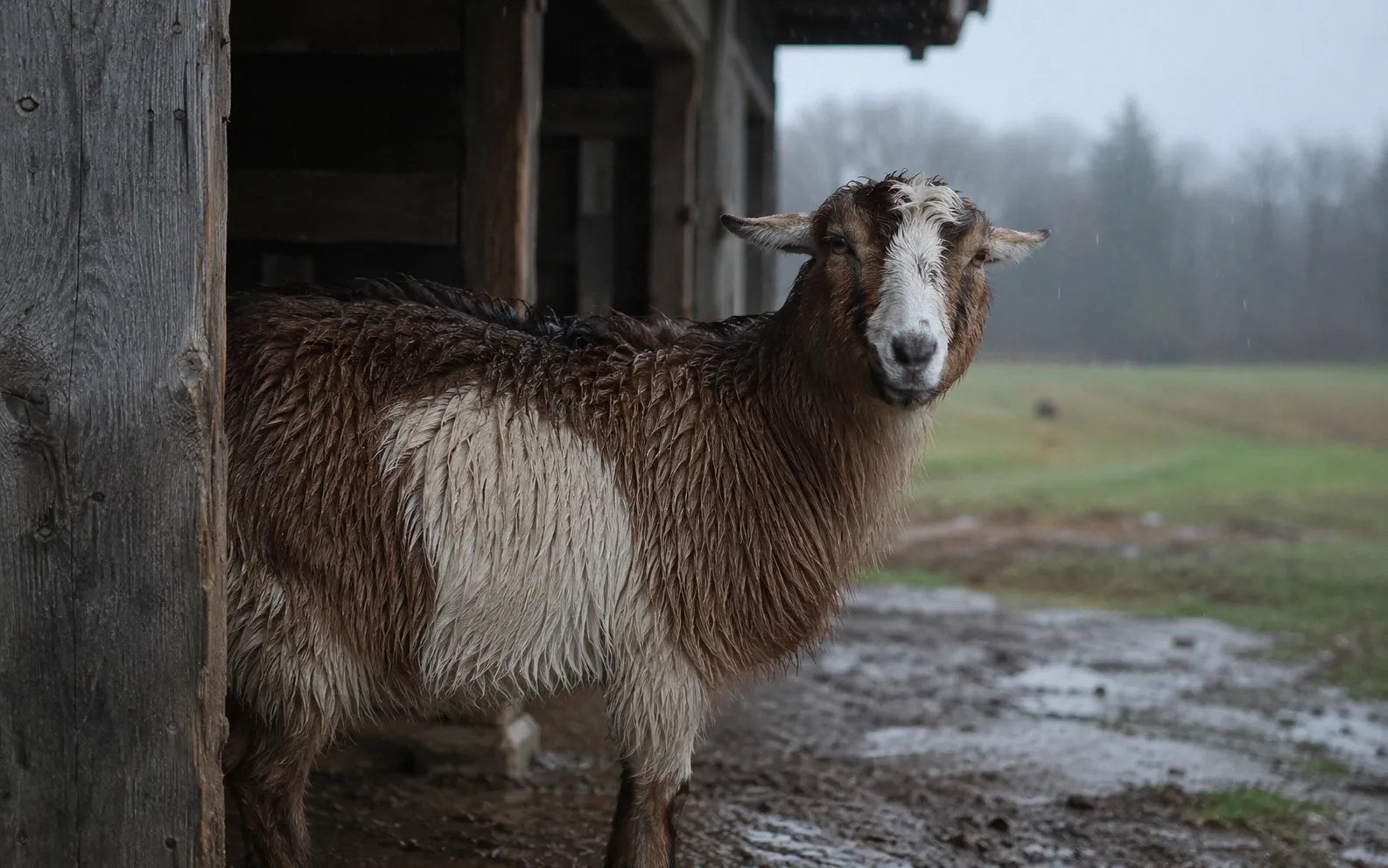
Heavy-coated breeds get hit the hardest. But even short-haired breeds like the Spanish goat lose enough insulation when wet to make water exposure a real thermal risk during cool weather.
Escape Speed Drops Dramatically
A soaked goat is a slow goat. Saturated fiber adds dead weight to every stride, wet hooves skid on surfaces that dry hooves would grip easily, and water dripping across the eyes disrupts the wide-angle panoramic vision goats rely on to spot approaching threats.
Every evasion strategy the species depends on, including sprinting uphill, leaping obstacles, and scrambling up steep rock faces, degrades when the coat is heavy and the feet are slick. Millennia of predation from wolves, leopards, and large raptors pressed hard against any individual that lingered near water longer than strictly necessary.
Domestic goats still carry that evasion-priority programming, even on properties where the largest predator is a barn cat.
How Do Fiber Goats, Dairy Goats, and Meat Goats Differ Around Water?
Here is what matters most: fiber breeds face the highest water risk due to extreme coat absorption, meat breeds handle it best thanks to higher buoyancy and short coats, and dairy breeds fall in the middle. Production type and coat characteristics create meaningful variation in how different goats handle submersion.
Fiber Breeds: Angora and Cashmere
Angora goats carrying a full mohair fleece absorb several extra pounds of water when their coat saturates. That additional weight drags the animal lower in the water column, forces the legs to work significantly harder, and extends drying time to many hours even in direct sun.
Cashmere goats run into the same problem with their dense, fine undercoat. The fiber is packed so tightly that water gets in slowly but, once absorbed, won’t come back out without sustained heat and airflow.
A wet Cashmere goat in a cool barn can remain damp for a full day, keeping the animal in the hypothermia risk zone far longer than a short-haired breed.
Both fiber types should be considered high priority for water exclusion fencing on any property.
Dairy Breeds: Alpine, Saanen, and Toggenburg
Dairy breeds tend to carry less body fat than meat breeds, which reduces passive buoyancy. An Alpine or Toggenburg sits lower in the water and expends more continuous effort to keep its head above the surface.
Their coats are moderate in density, lighter than fiber breeds but heavier than tropical short-haired lines. Drying time falls in a middle range, typically one to three hours in warm, breezy conditions.

Saanens, with their pale coats and larger frames, can absorb enough water to add noticeable drag during swimming. LaMancha goats, lacking external ear flaps, have one minor anatomical advantage: less ear canal exposure to trapped water post-swim compared to breeds with long, pendulous ears like Nubians.
Meat Breeds: Boer, Kiko, and Spanish
Boer goats carry more distributed body mass and higher fat reserves than most other domestic breeds. That extra mass translates to greater passive buoyancy, meaning a Boer floats higher with less effort.
Kiko goats, originally developed in New Zealand from feral stock, retained more of the hardy water-tolerant traits of their semi-wild ancestors. Their short, tight coats shed water faster than any dairy or fiber breed.
Spanish goats occupy a similar niche, with lean frames, short coats, and a temperament shaped by centuries of semi-feral rangeland survival. Both Kiko and Spanish goats dry within an hour under moderate conditions.
Miniature Breeds: Nigerian Dwarf and Pygmy
Small-bodied breeds face a physics problem unrelated to coat type. Their high surface-area-to-weight ratio means they radiate body heat faster per pound of body mass than larger goats.
A 60-pound Nigerian Dwarf loses core temperature in cold water significantly faster than a 200-pound Boer, even though the Nigerian’s short coat sheds water more efficiently. Pygmy goats, carrying a denser undercoat, sit between Nigerian Dwarfs and dairy breeds in overall water risk.
Both miniature breeds should be removed from water immediately if accidental submersion occurs, regardless of air temperature.
Do Feral and Wild Goat Populations Ever Choose to Swim?
Yes, several wild and feral populations swim routinely as part of their normal survival strategy. The behavior gap between managed domestic herds and their free-ranging relatives is dramatic.
The Kri-kri goats of Crete provide the strongest documented evidence. This feral breed, descended from some of the earliest domesticated goats that subsequently reverted to wild living, has been observed crossing open stretches of the Aegean Sea between small islands.
Distances of several hundred meters across saltwater are not unusual. Seasonal shifts in forage availability and competition for mating territory drive these crossings, and the goats that make them pass along their willingness and stamina to the next generation.

Caribbean goat populations on islands like Nevis and Saint Kitts show similarly relaxed attitudes toward water. Centuries of island life selected for individuals willing to wade through tidal flats and shallow bays to reach grazing patches separated by the shoreline.
The Alpine ibex of the European Alps fords glacial rivers during seasonal migration, navigating frigid, fast-moving water that would induce dangerous hypothermia in most domestic breeds within minutes. Their muscular builds, reaching up to 260 pounds in mature males, provide the raw power needed for these crossings.
West African Dwarf goats in tropical lowland regions cross rivers and streams during daily foraging without any apparent stress. Their compact frames, short coats, and consistently warm ambient conditions make water exposure far less thermally dangerous than it would be for a fiber breed in a northern climate.
Himalayan tahr populations navigate steep river gorges across Nepal and northern India, using swimming as one component of a broader movement strategy through extreme vertical terrain.
What ties all these examples together is environmental pressure. Populations surrounded by water or cut off by seasonal flooding evolved a comfort with swimming that most managed domestic herds never developed, because they never had to.
At What Age Can a Kid Safely Enter Water?
Kids are not safe in water until at least six months of age, and even then only briefly in warm conditions. Newborn kids carry the same paddling reflex as adult goats.
A kid dropped into water will begin stroking immediately, without any teaching or prior exposure.
That reflex does not mean the activity is safe. A newborn kid weighing five to eight pounds has an extremely high surface-area-to-weight ratio, which means it loses body heat at a rate that makes hypothermia possible within minutes in water below 70 degrees Fahrenheit.
The immune system of a kid under two weeks old is still heavily dependent on colostral antibodies. Stress from cold water immersion suppresses immune function further, creating a window where respiratory infections like pneumonia can gain a foothold with very little provocation.
Kids under four weeks old should have zero unsupervised access to any water source deeper than two inches. Stock tanks are the leading accidental drowning risk for young kids on working farms.

A kid that falls into a tank and cannot find the rim will exhaust itself within minutes and slip beneath the surface.
How Can You Kid-Proof Water Sources on a Farm?
Practical prevention involves using water troughs no taller than the kid’s chest height in any pen or paddock where young animals have access. Placing a flat stone or brick inside deeper tanks gives a fallen kid a platform to stand on while awaiting rescue.
Kids between one and three months old are physically sturdier but still carry elevated risk compared to adults. Their smaller body mass means they lose heat faster and succumb to cold-triggered illness sooner, and their less developed rumen produces less fermentation gas, reducing the passive buoyancy that helps adult goats float.
By six months of age, most kids have enough body mass, coat development, and rumen function to handle brief accidental water contact without immediate danger in warm weather. Deliberate swimming at any age remains inadvisable unless the animal has been gradually conditioned and the water temperature exceeds 75 degrees Fahrenheit.
What Diseases and Infections Can Water Exposure Cause?
Water exposure opens the door to at least seven distinct categories of illness in goats, ranging from bacterial hoof infections to lethal algae toxicity. Some come from the simple act of getting wet, while others trace back to organisms living in the water itself.
Hoof and Skin Infections
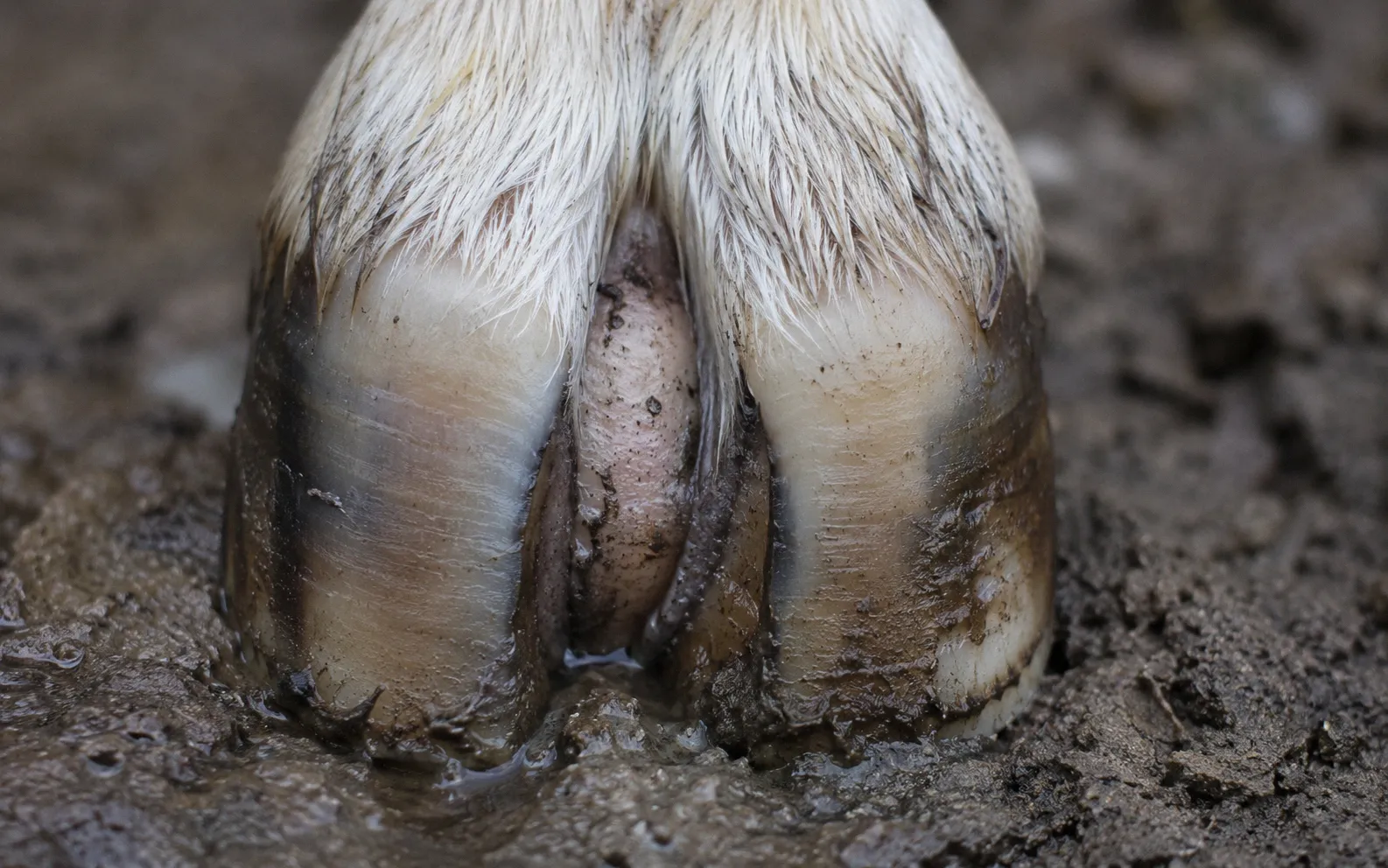
Prolonged hoof moisture is the primary trigger for foot rot, caused by the bacterium Fusobacterium necrophorum often working alongside Dichelobacter nodosus. Wet hooves soften the keratin shell, allowing bacteria to penetrate the junction between the hoof wall and sole where they thrive in the oxygen-deprived environment.
Severe foot rot can become life-threatening if the infection reaches deeper tissue layers. Treatment requires aggressive trimming of affected tissue, medicated foot soaks, and sometimes systemic antibiotics.
Dermatophilosis, commonly called rain rot, produces crusty scabs and hair loss across the back, neck, and flanks. The organism Dermatophilus congolensis activates in conditions of sustained skin moisture and is already present on the skin of many healthy goats, waiting for wet conditions to proliferate.
Respiratory Illness
Nothing triggers pneumonia in goats more reliably than a wet coat paired with cool air. Once that insulating layer fails, core temperature drops, and the respiratory lining can’t hold off the bacterial and viral invaders that a healthy immune response would normally keep in check.
Mannheimia haemolytica and Pasteurella multocida, two bacterial species commonly found in the upper respiratory tract of healthy goats, can overwhelm the lungs within 48 to 72 hours once the immune barrier weakens. Early signs include nasal discharge, rapid breathing, reduced appetite, and a rectal temperature above 104 degrees Fahrenheit.
Waterborne Parasites and Bacteria
Stagnant or slow-moving water sources harbor organisms that pose direct infection risk through ingestion or skin contact. Here are the most dangerous waterborne threats to goats:
- Giardia duodenalis contaminates standing water through fecal deposits from infected wildlife and livestock, causing watery diarrhea, weight loss, and dehydration that hits kids and immunocompromised adults hardest
- Cryptosporidium parvum follows a similar fecal-oral transmission route and produces comparable gastrointestinal damage, with mortality rates from severe cryptosporidiosis reaching 30 percent in kids under one month old
- Leptospira bacteria enter through mucous membranes and skin abrasions during contact with contaminated water, causing fever, anemia, kidney damage, and spontaneous abortion in pregnant does
- Cyanobacteria (blue-green algae) bloom in warm, nutrient-rich ponds and produce cyanotoxins that can be lethal within hours of ingestion, causing acute liver failure with no reliable treatment once symptoms appear
How Cold Is Too Cold for a Goat to Be in Water?
Any water below 60 degrees Fahrenheit is acutely dangerous for domestic goats regardless of breed. Water temperature controls how fast a swimming goat goes from capable to in trouble, and the thresholds are lower than most owners think.
Water above 75 degrees Fahrenheit allows most healthy adult goats to sustain brief swimming without immediate thermal risk. Core temperature remains stable, and the animal can exit and dry without needing intervention beyond monitoring.
Between 60 and 75 degrees, risk climbs. A goat submerged for more than ten minutes in this range begins losing core temperature faster than its metabolism can compensate.
Shivering starts within minutes of exit, and full recovery requires active drying and sheltered warmth.
Below 60 degrees Fahrenheit, water becomes acutely dangerous for any domestic goat regardless of breed, coat type, or body condition. Core temperature drops rapidly, muscle coordination deteriorates, and the paddling reflex weakens as the nervous system diverts resources to protecting vital organs.
What Role Does Wind Chill Play After a Goat Exits Water?
Air temperature compounds the equation after exit. A goat emerging from 65-degree water into 50-degree air with a 15 mile-per-hour wind faces an effective chill factor that accelerates evaporative heat loss from the wet coat.
The danger period extends until the coat is fully dry, which can take two to four hours depending on breed and conditions.

Goats already operating on tighter thermal margins during winter months face the greatest danger. Any unplanned water exposure between October and March in northern regions should be treated as a veterinary emergency regardless of the specific water temperature.
Seasonal pond temperature in most of the continental United States drops below the 60-degree danger line by mid-October and does not reliably climb back above it until late May. That window defines the period when accidental water entry carries the highest risk of hypothermia-related death.
Does Salt Water Affect Goats Differently Than Fresh Water?
Salt water is significantly more dangerous to domestic goats than fresh water due to skin irritation, hoof degradation, and the risk of sodium ion poisoning from ingestion. Feral coastal populations have adapted over centuries, but domestic goats hitting salt water for the first time face hazards they’re not built for.
Sodium chloride in seawater irritates goat skin more aggressively than fresh water, particularly in areas where the coat is thin or the skin already has minor abrasions. Prolonged contact can dry and crack the skin after the salt crystallizes during the drying phase, creating entry points for secondary bacterial infections.
Hoof keratin degrades faster under repeated salt exposure. The salt draws moisture from the hoof wall through osmotic action, weakening structural integrity over time.
Feral island goats have adapted to this through natural selection for harder, denser hoof material, but domestic breeds lack that specific adaptation.
The bigger concern is ingestion. A goat that swallows salt water during swimming takes in roughly 35 grams of sodium chloride per liter.
Even a small amount stresses the kidneys, and a goat that drinks a significant volume can develop sodium ion poisoning, which causes neurological symptoms including blindness, head pressing, circling, and seizures.
Fresh water should always be available immediately after any salt water contact. The goat will naturally seek to dilute the sodium load through drinking, and restricting water access during this period worsens the kidney burden.
Coastal farmers in regions like the Scottish Highlands and parts of Greece who keep goats near tidal zones typically fence their herds well above the high-tide line and provide elevated fresh water stations that salt spray cannot contaminate.
Is Chlorinated Pool Water Harmful to Goats?
Chlorinated pool water poses both chemical and structural hazards to goats. Chlorine stresses the liver and kidneys on repeated exposure, and smooth pool surfaces make self-rescue nearly impossible.
Residential swimming pools contain chlorine concentrations between one and three parts per million under standard maintenance. That level is low enough to avoid causing acute chemical burns to skin or mucous membranes on brief contact, but the effects of even mild chlorine exposure accumulate through routes that pool owners rarely consider.
Goat skin absorbs dissolved chemicals more readily than human skin. Chlorine and its byproducts, particularly chloramines formed when chlorine reacts with organic material in the water, pass through the skin into the bloodstream where the liver must process and neutralize them.
A single brief swim is unlikely to cause visible organ stress. Repeated exposure over days or weeks places a cumulative detoxification burden on the liver and kidneys that has no upside for the animal.
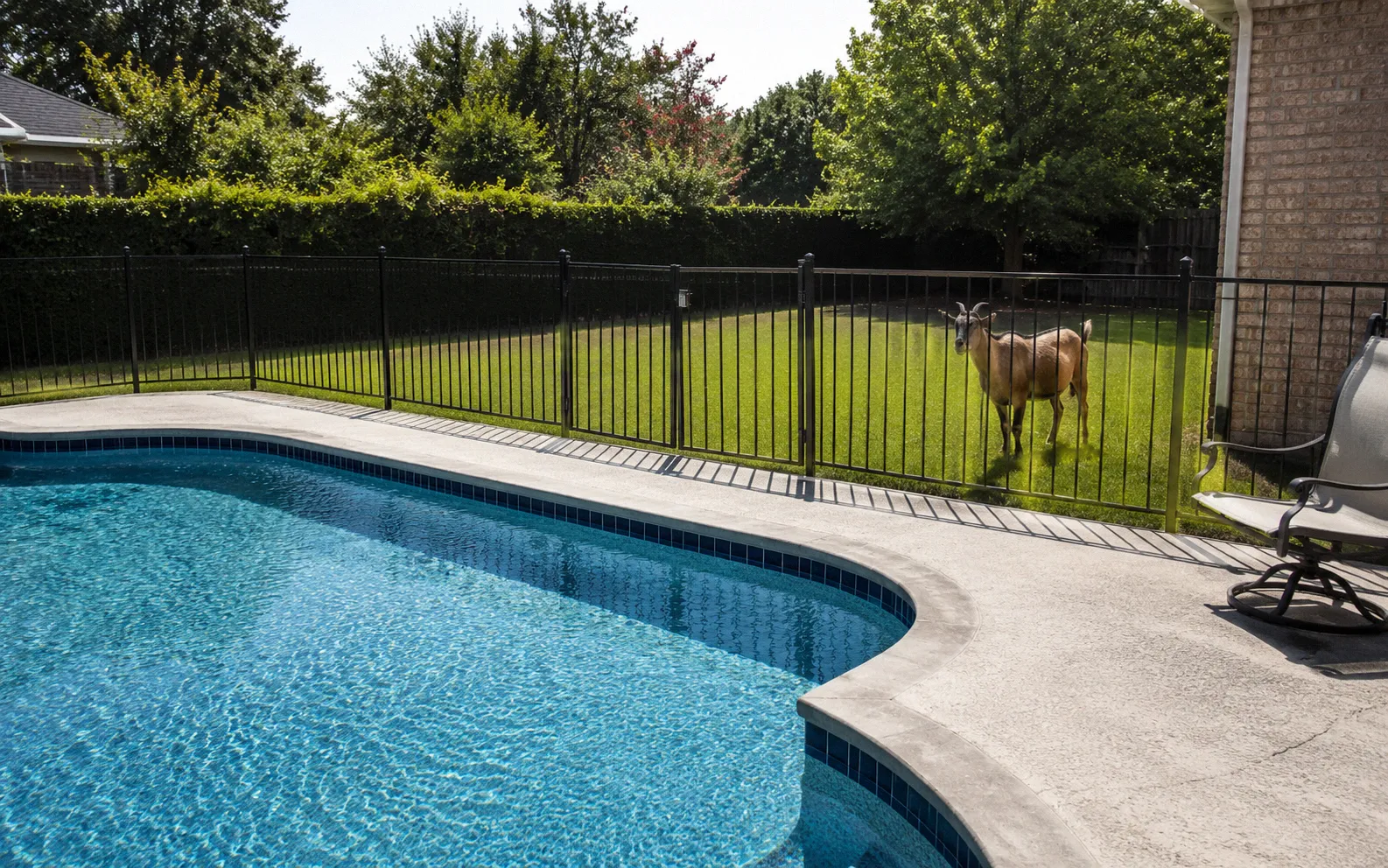
The bigger and more immediate pool hazard is structural. Edges, ladders, and steps are all designed for human hands and feet.
Smooth tile, fiberglass, and vinyl surfaces offer zero traction to a cloven hoof.
A goat that enters a pool through a shallow entry ramp or by jumping from the deck may be physically unable to climb back out. The slick walls and coping provide nothing for the hoof’s gripping mechanism to engage with, and the animal burns through its energy reserves trying to exit while its core temperature drops.
Goat fecal matter also introduces Cryptosporidium oocysts, E. coli, and other organisms into the pool water that standard chlorine levels may not neutralize quickly enough. A single defecation event in a residential pool requires superchlorination and extended filtration cycling to return the water to safe levels for human use.
The simplest recommendation is absolute exclusion. Pool fencing that meets local code for child safety is typically sufficient to keep goats out as well.
How Can You Tell When a Goat Is Struggling in Water?
Watch the head position first. A dropping chin where water reaches the lower jaw is the earliest reliable sign that a goat is losing the fight against fatigue and gravity.
Catching distress early is the difference between a quick rescue and a full-blown veterinary emergency. Goats show a predictable sequence of warning signs as swimming shifts from manageable to dangerous.
Head position tells you the most. A goat swimming comfortably holds its chin tilted up with nostrils and eyes well clear of the waterline.
When the head starts dropping and water laps at the lower jaw, the animal is losing ground against gravity and fatigue.
Paddle rhythm changes next. Smooth, coordinated strokes break into erratic splashing as the muscles start to fail.
The hind legs, the main source of forward thrust, may start cycling unevenly or stalling between strokes.
Vocalization is a late-stage distress marker in water. Goats that begin bleating while swimming are already past the point of self-rescue in most cases.
The sound is distinctive, higher-pitched and more frantic than a standard contact call, and it should trigger immediate intervention.
The rear end sinking lower than the shoulders indicates the goat is losing buoyancy, either because the rumen gas pocket has shifted forward or because exhaustion has reduced the animal’s ability to maintain a level body position. Once the hindquarters drop below a 20-degree angle from horizontal, the goat cannot generate enough thrust from the hind legs to maintain forward movement.
Complete cessation of paddling is the final stage before submersion. A goat that stops moving its legs in water will sink within seconds unless the rumen gas pocket alone provides enough passive lift to keep the nostrils above the surface, which it usually does not in a fatigued, hypothermic animal.
What Is the Correct Emergency Response for a Goat in Water?
Get the goat out immediately, dry it thoroughly, and monitor for secondary pneumonia over the next 48 hours. Speed matters more than technique in a water rescue.
Every additional minute in the water deepens hypothermia and exhaustion.
Approach the goat from the direction it is facing if possible. A panicked animal in water may strike out with its front hooves, and approaching from behind risks pushing its head below the surface.

Grab the goat firmly by the base of the horns, the collar if wearing one, or under the chest behind the front legs. Lift the front end first to get the nostrils clear and then guide or carry the animal to solid ground.
Once on land, move the goat immediately to a dry, sheltered, wind-protected area. A barn stall with deep straw bedding is ideal.
An open field on a windy day is the worst possible recovery environment because evaporative cooling from the wet coat accelerates heat loss.
Begin towel-drying the entire body. Focus first on the belly, the inner legs, and the area behind the ears, where moisture hides in folds and takes the longest to evaporate naturally.
Use multiple dry towels rather than wringing and reusing a single saturated one.
If the goat is shivering, lethargic, or has a rectal temperature below 100 degrees Fahrenheit (normal range is 101.5 to 103.5), provide a warm energy drink. Mix one tablespoon of blackstrap molasses and a quarter teaspoon of cayenne pepper into a quart of warm water.
The molasses supplies readily available sugars and minerals, while the cayenne promotes peripheral blood circulation to speed rewarming.
Place a blanket or horse sheet over the goat once towel-drying is complete. Keep the animal in a sheltered area with access to fresh water, quality hay, and loose minerals for at least 24 hours.
Monitor breathing rate, appetite, and rectal temperature every six hours for 48 hours post-rescue. Nasal discharge, persistent coughing, refusal to eat, or a rectal temperature above 104 degrees Fahrenheit within this window warrants an immediate veterinary call because secondary pneumonia can develop rapidly after cold water immersion.
Can You Gradually Train a Goat to Accept Water?
Gradual desensitization over several weeks can make most goats comfortable wading through belly-deep water, though full swimming comfort is unrealistic for the majority of domestic breeds. Some owners want their goats comfortable around water for practical reasons, such as property that requires crossing a creek to reach pasture, or livestock that need regular bathing for show preparation.
Trust is the prerequisite. A goat that does not willingly approach and accept handling from the person doing the training will not relax around water with that same person standing beside it.
Establish a calm, confident handling relationship on dry ground before introducing any water element, the same foundation required when taming any wary goat.
Start with standing water no deeper than the goat’s fetlock, roughly two to three inches. A shallow splash pad, a low tray, or a naturally occurring puddle on a warm day all work for this phase.
Let the goat approach on its own terms with a feed reward waiting on the far side.
Most goats will hesitate at the water’s edge for several sessions before stepping through. Forcing the animal forward at any stage resets the entire conditioning process because it reinforces the instinctive association between water and danger.
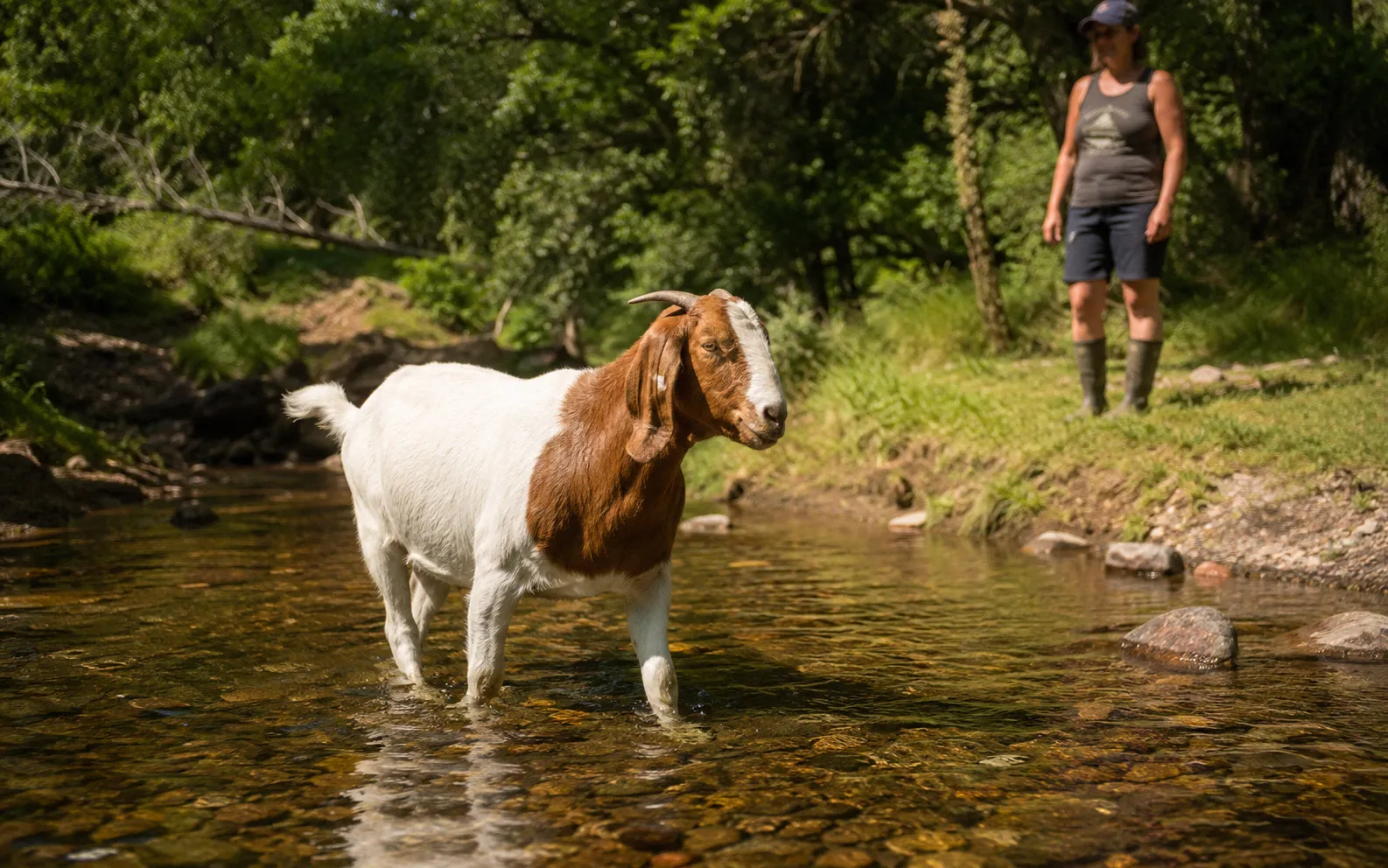
Once the goat crosses the shallow water reliably, increase depth by one to two inches per week. Each new depth level may trigger a brief return to hesitation before the animal adjusts.
Positive reinforcement with grain or browse treats after each successful water crossing builds a reward association that gradually outweighs the avoidance instinct. Verbal praise alone is not sufficient for most goats because the species responds primarily to food-based motivation.
Full swimming comfort is unrealistic as a training goal for most domestic goats. A reasonable target is willing wading through water up to the belly on warm days.
Breeds with shorter coats and calmer temperaments, particularly Kiko and Spanish lines, tend to progress faster than high-strung dairy breeds or heavy-coated fiber animals.
How Should Farmers Protect Herds From Open Water on Property?
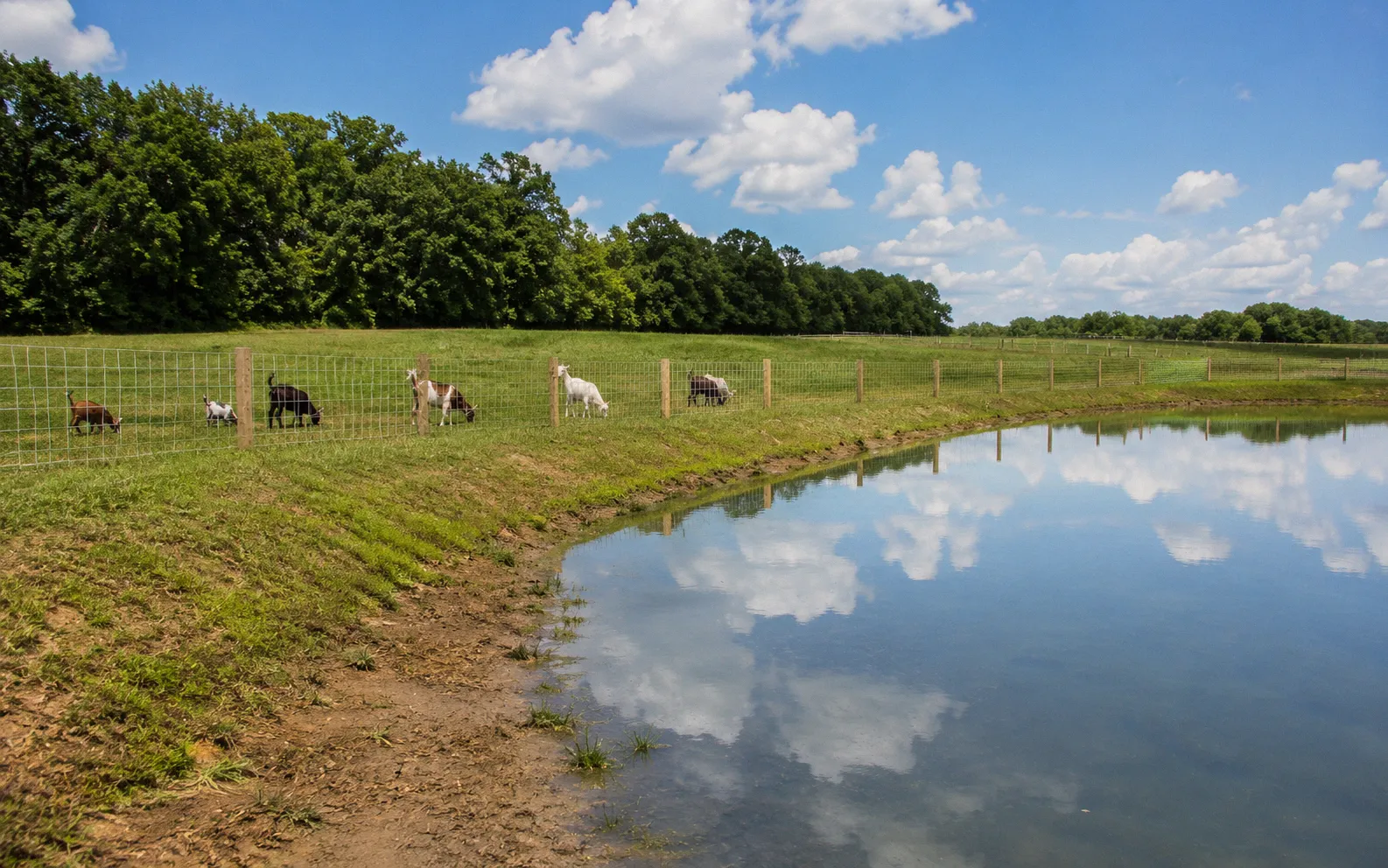
The most effective protection is physical exclusion with four-foot woven wire fencing set at least ten feet from the water’s edge. Proactive infrastructure is always cheaper than emergency veterinary care, and any property with open water accessible to goats needs deliberate protective measures.
Ponds and creeks require fencing that accounts for goat behavior. Standard three-strand cattle wire is not sufficient because goats routinely duck between strands that a cow would respect.
A minimum of four-foot-high woven wire, welded panel, or livestock mesh fencing set at least ten feet back from the water’s edge prevents both intentional approach and accidental entry during herd movement.
Stock tanks inside goat pens should be no taller than chest height on the smallest animal in the enclosure. For pens housing kids, keep water depth below six inches and place a flat concrete block or large stone inside the tank as an emergency standing platform.
Drainage management during rainy seasons prevents standing water from accumulating in low spots within pastures and paddocks. French drains, graded earthwork, or simply building up low areas with gravel and clean fill eliminate the puddles and flooded patches that breed parasites and create slipping hazards.
Flood preparation requires a specific evacuation plan. Identify the highest ground on your property and ensure a clear path from every goat enclosure to that elevation.
Goats caught outdoors during winter storms face compounded risk if flooding accompanies the cold, because wet and cold together create the fastest path to fatal hypothermia.
Move herds to high ground before a storm arrives, not during or after. Post-storm standing water creates breeding habitat for mosquitoes carrying West Nile virus, snail populations hosting liver flukes, and bacteria that contaminate any forage submerged for more than a few hours.
Proactive fecal egg counts and targeted deworming after any flooding event prevent parasite loads from spiking in the weeks following the water’s recession.
How Do Goats Stack Up Against Other Farm Animals in Water?
Goats rank in the middle of the livestock swimming spectrum, more capable than sheep but far less willing and enduring than cattle, horses, or pigs. Looking at how other livestock handle water puts the goat’s strengths and weaknesses into sharper focus.
Cattle are natural, powerful swimmers. A mature cow displaces enough water with its barrel chest to generate strong passive buoyancy, and the muscular limbs produce steady forward propulsion.
Ranchers in river-crossed regions have moved cattle herds across water crossings for centuries with relatively low drowning rates. Cattle also tolerate wet conditions far better than goats because their thicker hides and different coat structure shed water more efficiently.
Horses are among the strongest swimmers of all domesticated animals. Their deep chests, powerful hindquarters, and efficient stroke mechanics allow sustained swimming across wide rivers and even open ocean channels in documented historical cases.
Mounted cavalry units regularly crossed major waterways during military campaigns.
Sheep occupy the opposite end of the spectrum from horses. A sheep carrying a full wool fleece can absorb so much water weight that the animal sinks and drowns within minutes.
Shearing dramatically reduces this risk, but even freshly shorn sheep swim reluctantly and with far less coordination than goats.
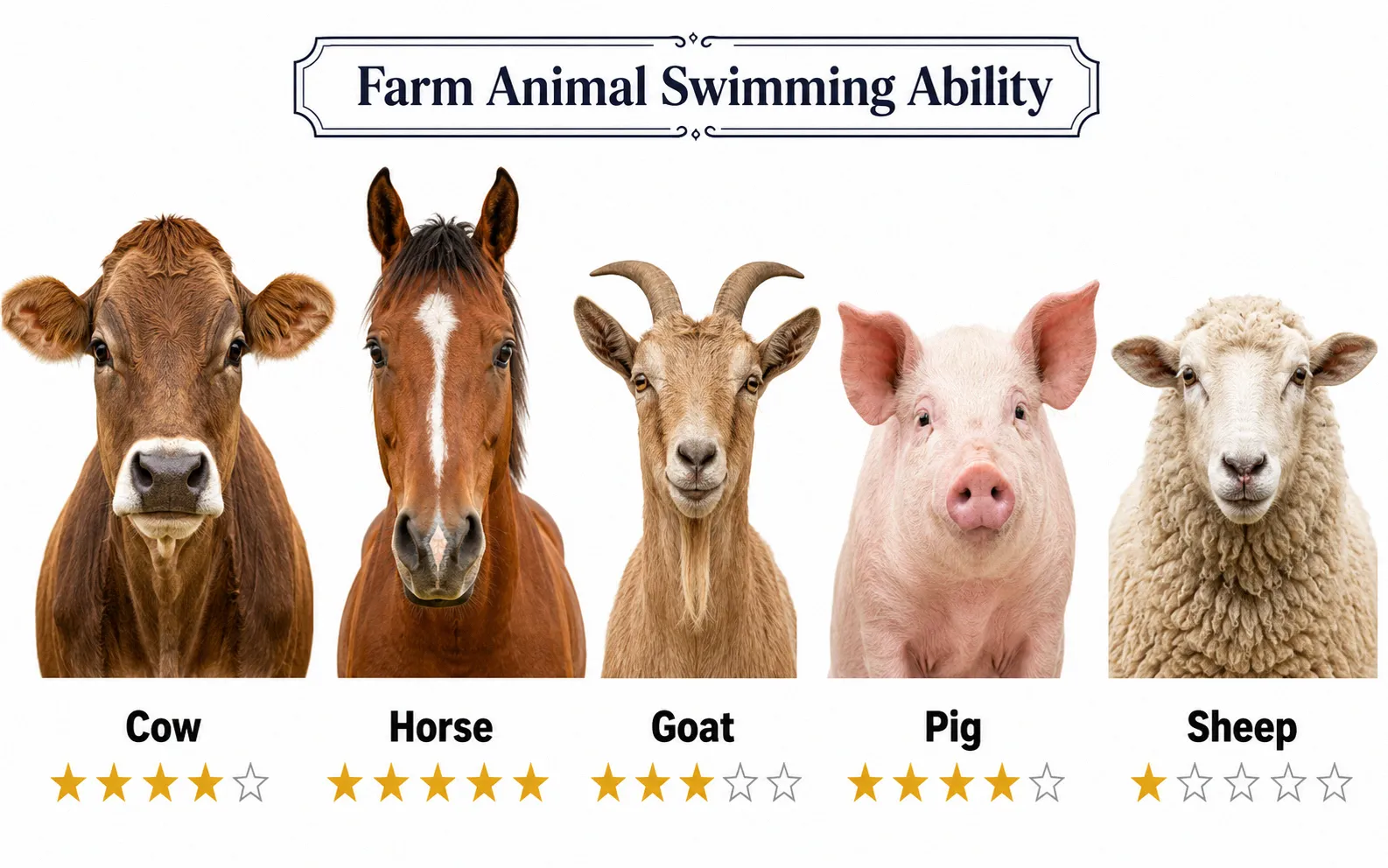
Pigs are surprisingly competent swimmers. Their body fat provides excellent buoyancy, their skin handles water without the insulation-loss problems that plague goats and sheep, and feral pig populations regularly cross rivers and swim to offshore islands in subtropical regions.
Goats land in the middle of the livestock spectrum: physically capable but psychologically averse, with breed-dependent coat issues that create genuine post-swim health risks. They outperform sheep in water by a wide margin but fall short of cattle, horses, and pigs in both willingness and endurance.
The practical takeaway for mixed-species farms is that water crossings safe for cattle may not be appropriate for goats, and fencing decisions around ponds should prioritize goat exclusion even when other species on the property can access the water safely.
What Are Safer Alternatives to Swimming for Cooling Goats in Summer?
The safest cooling methods keep goats dry. Shade structures, misting systems, frozen treats, and shallow splash pads all reduce heat stress without the health risks of full water immersion.
Heat stress kills more goats annually than accidental drowning, so effective cooling that avoids soaking matters.
Shade and Airflow Solutions
Shade is the single best passive cooling tool you can provide. A simple three-sided shelter with an open front facing the prevailing breeze cuts radiant heat load by 15 to 25 degrees compared to direct sun.
Mature trees with dense canopy cover work equally well for pasture shade.
Barn ventilation matters as much as shade. Air should move freely through the structure at goat-head height.
Openings positioned at roughly eight feet above floor level, below the roofline overhang, create a natural convective flow that pulls warm, humid air upward and out while drawing cooler air in from ground level.
Box fans or ceiling fans in enclosed barns supplement natural airflow during periods of dead calm. Position fans to move air across the animals rather than directly at them, because sustained direct airflow can dry mucous membranes and increase respiratory vulnerability.
Hydration and Feed Adjustments
Fresh, cool drinking water is the most important heat management tool on any goat farm. A goat in 90-degree heat may drink two to three times its normal daily intake.
Restricting water access during peak heat, even unintentionally through empty or distant troughs, is one of the fastest paths to heat stroke.
Adding a livestock electrolyte supplement to one of multiple available water sources replaces sodium, potassium, and magnesium lost through increased sweating and panting. Keep at least one plain water source available alongside the electrolyte option because some goats refuse flavored water.
Shifting the largest hay feeding to evening hours reduces the metabolic heat generated by rumen fermentation during the hottest part of the day. The fermentation process itself produces internal body heat, and feeding during cooler evening temperatures moves that heat production into hours when the animal can dissipate it more easily.
Direct Cooling Methods
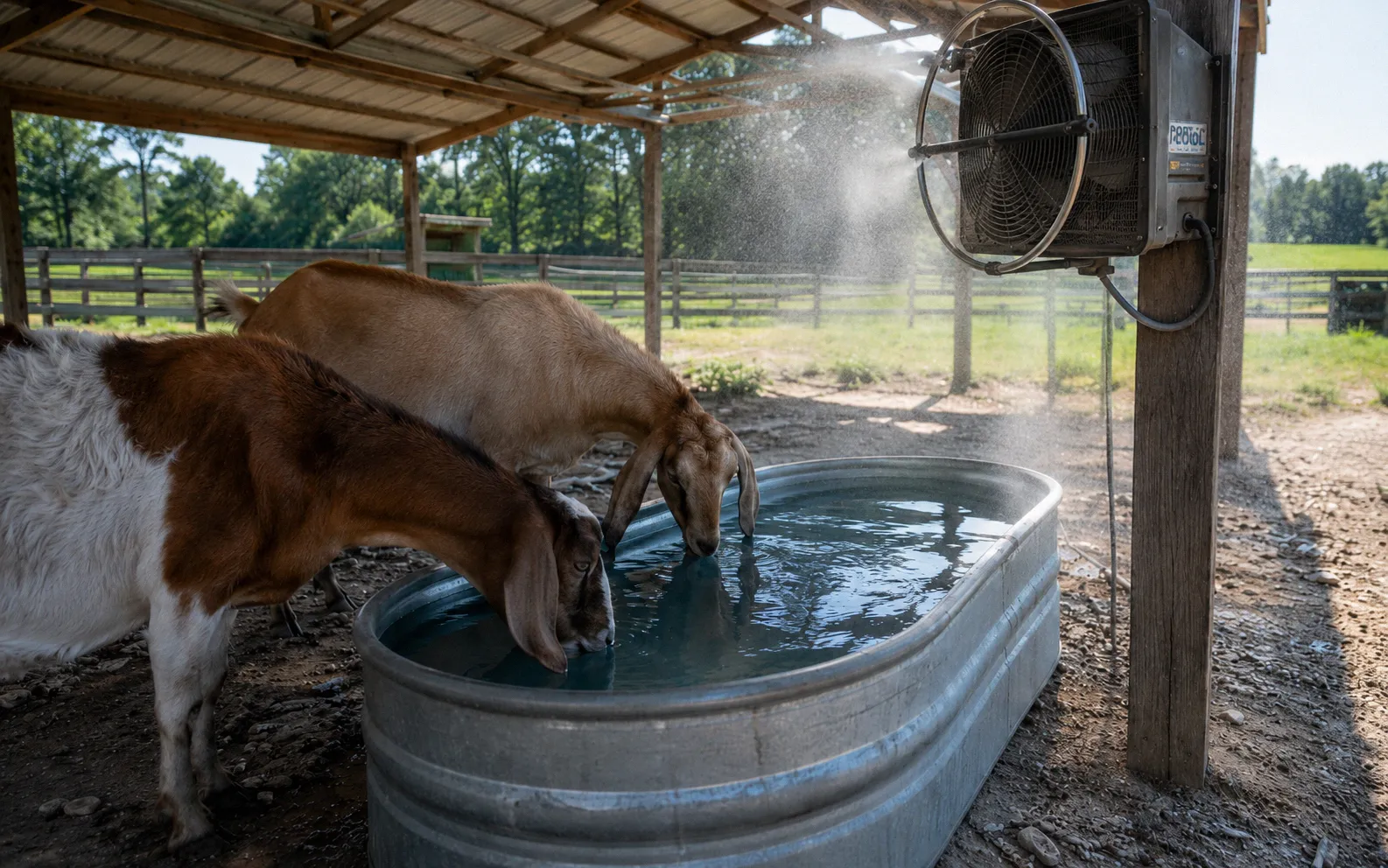
Misting systems mounted in shade structures provide evaporative cooling without saturating the coat. Fine mist droplets evaporate before fully wetting the fiber, pulling heat from the surrounding air and the goat’s skin simultaneously.
This approach avoids the coat-saturation and hoof-moisture problems that make full water immersion dangerous.
Frozen treats offer targeted cooling. Freeze chunks of watermelon, cucumber, or sliced apples in blocks of ice and place them in feed troughs during peak afternoon heat.
The goats lick and chew the frozen treats, lowering oral and stomach temperature from the inside while staying completely dry.
Shallow splash pads holding no more than two to three inches of water allow goats to stand in cool water and absorb some cooling through the lower legs and hooves without submerging the coat. Most goats that refuse deeper water will tolerate hoof-depth wading voluntarily on extremely hot days.
Strategic coat trimming before summer reduces insulation thickness on breeds that carry excessive fiber into warm months. This is standard practice for Angora and Cashmere producers but benefits any breed entering a region’s hottest season with more coat than the climate demands.
Final Thoughts
The answer to whether a goat can swim has always been yes. The more useful question is whether it should, and in almost every practical scenario the answer leans firmly toward no.
That swimming reflex is a holdover from thousands of years of wild survival in conditions nothing like a modern managed pasture. It works, and it’s saved the lives of goats caught in floods, fallen into ponds, and swept into creeks during spring runoff.
But the physical toll of swimming, the disease risks of wet coats and saturated hooves, and the thermal danger of cold water exposure all stack heavily against voluntary or recreational use.
The best approach is straightforward: respect the capability, prevent the need, and be ready for the emergency. Fence your water, manage your drainage, keep rescue supplies within reach, and cool your herd with methods that don’t involve getting them wet.
Frequently Asked Questions
Kids can drown in water as shallow as six to eight inches if they lose footing and panic. Adult goats face less risk in shallow water, but a stock tank deep enough to submerge the chest becomes dangerous for any goat that cannot find the exit. Hypothermia compounds the threat because a chilled goat loses muscle coordination long before its energy runs out. Every water source on a goat property should have a safe and obvious exit point.
Goats and sheep paddle at roughly comparable speeds in calm water. The critical difference is what happens to their coats. A sheep carrying a full wool fleece absorbs enormous water weight that increases by the second, dragging the animal lower and creating a real drowning risk within minutes. Goat hair, while still problematic when saturated, never reaches the same weight-to-body ratio as waterlogged wool.
A small percentage of individual goats, especially those raised around shallow creeks or ponds from birth, develop a genuine tolerance for wading and even brief swimming on hot days. This is not common behavior across the species. If your goat willingly enters water, it likely grew up with early positive exposure. Most goats never reach that comfort level regardless of how much access they have.
Most goats never need a full bath unless they are being prepared for a show ring. Their skin produces natural oils that regulate coat health, and frequent bathing strips those oils away, leading to dry skin and increased vulnerability to fungal infections. If you must wash a goat, limit it to warm days above 70 degrees Fahrenheit, use livestock-safe shampoo, and towel dry the entire coat immediately afterward.