| # | Product | Our Rating | ||
|---|---|---|---|---|
| 1 |  | Best OverallWeaver Leather Livestock Goat Collar | ★★★★★ | Check Price |
| 2 |  | Manna Pro Goat Treats | ★★★★☆ | Check Price |
| 3 |  | HoAoOo Pet Training Clicker with Wrist Strap | ★★★★☆ | Check Price |
Goats are already domesticated. They were one of the first animals humans tamed, roughly 10,000 years ago in the Zagros Mountains of western Iran.
Every dairy goat, meat goat, and pet goat you see today descends from those original wild ancestors.
Can you domesticate a goat?
When most people ask this question, what they really mean is whether you can tame a wild or feral goat. The answer is yes, but the difficulty depends entirely on the age of the animal.
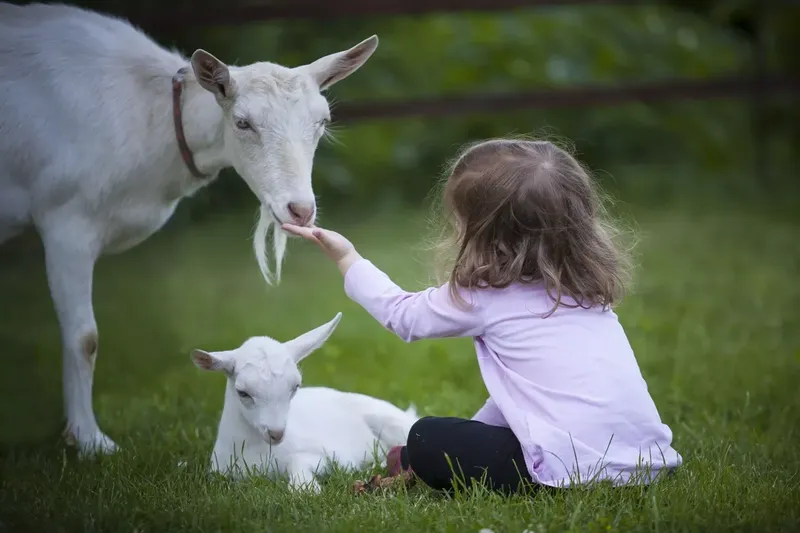
Bottle-fed kids become as friendly as dogs within days. They bond to whoever feeds them and will follow you everywhere.
If you want the friendliest goat possible, getting a bottle baby is the fastest path to a pet that acts more like a puppy than a farm animal.
What else should I consider before domesticating a goat?
Taming an adult feral or wild-caught goat takes real patience. Start by keeping the goat in a small pen where it can’t run far from you.
Sit quietly in the pen every day without making sudden movements or trying to grab the animal.
Offer treats by hand, things like raisins, apple slices, or animal crackers. Once a goat trusts you, it can even learn to love humans deeply.
Let the goat come to you on its own terms. Some adults tame up within a few weeks, while others take months.
A few never fully trust people, and you have to accept that possibility going in.
What are the benefits of domesticating a goat?
Goats are intelligent, social animals that form strong bonds with their owners. Once a goat trusts you, it’ll follow you around the property, come when called, and genuinely enjoy your company.
They’re also practical animals. Goats clear brush, produce milk, and provide natural weed control.
With patience, some owners have even tamed previously wild goats that were never handled as kids. Quite a few goat owners train their animals to walk on a lead, jump on a milk stand, or even carry packs on hiking trails.
The bond you build through that training is rewarding for both you and the goat.
Are there any risks to domesticating a goat?
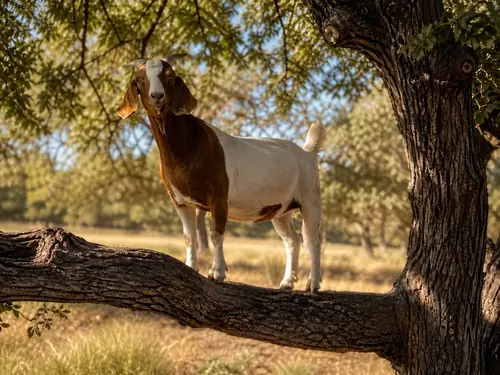
Goats are escape artists that can even climb trees when motivated. They’ll test every fence, gate, and latch you put up.
If there’s a weakness anywhere in your setup, they’ll find it within the first few days. Anything climbable near the fence counts as a weakness, from a leaning pallet to a sloped shed roof.
Feral or untamed goats can also cause injury with their hooves and horns if they panic. Handle them calmly, use slow movements, and never corner a scared goat.
Give them space to retreat and they’ll calm down faster than if you try to force contact.
How to prevent any risks when domesticating a goat?
Start with at least four-foot woven wire fencing for standard breeds. Latch every gate with a carabiner or clip, because goats figure out simple latches fast.
Remove any toxic plants from their area before turning them loose, since rhododendron, azalea, and yew can all kill a goat.
Check your local zoning laws before bringing a goat home. Some municipalities restrict livestock ownership or require special permits.
Goats are vocal animals, and neighbors in close quarters may not appreciate the noise, especially from breeds like Nubians that are famous for being loud.
What type of training can I do with my goat?
Goats respond well to food-based training with small, healthy treats. Keep treats in your pocket and reward behaviors you want to encourage, like jumping on the milk stand, following on a lead, or standing still for hoof trimming.
Nearly all goats learn basic commands within a few sessions. Young kids can even be house trained to some degree.
They’re food-motivated animals and they catch on quickly when a specific action earns them something tasty. Consistency matters more than anything.
Work with your goat for ten minutes a day rather than one long session per week. Once the basics stick, you can try fun extras like a backyard truffle hunt.
Final Thoughts
Goats have been living alongside humans for thousands of years, so domestication is already built into their DNA. The real question is how tame and friendly you want your particular goat to be.
Bottle babies bond the fastest. Young kids caught from a feral herd tame within days to weeks.
Adults take longer and some never fully come around. Whichever route you take, patience and treats will get you further than anything else.
Frequently Asked Questions
Goats are already domesticated, having been tamed roughly 10,000 years ago. If you mean taming a wild or feral goat, bottle-fed kids bond to whoever feeds them and become friendly within days. Taming adult feral goats requires patience, treats, and quiet daily contact over weeks or months.
Before domesticating a goat, you should also consider the cost of housing and feeding it. Goats are far from cheap, and the cost of providing them with a healthy diet and safe home can be high.
Although it takes dedication and commitment, there are many benefits to owning a pet goat. Goats are intelligent creatures that form strong bonds with their owners. They can also be trained to do tricks and even pull carts or carry backpacks.
There are certain risks associated with owning a pet goat. Goats can be difficult to contain and may escape or wander off if not properly supervised. They also have sharp hooves that can cause injury if they aren't handled correctly.