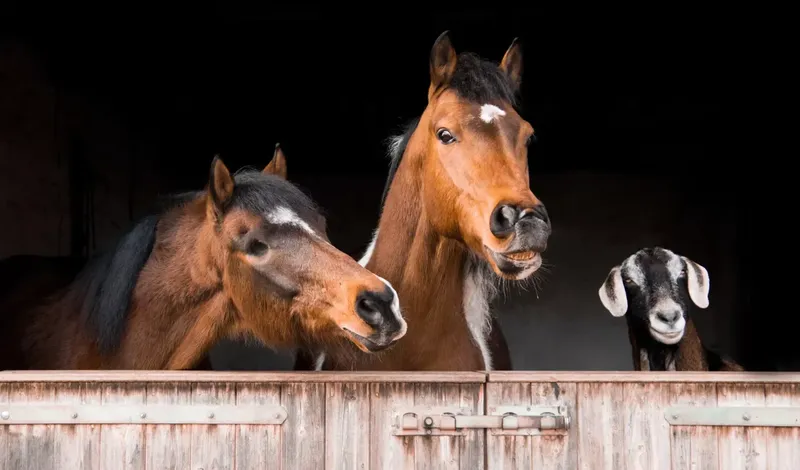
Walk through any racehorse barn in the country, and there’s a good chance you’ll spot a goat bedded down in one of the stalls. This tradition didn’t start as a novelty or a quirky photo opportunity.
Trainers figured out decades ago that certain horses settle down around goats, eat better, and perform more consistently with one nearby.
This bond extends well beyond the racetrack. Backyard horse owners, hobby farmers, and equine rescue operations all report the same pattern.
Given the right conditions and a proper introduction, horses develop genuine attachments to goats that change how they eat, sleep, and behave on a daily basis.
Why Do Horses Form Attachments to Goats?
Horses are herd animals, and they’re wired to crave social connection. When a horse is alone, it feels exposed.
In the wild, that means vulnerable to predators. A goat fills that companion role surprisingly well.
Goats are small enough that horses don’t see them as a threat. They’re social creatures too, naturally drawn toward larger animals rather than avoiding them.
That mutual interest builds on itself. The horse relaxes around the goat, and the goat feels safe near the horse.
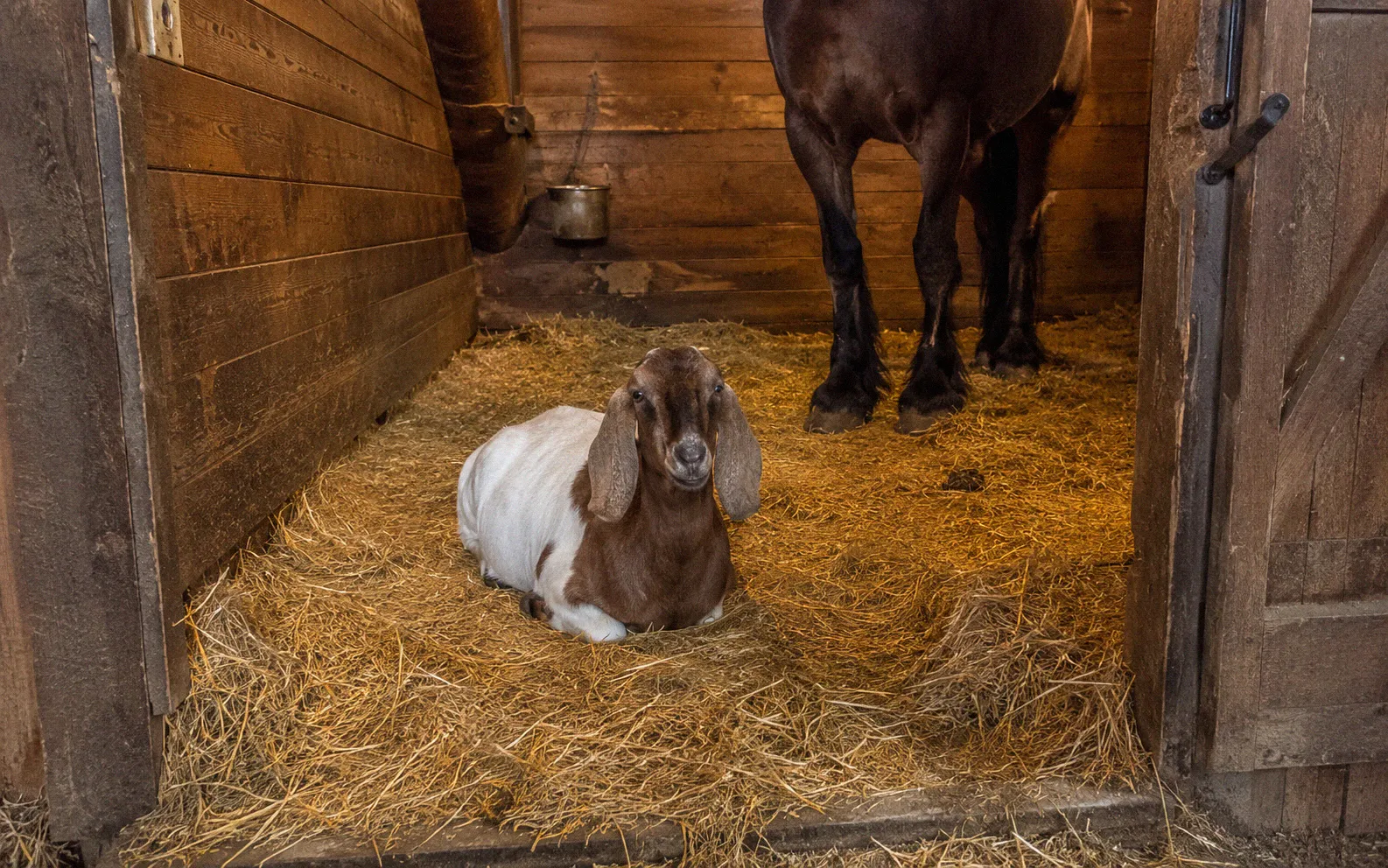
Over weeks, the bond deepens as both animals fall into shared routines. They graze at the same times, rest in the same corners, and move through the day together.
None of this is random. It’s driven by the same cross-species social instincts that allow goats to form bonds with humans and other livestock.
Racetrack trainers have relied on this connection since at least the early 1900s. Some of the most famous Thoroughbreds traveled with a personal goat companion that kept them settled before big races.
Signs Your Horse Is Bonded to a Goat
There are three telltale signs of a horse-goat bond: proximity seeking, vocal distress during separation, and shared resting.
Following and Staying Close
A bonded horse will track where the goat is in the pasture and stay close throughout the day. You’ll notice it drifting toward the goat rather than grazing on its own.
It’s one of the earliest and clearest signs of attachment.
Calling Out When Separated
When the goat gets moved to a different pen for feeding or vet care, an attached horse will whinny repeatedly, pace the fence line, or just stand at the gate staring. Some won’t eat until the goat comes back.
It’s the same kind of distress you’d see when a horse is separated from another horse it’s bonded with.
Shared Resting and Mutual Comfort
Bonded pairs often rest together, with the goat lying down near the horse’s feet or tucked alongside its body. The horse may lower its head toward the goat, and some will nuzzle or lick their goat companion.
When you see that kind of relaxed closeness, it’s a clear sign of deep trust between two very different species.
How Long Does It Take for the Bond to Form?
Most horses and goats settle into a comfortable relationship within two to four weeks. Some bond faster, within days, while others need a full month or more.
A lot depends on the horse’s temperament and history. A horse that’s been isolated for months will usually bond faster.
The need for any kind of companionship is just stronger.
Younger horses and foals tend to accept a goat companion more readily than older horses that are stuck in their routines.
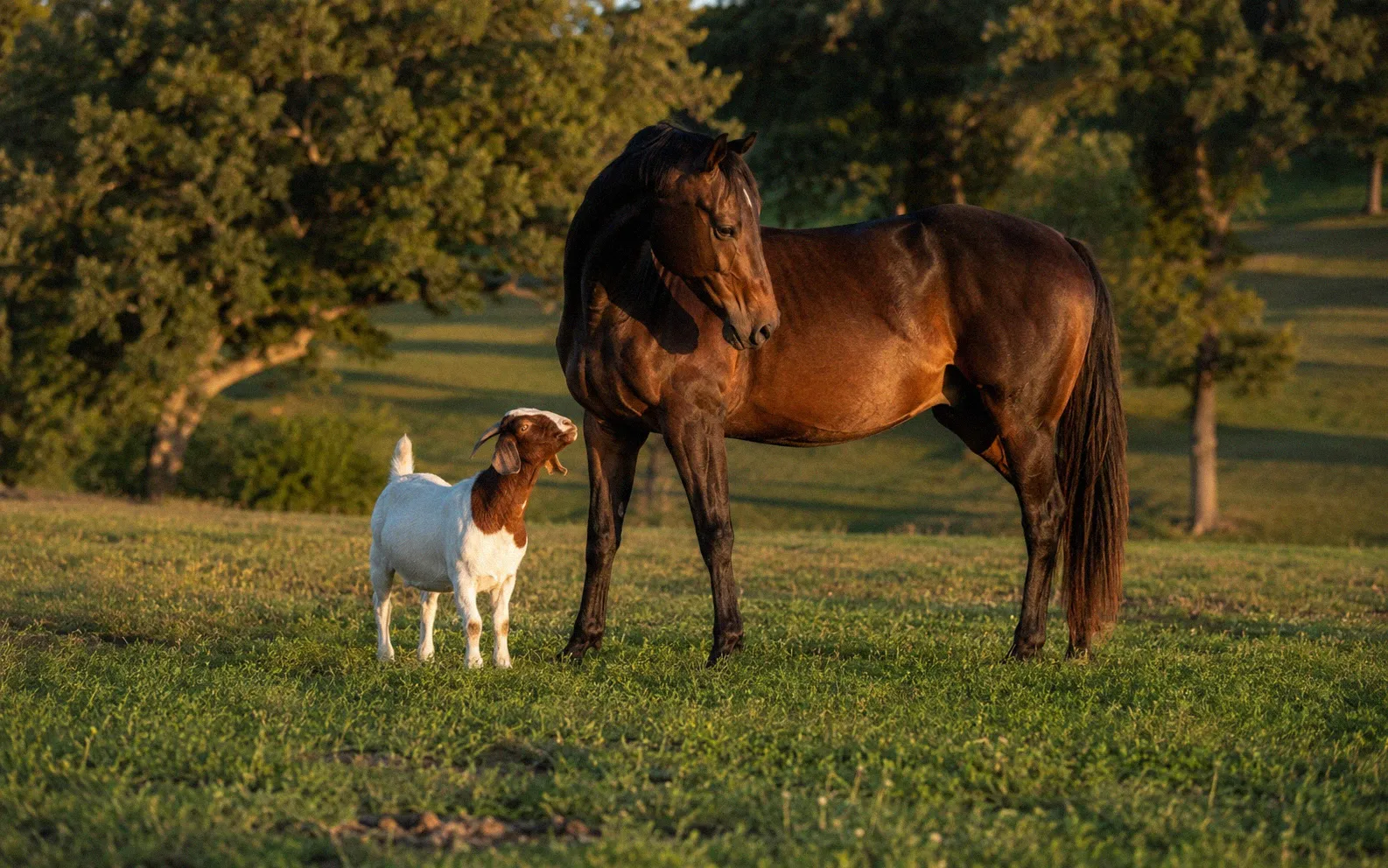
The goat’s personality matters just as much. Bold, outgoing breeds that walk right up to the horse speed things up considerably.
A skittish goat slows everything down. Matching temperaments gives you the best shot at a quick bond.
What Makes Goats Such Good Companions for Horses?
Put simply, goats are cheap to keep, they graze on different plants, and their calm presence reduces stress in nervous horses.
They’re Affordable and Low Maintenance
A second horse runs thousands a year in feed, farrier, dental, and vet costs. A goat?
Hay, fresh water, loose minerals, and the occasional hoof trim.
For horse owners who want a companion animal without the cost of another equine, a goat is the most practical option out there.
They Don’t Compete for the Same Food
Horses graze on grass while goats browse on weeds, shrubs, and broadleaf plants horses ignore. Together, they actually improve pasture quality.
The goat clears overgrowth while the horse keeps grass trimmed.
It’s a natural partnership that benefits both animals and the land they share.
They Have a Natural Calming Effect
Something about a goat’s steady, unbothered presence settles nervous horses. Horses that weave, crib, pace, or refuse to eat often improve dramatically when a goat is introduced.
That calming influence is exactly why racetracks have kept goats in their barns for over a century. It’s not folklore.
It’s a proven barn management strategy.
Best Goat Breeds for Horse Companionship
Not all goat breeds work equally well around horses. The best picks come down to temperament, size, and how well they hold up in a pasture setting.
Pygmy goats and Nigerian Dwarf goats are popular because they’re small, friendly, and easy to manage. Their size can be a concern around large horses, but their bold personalities help them stay alert and out from underfoot.
Nubian goats are larger and naturally social, making them confident around horses without being easily intimidated. Boer goats are calm, sturdy, and heavy enough to absorb a minor bump without serious injury.
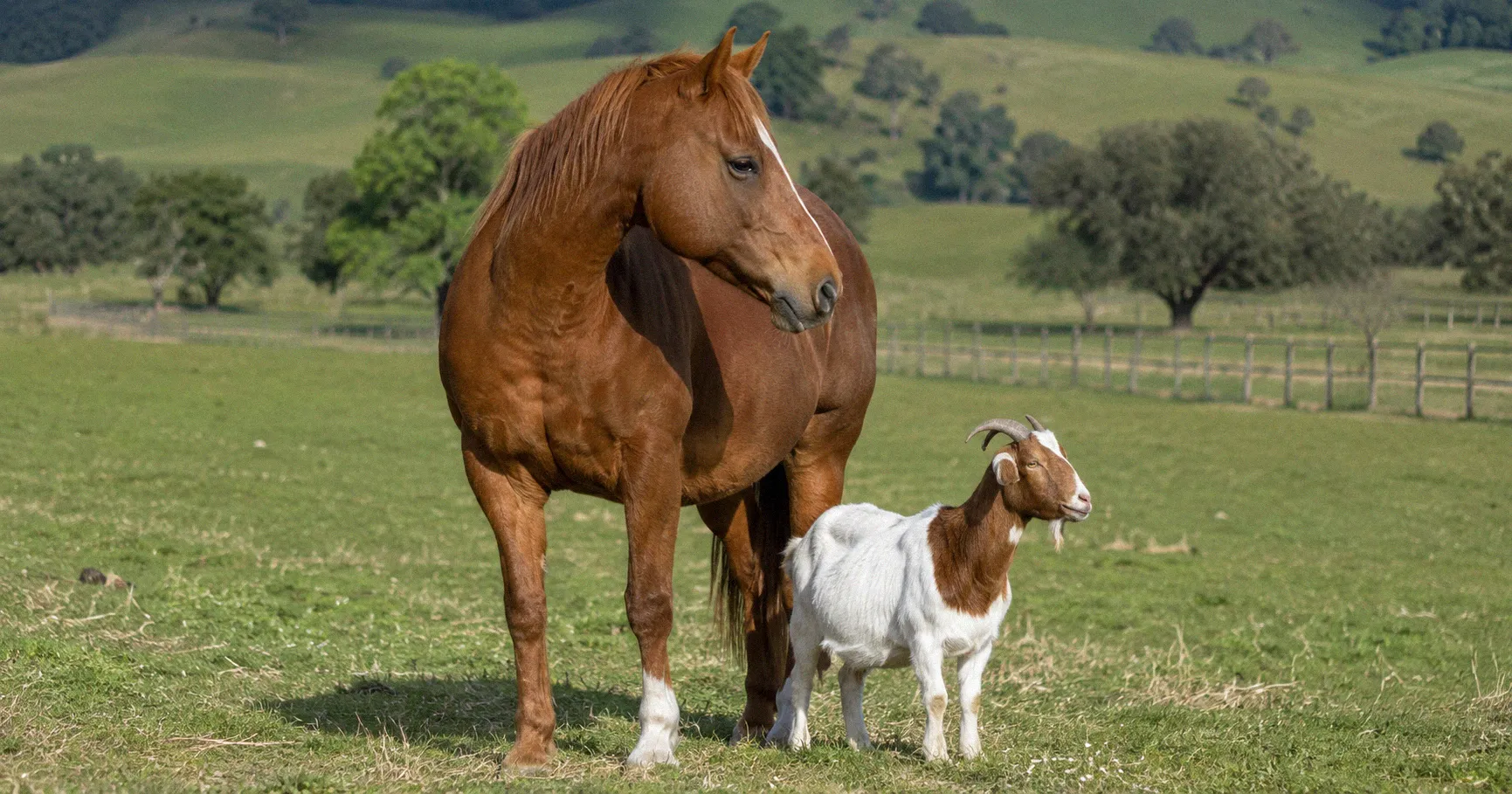
Lamancha and Kiko goats are hardy breeds that thrive on pasture without much extra care. Fainting goats (Myotonic goats) are docile and tend to stay put rather than climbing fences.
Regardless of breed, a wether (castrated male) or a doe is a far better choice than an intact buck. Bucks become aggressive during rut, produce a strong odor, and may harass the horse.
A calm wether is the gold standard for horse companionship: steady behavior, no hormonal drama. The same temperament logic applies when pairing goats with dogs or other livestock.
How to Introduce a Goat to Your Horse Safely
The safest method is a gradual introduction over three to five days, using a fence as a barrier before allowing direct contact.
Use a Physical Barrier First
Start with the goat on the other side of a fence where both animals can see, hear, and smell each other without direct contact. Let the horse get curious on its own terms, with no risk of stepping on or kicking the goat.
Keep this barrier phase going for three to five days before you try putting them together.
Supervise the First Few Days
When you put them together in the same space, stay close and watch carefully. Look for pinned ears, lunging, teeth baring, or kicking from the horse.
Most horses respond with curiosity rather than hostility, but a single kick can break bones or kill a goat. Remove the goat immediately if the horse shows aggression and restart the barrier phase.
Provide a Goat-Only Escape Area
Set up a creep area or small shelter that the goat can access but the horse cannot. A narrow opening or low overhang works well for this.
This gives the goat a safe retreat whenever the horse gets too pushy. Keep in mind that goats can jump surprisingly high, so the escape area needs solid walls rather than something the goat will vault over.
Potential Problems With Keeping Horses and Goats Together
The biggest risks are accidental injury from size differences, toxic horse feed, and goats escaping through standard fencing.
Size Difference Means Injury Risk
A horse can weigh anywhere from 900 to 2,000 pounds. A goat tops out around 200.
Even a casual kick or a startled sidestep can break ribs, fracture legs, or cause fatal internal injuries.
That size gap means you need to supervise closely for the first several weeks, and a goat-only escape area isn’t optional. Watch the water trough too, since small goats can drown in a tank sized for horses.
Horse Feed Can Kill Goats
Many commercial horse feeds contain monensin (Rumensin), an ionophore additive that is lethal to goats even in small doses. Ingestion causes rapid heart failure and death.
Store all horse feed, supplements, and medicated blocks in a locked area the goat cannot reach. Feed each animal separately, every time.
Goats Are Escape Artists
Standard horse fencing won’t hold a goat. They squeeze through board fence gaps, slide under electric tape, and climb anything with a foothold.
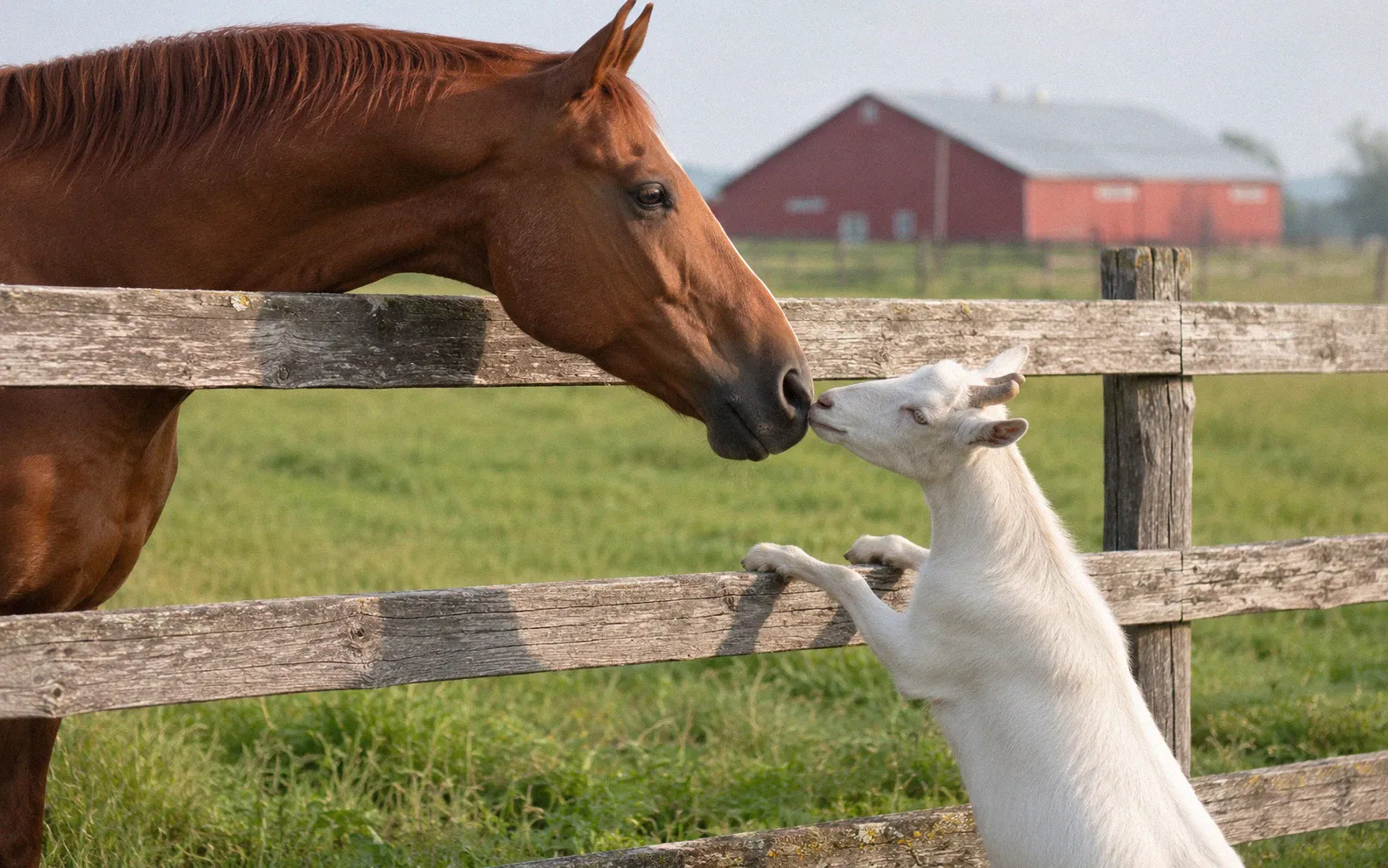
You’ll need woven wire or goat-specific mesh in addition to your existing horse fencing. Goats that resist taming efforts or refuse to settle down often cause more headaches than they solve as horse companions.
What Happens When a Bonded Goat Is Removed?
Separation anxiety in horses is real, and it gets worse when a bonded companion is removed suddenly. A horse that loses its goat may stop eating, pace for hours, call out repeatedly, or become hard to handle.
The distress can last days to several weeks, depending on the bond’s strength. Some horses settle once a new companion is brought in, but others take much longer.
If you need to remove the goat for veterinary treatment or rehoming, do it in stages. Move the goat to an adjacent pen first so the horse can still see and hear it.
After a few days of that, move the goat fully out of sight. Doing it gradually takes the edge off the emotional shock and gives the horse time to adjust.
Can a Goat Replace Another Horse as a Companion?
A goat can cut down on loneliness and give a horse real daily companionship, but it won’t fully replace another equine. Horses rely on species-specific body language, mutual grooming, and herd hierarchy that a goat just can’t replicate.
That said, a goat is often enough. Plenty of solo horses do great with a goat companion, especially when the only other option is standing alone in a field with zero social contact.
A horse with a goat shadow is always better off than a horse with nothing.
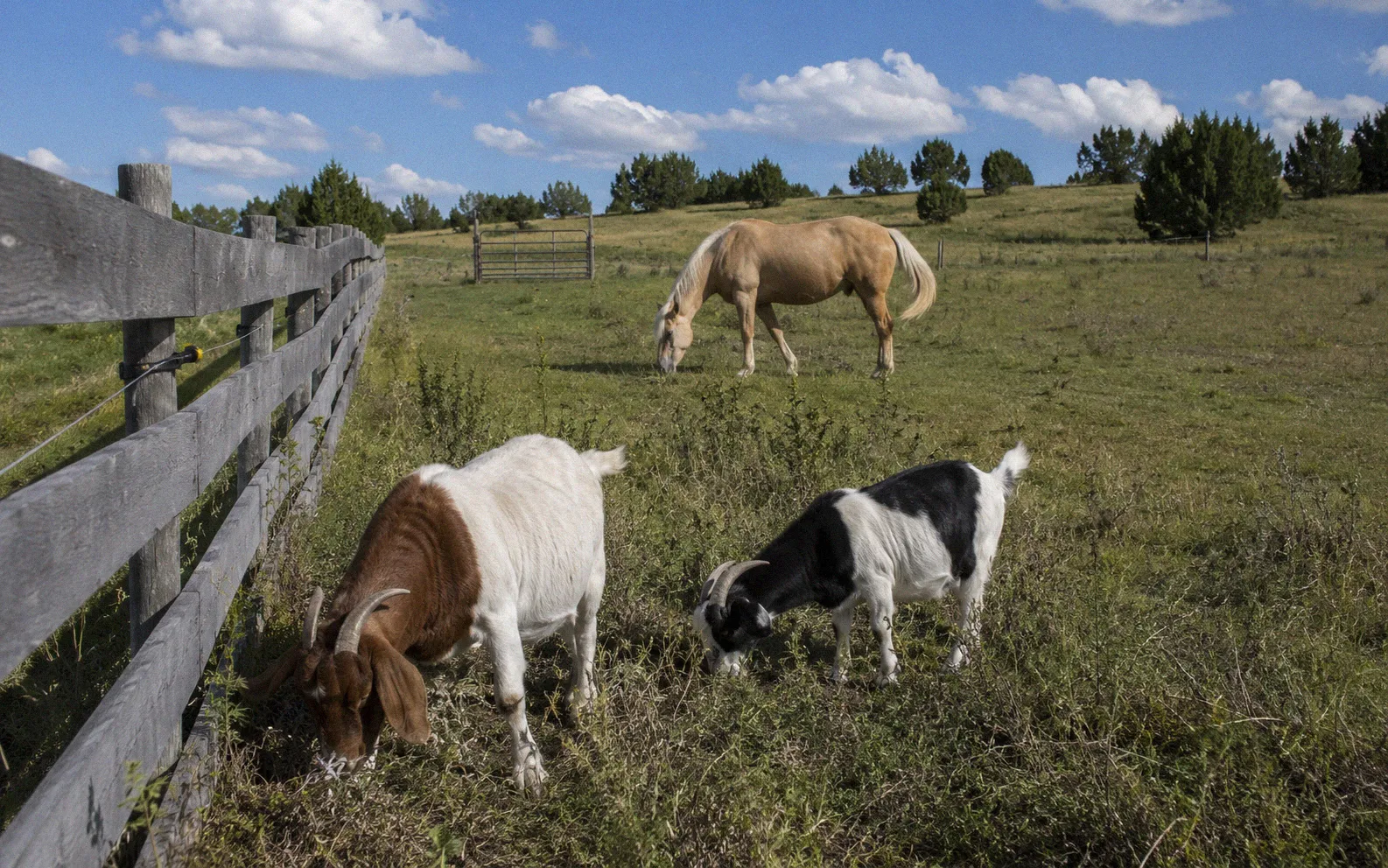
If a horse is showing severe isolation stress (self-harm, chronic cribbing, refusing to eat), a goat is a strong first step. Should the problems continue even with a goat around, a second equine may be the only real answer.
It also helps to know how to manage an aggressive or stressed goat so you can catch tension in the pairing early.
Frequently Asked Questions
Yes, horses frequently get attached to goats. Both are herd animals wired for social bonding, and horses often develop strong emotional connections with goat companions that share their stall or pasture. Signs include following the goat, vocalizing when separated, and resting together.
Goats have a well-documented calming effect on nervous horses. Racetrack trainers have used goats as stall companions for anxious Thoroughbreds since the early 1900s. The goat's steady, unbothered presence reduces pacing, weaving, cribbing, and other stress-related behaviors.
Wethers (castrated males) of calm, medium-sized breeds like Nubians, Boer goats, or Lamanchas work best. Pygmy goats and Nigerian Dwarf goats are also popular but require extra precautions due to their small size around large horses.
Horned goats can accidentally scratch or puncture a horse's legs, belly, or face. Most horse owners choose polled (naturally hornless) or disbudded goats to eliminate this risk. If you keep a horned goat with horses, monitor them closely for any injuries.
One goat is usually enough for a single horse. Two can work well too since they keep each other company when the horse needs space, and it reduces stress if one goat has to be removed temporarily.
Yes, but horses typically form the strongest attachment to one goat. If you keep multiple goats, the horse will often single one out as its primary companion while tolerating the others.
Pygmy goats can live with horses, but at just 35 to 50 pounds, they're far more vulnerable to accidental kicks, steps, or getting pinned against a wall. Supervised introductions and a permanent goat-only escape area are absolutely essential with a pygmy goat and a full-sized horse.