| # | Product | Our Rating | ||
|---|---|---|---|---|
| 1 |  | Best OverallWeaver Leather Livestock Goat Collar | ★★★★★ | Check Price |
| 2 |  | Manna Pro Goat Treats | ★★★★☆ | Check Price |
| 3 |  | HoAoOo Pet Training Clicker with Wrist Strap | ★★★★☆ | Check Price |
Goats can absolutely be tamed, and most domestic breeds warm up to people once they decide you’re safe. Trust is the whole game here, and that’s the one thing you can’t rush or force.
Can goats be tamed?
Yes, goats can be tamed. Domestic goats have been living alongside humans for roughly 10,000 years, so the tendency to bond with people is already there in their DNA.
There’s a big range in how tame individual goats are. A bottle-fed kid raised in your kitchen will follow you around like a dog.
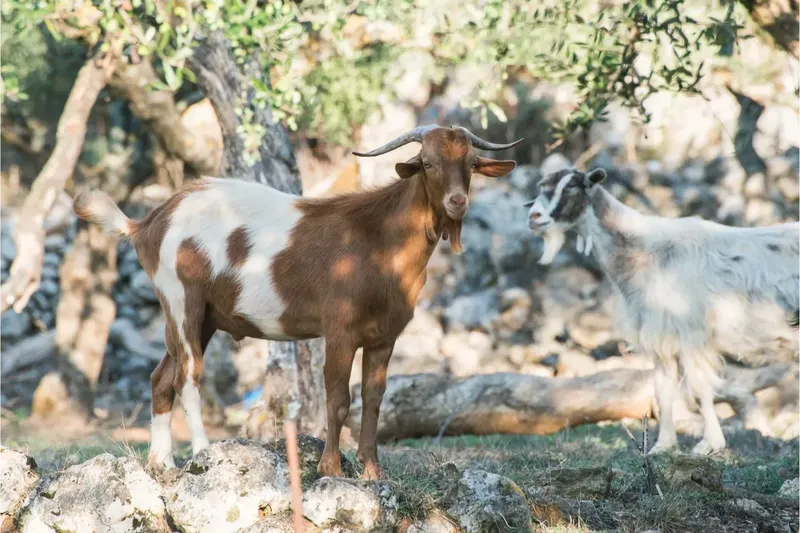
A feral goat off a mountainside might take months to let you within arm’s reach. Certain owners try house training baby goats, though it’s rarely successful due to their biology.
The good news is that food is the universal motivator for goats. Given enough time and treats, almost any goat will come around.
Wild mountain goats are a different story, since the ones that lose their fear of people can turn dangerous.
How to tame a goat
The short answer: move slowly, sit still, and let food and daily repetition do the heavy lifting.
Nothing tanks your progress with a skittish goat faster than chasing it, grabbing it, or backing it into a corner. Goats are prey animals, so anything that reads like a predator on the hunt will cost you weeks of trust.
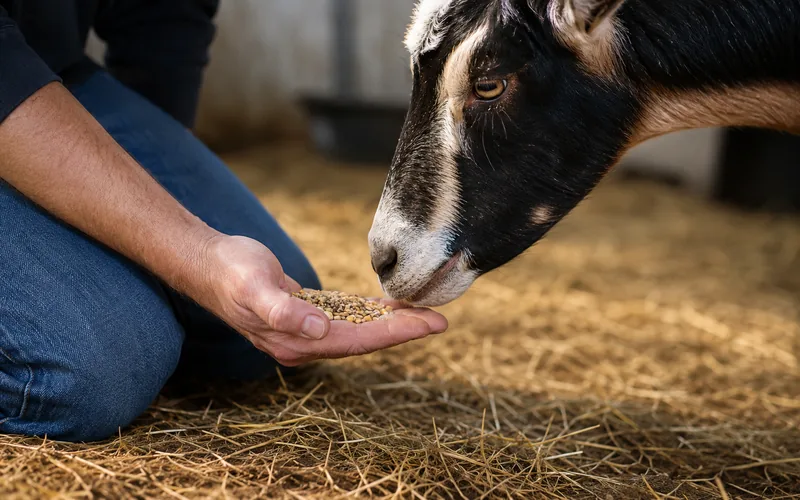
Instead, just plant yourself in their pen for 15 to 20 minutes a day. Bring a bucket of grain or some animal crackers and set them down near you.
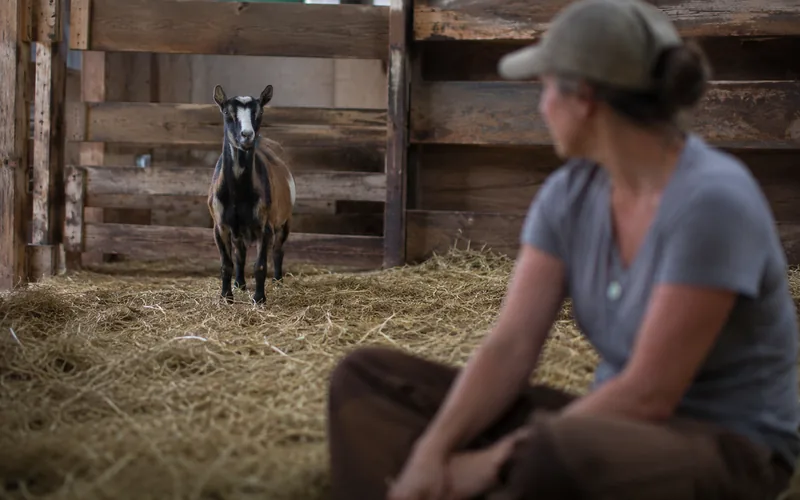
Let the goat come to you on its own terms, even if it takes days to get close enough to eat from your hand.
Once a goat takes food from you, start gently touching its chin and chest while it eats. Avoid reaching over the top of its head at first since that’s a dominant gesture that makes nervous goats flinch.
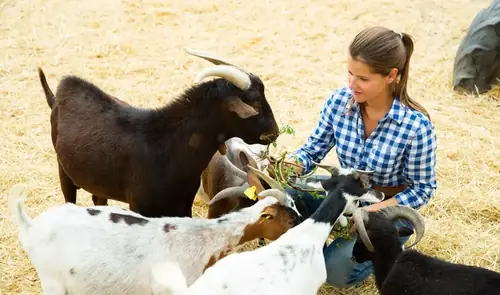
A well-tamed goat may even become friends with your dog, creating a bond between the two species.
Kids vs. Adult goats
Put simply, the younger the goat, the faster it tames.
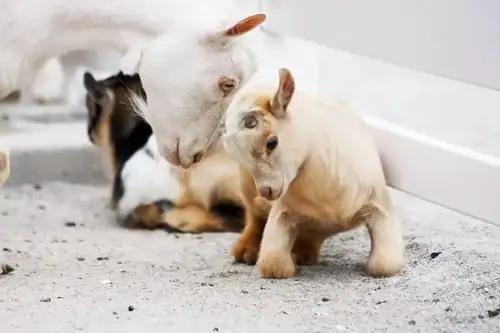
Young kids tame faster than adults, and honestly it’s not even close. Handle a kid from birth and it’ll bond with you inside the first week or two.
Bottle-fed babies in particular become the friendliest goats on the farm, linking humans with food and comfort from day one.
Adult goats that have had limited human contact take more patience. Plan on a few weeks of daily visits before a standoffish adult eats from your hand.
Rescue goats or goats that have been mistreated can take six months or longer.
If you’re buying goats and want tame animals, ask the breeder whether the goats were handled regularly as kids. Research shows that long-term socialization with humans shapes how goats respond to people later in life.
Tame goats are also far easier to handle for hoof trimming and vet checks.
Signs your goat is warming up to you
Here’s what matters: a goat that approaches you instead of fleeing is starting to trust you.
You’ll know things are clicking when your goat stops bolting to the far corner the second you walk up. One that holds its ground and just watches you is already halfway tamed.
After that comes the goat strolling over at feeding time without a second thought. Keep an eye on the ears too, since relaxed, forward-facing ears mean the goat feels comfortable.
Ears pinned flat against the head mean fear or irritation.
A truly tame goat will bleat when it sees you coming, nuzzle your hands looking for treats, and may even give you a gentle headbutt. That headbutt isn’t aggression.
It’s how goats show affection and bond within their herd, signaling the goat considers you part of its group. This affectionate behavior proves that goats can love humans in their own way.
Common mistakes when taming goats
In simple terms, most taming setbacks trace back to rushing the goat or skipping days.
The biggest blunder? Trying to tame one goat all by itself. Goats are herd animals by nature, and a lone goat is a stressed goat.
Stressed goats don’t bond well with anyone.
Inconsistency is the other big one. Visit the pen daily for a week, then disappear for two, and most of your hard-won progress melts away.
Short, daily sessions beat long occasional ones every time.
Avoid using a goat’s horns as handles. Grabbing horns is uncomfortable and feels threatening.
If you need to restrain a goat, use a collar and lead, and always pair restraint with a food reward so it never links your hands with bad experiences. Building trust is also how you successfully domesticate a goat from a wilder background.
Final Thoughts
So what does taming a goat really take? Patience, food, and showing up every single day. Let them set the pace, and try not to take it personally when a nervous goat needs more time.
Once a goat trusts you, that bond is strong and lasting. A tame goat makes every part of farm life easier, from hoof trimming to vet visits to just enjoying time with your herd.
Frequently Asked Questions
Yes. Goats have lived alongside humans for roughly 10,000 years, so the instinct to bond is already wired into them. With steady daily handling and food rewards, even a wary goat will usually grow comfortable around people over time.
Almost all domestic goats can be tamed given enough time and treats. Bottle-fed kids bond fastest, while feral goats pulled off mountainsides may take months. Food is the universal motivator.
All domestic goats are domesticated as a species, meaning they've been bred alongside humans for 10,000 years. 'Tame' refers to an individual goat's comfort with human handling, which varies based on how much it's been socialized.
Sit quietly in their pen for 15 to 20 minutes a day with grain or treats nearby. Let the goat come to you on its own terms. Once it takes food from your hand, start gently touching its chin and chest while it eats.