| # | Product | Our Rating | ||
|---|---|---|---|---|
| 1 |  | Best OverallWeaver Leather Livestock Goat Collar | ★★★★★ | Check Price |
| 2 |  | Manna Pro Goat Treats | ★★★★☆ | Check Price |
| 3 |  | HoAoOo Pet Training Clicker with Wrist Strap | ★★★★☆ | Check Price |
Goats hauled goods along ancient trade routes thousands of years before horses dominated overland transportation. Farmers throughout Europe, Asia, and North America depended on goat-drawn carts for delivering milk, moving supplies, and ferrying children to the schoolhouse.
That tradition never disappeared. Today, homesteaders, 4-H families, and hobby farmers are rediscovering what earlier generations understood about these compact, surprisingly strong animals.
A well-trained goat can pull a loaded cart across the homestead, charm a crowd at a local parade, and teach children lasting lessons about animal care and responsibility.
This guide covers everything you need to know about goat carting. You’ll learn which breeds pull the most weight, what equipment to buy, how to train safely from day one, and which mistakes send most beginners back to square one.
A brief history of goats pulling carts
Goat carting dates back over 5,000 years and spans nearly every continent where humans kept domesticated livestock.
Goats have pulled carts for over 5,000 years across Europe, Asia, Africa, and the Americas, making them one of the oldest draft animals still in use today.
Goats were among the first animals humans ever domesticated. Archaeological evidence from modern-day Iran and Turkey puts goat domestication at roughly 10,000 years ago.
Within a few thousand years, farmers across the Fertile Crescent realized these animals could do far more than produce milk and meat.
Records from ancient Egypt show goats hitched to small two-wheeled carts for hauling grain and water vessels. Similar depictions appear in Roman mosaics, Greek pottery, and Scandinavian woodcarvings from the Viking era.
In Norse mythology, the god Thor rode a chariot pulled by two goats named Tanngrisnir and Tanngnjostr. That detail reflected how common goat-drawn vehicles were in daily Scandinavian life.
The practice traveled across the Atlantic during European colonization. In 19th-century America, goat carts became a fixture at state fairs, county parades, and traveling photographers’ studios.
Children posed in decorated goat carts the way modern kids sit on Santa’s lap at the mall. Postcards from the 1880s through the 1920s show goat-cart photography as a thriving cottage industry across the Midwest and South.
Goat carting also served practical purposes in early American agriculture. Small farmers who could not afford horses used teams of two or three goats to haul milk cans and garden produce to market.
The practice was especially common in Appalachian communities where rocky terrain made horse-drawn wagons impractical on narrow mountain paths.
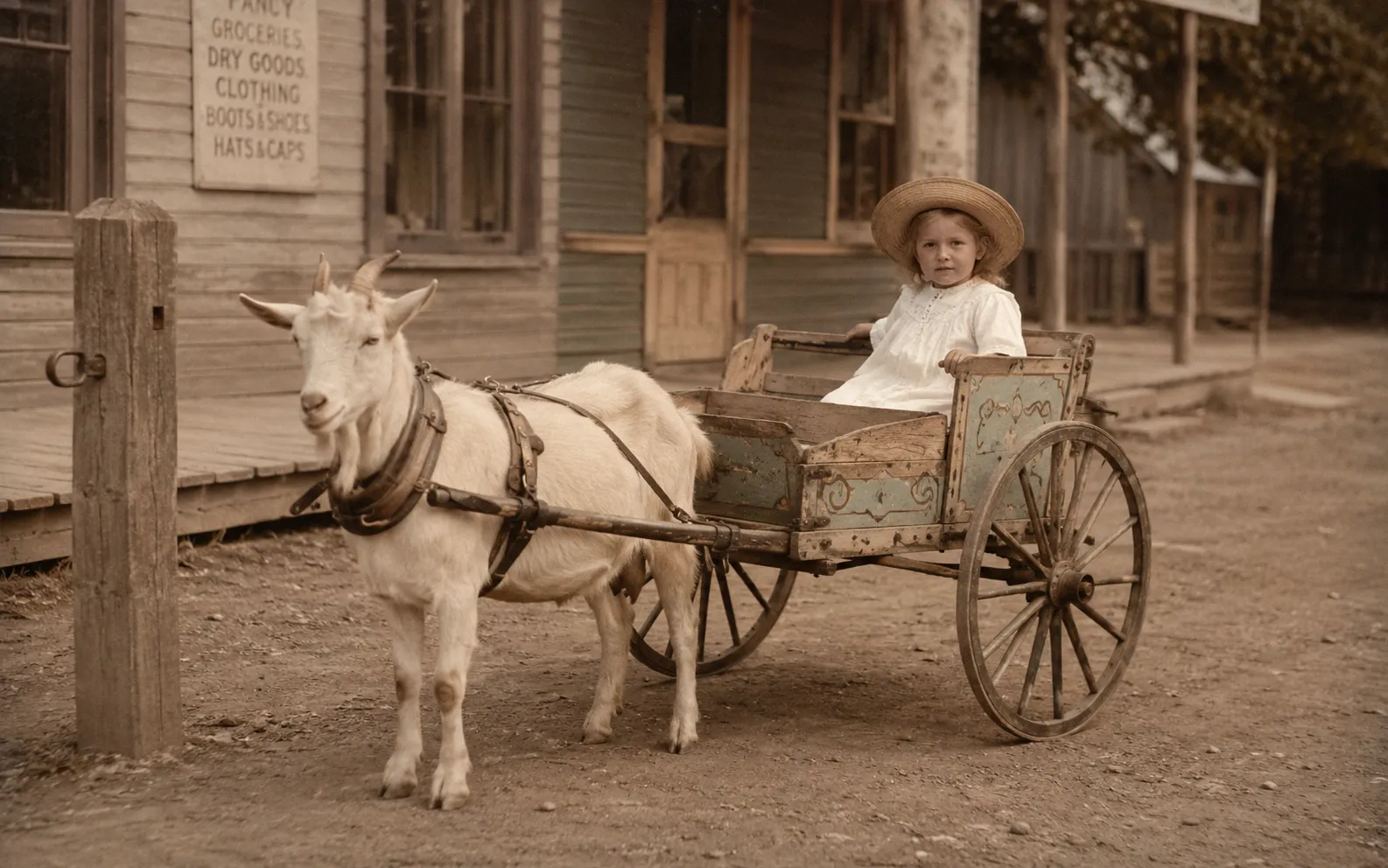
By the early 1900s, goat carting declined as automobiles and tractors replaced animal power. But the tradition persisted in small pockets across rural America.
Amish and Mennonite communities continued using goat-drawn carts for light hauling well into the 20th century. And 4-H clubs kept the practice alive as a youth project in agricultural communities.
The past two decades have brought a genuine revival. The Harness Goat Society and online communities have connected thousands of goat driving enthusiasts worldwide.
Social media groups dedicated to working goats now count memberships in the tens of thousands.
Modern interest goes beyond nostalgia. Goats consume far less feed than horses, require smaller shelters, and produce manure that enriches garden soil directly.
For a small homestead where keeping a horse would be impractical or too pricey, a trained cart goat fills the gap between hand labor and mechanized equipment nicely.
There’s a safety angle, too. A 200-pound Saanen that spooks in harness causes far less damage than a 1,200-pound draft horse that bolts.
That safety margin makes goat carting accessible to families with young children, older homesteaders, and anyone who wants a working animal without the risks of handling full-sized livestock.
How much weight can a goat pull in a cart
A conditioned adult goat pulls between 1.5 and 2 times its own body weight on flat terrain, including the weight of the harness and cart itself.
Here’s the general rule most experienced goat drivers go by. A healthy, conditioned adult goat can pull between 1.5 and 2 times its own body weight, and that figure includes the harness and cart.
So a 200-pound Boer wether in good shape can pull a total load of 300 to 400 pounds. Subtract the harness (typically 3 to 5 pounds) and the cart (anywhere from 25 to 80 pounds depending on construction), and you’re looking at a practical cargo capacity of roughly 215 to 370 pounds.
Does usually land on the lower end, around 1.5 times their body weight. Wethers and bucks in peak condition can hit the full 2x multiplier after several months of gradual conditioning.
The Harness Goat Society uses these guidelines as standard recommendations for recreational and working goat drivers. Individual goats may fall above or below these averages depending on genetics, conditioning history, and overall health.
These numbers assume flat or gently rolling terrain with firm footing. Steep grades, soft ground, sand, deep snow, and mud all reduce effective pulling capacity significantly.
On a steep uphill grade, expect a goat to manage roughly half its flat-ground capacity before showing signs of strain.
Factors that affect pulling capacity
Five key variables determine how much weight a goat can safely pull:
- Breed and body structure
- Conditioning level
- Hoof health and traction
- Terrain and surface type
- Ambient temperature and humidity
Body weight alone doesn’t tell the whole story, though. Several variables determine how much any individual goat can safely pull.
Breed and build matter more than raw size in certain cases. A stocky, deep-chested Boer goat with heavy bone structure outpulls a taller, leaner dairy goat of identical weight almost every time.
Muscle mass distribution across the chest and shoulders makes the biggest difference in raw pulling power.
Conditioning level makes a huge difference. A goat trained to pull increasing loads over several months will outperform an untrained goat of the same size by a wide margin, just like a trained athlete outlifts a couch potato of identical weight.
Hoof condition and traction directly affect output. Goats with overgrown or improperly trimmed hooves lose grip and waste energy compensating for poor foot placement.
Regular hoof trimming every 6 to 8 weeks keeps a working goat performing at its best. Cracked or unevenly worn hooves create pain that makes a goat reluctant to lean into the harness.
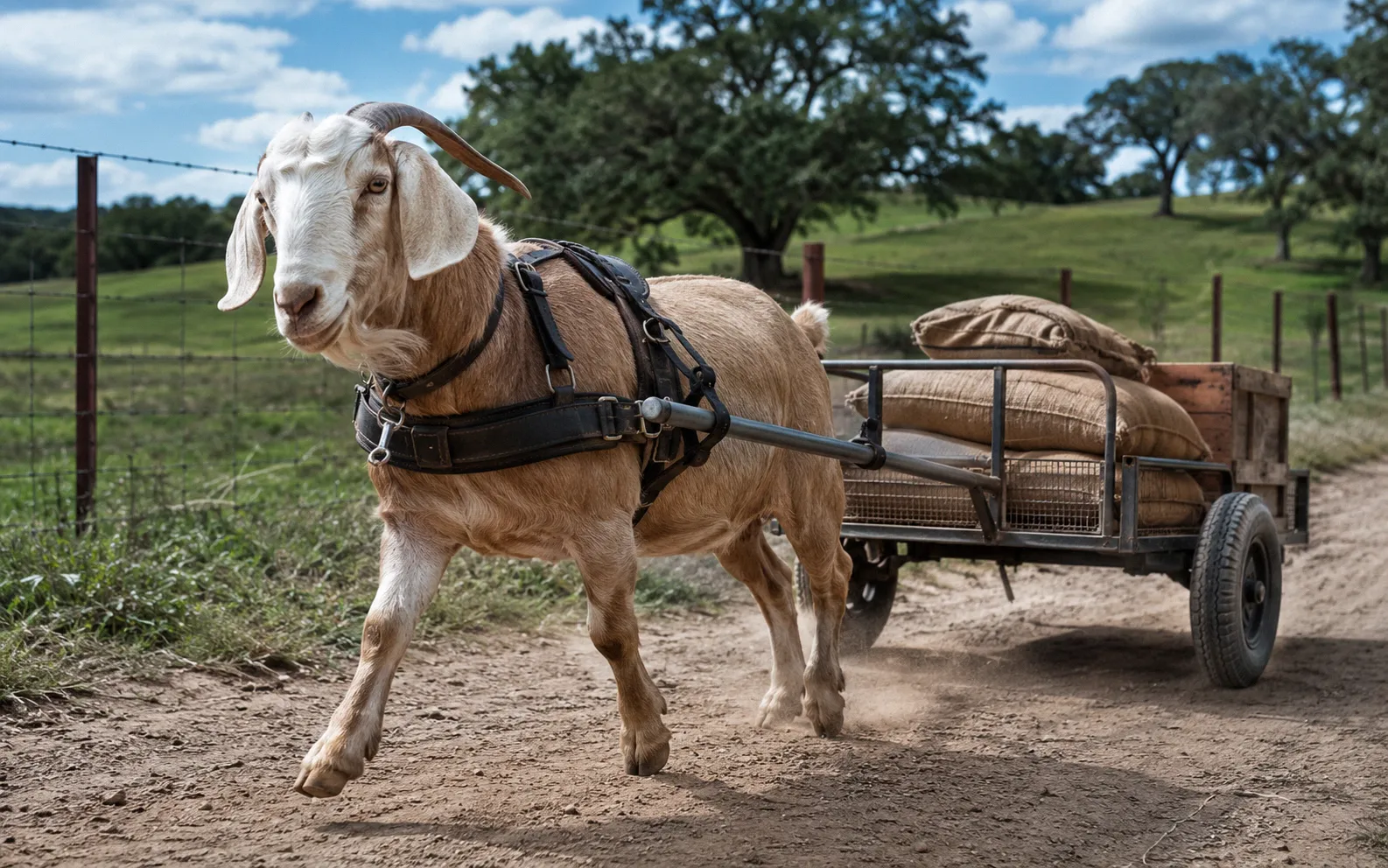
Terrain and surface type change things entirely. A goat can approach its maximum capacity on smooth, hard-packed dirt or short grass.
Gravel, tall grass, loose soil, and any kind of incline all cut that number down fast. Wet conditions make surfaces slippery and increase rolling resistance on pneumatic cart tires.
Temperature affects endurance more than peak strength. Goats overheat faster than horses because they lack the same evaporative cooling capacity through their skin.
On hot days above 85 degrees Fahrenheit, reduce loads by 25 to 30 percent and keep work sessions under 15 minutes to prevent heat stress.
Goats are more physically capable than most people expect. Anyone who has watched how high goats can jump already has a sense of the muscle and power packed into a compact frame.
That same physical structure distributes pulling force powerfully across the chest and shoulders through the harness, far more effectively than it handles weight pressing down directly on the spine.
Weight limits by breed
| Breed | Average Adult Weight | Estimated Max Pull (2x) | Practical Cart Load |
|---|---|---|---|
| Boer | 200-300 lbs | 400-600 lbs | 300-500 lbs |
| Saanen | 150-200 lbs | 300-400 lbs | 220-320 lbs |
| Alpine | 135-175 lbs | 270-350 lbs | 190-270 lbs |
| Nubian | 135-175 lbs | 270-350 lbs | 190-270 lbs |
| LaMancha | 130-160 lbs | 260-320 lbs | 180-240 lbs |
| Kiko | 120-175 lbs | 240-350 lbs | 160-270 lbs |
| Toggenburg | 120-150 lbs | 240-300 lbs | 160-220 lbs |
| Oberhasli | 120-150 lbs | 240-300 lbs | 160-220 lbs |
| Nigerian Dwarf | 60-80 lbs | 120-160 lbs | 60-100 lbs |
| Pygmy | 60-85 lbs | 120-170 lbs | 60-110 lbs |
These figures represent maximums for fully conditioned adults in peak health. Start new cart goats at 25 percent of their theoretical maximum and increase gradually over months of consistent training before approaching these upper limits.
Best goat breeds for pulling carts
Put simply, Boers and Saanens handle the heaviest loads, while Alpines and LaManchas offer the best balance of strength and trainability.
The top breeds for cart work are Boers and Saanens for heavy loads, Alpines and LaManchas for all-around versatility, and Nigerian Dwarfs for light duty and youth projects.
Every goat breed can learn to pull with proper training and correct equipment. But some breeds offer clear advantages in strength, temperament, and endurance that make the process smoother.
Breed selection matters most if you plan to haul real loads rather than just walk a goat in a holiday parade. It determines your ceiling for pulling capacity, training speed, and how reliably the goat performs in unfamiliar settings like fairgrounds and parade routes.
Large breeds for heavy hauling
Boer goats top nearly every list for raw pulling power. Originally bred in South Africa for meat production, Boers carry dense muscle through the chest, shoulders, and hindquarters.
Adult Boer wethers regularly reach 250 to 300 pounds and pull loaded carts weighing 400 pounds or more on flat terrain. Their calm, docile temperament makes them forgiving training partners for first-time goat drivers.
Saanen goats combine size with intelligence in a way few other breeds match. The largest of the standard dairy breeds, Saanens frequently reach 180 to 200 pounds at maturity.
They respond quickly to voice commands and seem to enjoy the structure of training sessions. Their white coats do make them susceptible to sunburn during long outdoor work, so plan shade breaks during summer.
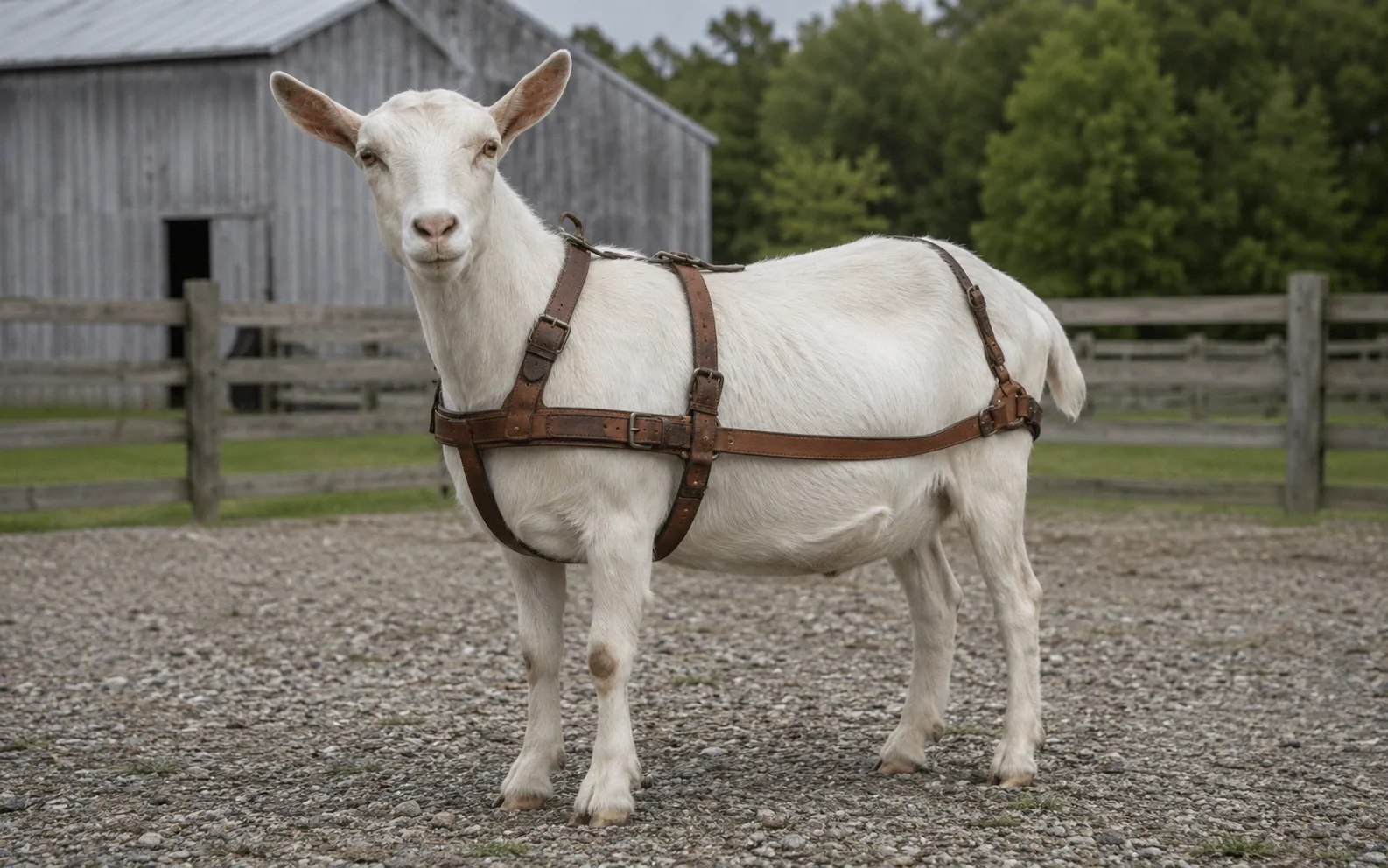
Alpine goats bring superior endurance to the equation. Originally developed in the French Alps for dairy production in mountainous terrain, this breed handles hilly country and varied footing better than most flatland breeds.
Alpines range from 135 to 175 pounds and maintain a steady working pace without the stubbornness some other breeds display when they get tired.
Nubian goats are among the most recognizable dairy breeds with their long floppy ears and distinctive Roman nose profile. They fall in the same weight range as Alpines and pull comparable loads in practice.
Nubians do tend toward more vocal behavior though, which means they may protest loudly during early training sessions before they settle into a comfortable routine.
Medium breeds for versatile work
LaMancha goats are known for their easygoing personalities and willingness to cooperate. At 130 to 160 pounds, they fall in the middle of the pack for pulling power.
What they lack in raw strength compared to Boers, they make up for in cooperative temperament. LaManchas rarely balk at new training challenges or unfamiliar environments.
Kiko goats were developed in New Zealand for hardiness, rapid growth, and parasite resistance. They handle variable terrain and unpredictable weather better than most dairy breeds.
Kikos range from 120 to 175 pounds, and the larger wethers make capable cart goats for moderate loads. Their natural toughness makes them popular in regions where parasites are a persistent problem.
Toggenburg goats originate from Switzerland and typically weigh 120 to 150 pounds. They’re intelligent and trainable but can show an independent streak that requires extra patience during ground-driving exercises.
Experienced handlers appreciate their stamina on longer routes.
Oberhasli goats share the Swiss origin and similar build to Toggenburgs but tend to be a bit more cooperative in harness. Their calm, steady nature under pressure makes them solid choices for handlers who value predictability over raw pulling power.
Small breeds for light duty
Nigerian Dwarf goats weigh just 60 to 80 pounds at maturity, limiting their pulling capacity to around 120 to 160 pounds total. That is still enough for a lightweight parade cart carrying a small child or hauling feed bags across a barnyard.
Their small size and gentle temperament make them ideal starter animals for families with young children who want to learn goat driving basics. Many 4-H programs recommend Nigerian Dwarfs for first-time youth handlers because their manageable size reduces the risk of injury for both child and goat.
Pygmy goats fall in a similar weight range but are stockier with thicker legs and broader chests. That build gives them slightly better pulling power relative to body size.
However, their short legs mean they cover ground slowly and tire sooner on longer routes. Pygmies work best for short-distance hauling rather than extended trail work.
If your homestead already keeps dairy goats, the same animals can serve as cart goats too. A Saanen or Alpine doe in her dry period between lactations can train and work in harness without any negative impact on her next kidding season.
Wethers vs does vs bucks for cart work
In short, wethers are the best choice for cart work. They’re larger, calmer, and free of the hormonal issues that make bucks unsafe in harness.
Wethers are the gold standard for goat carting. Castrated males grow larger than does, carry more muscle, and lack the hormonal swings that make bucks unpredictable.
They also lack the strong odor bucks produce during rut, which matters when you are standing directly behind a goat holding driving lines.
Does make capable cart goats during dry periods between lactations. Avoid working a doe in late pregnancy or peak milk production since pulling competes with the nutritional demands of lactation and fetal development.
Bucks should be avoided for cart work entirely. Hormonal behavior during rut makes them unreliable and potentially dangerous in harness.
A buck that charges or rears while hitched to a loaded cart can injure itself, damage equipment, and hurt anyone nearby.
What age should a goat start pulling
The short answer is 18 to 24 months for loaded cart work, though handling and halter training should begin within the first weeks of life.
Most goats can begin full cart work between 18 and 24 months of age, once growth plates have closed. Handling, halter training, and harness desensitization should start much earlier, as young as birth.
Training a cart goat isn’t something you can rush without serious consequences. Starting too early puts immature joints, growth plates, and developing ligaments at risk of permanent damage.
No amount of veterinary care later on can undo skeletal injuries caused by premature loading on a young goat’s frame.
The good news is that foundational training can begin long before a goat ever touches a harness or sees a cart. The key is matching each training phase precisely to the physical development stage of the individual animal.
Birth to 3 months: handling and socialization. Begin handling kids from day one of life.
Pick them up, touch their legs and feet, rub their chest and belly, and walk them on a short lead alongside their dam. Kids that receive regular human contact during this early window are dramatically easier to harness-train later because they already trust people and accept physical handling without fear or resistance.
3 to 6 months: halter training. Introduce a properly fitted halter and begin daily leading exercises in a fenced area.
Teach the kid to walk beside you, stop on a verbal command, and back up with gentle lead pressure. Keep sessions to 10 to 15 minutes at this age to match their short attention span.
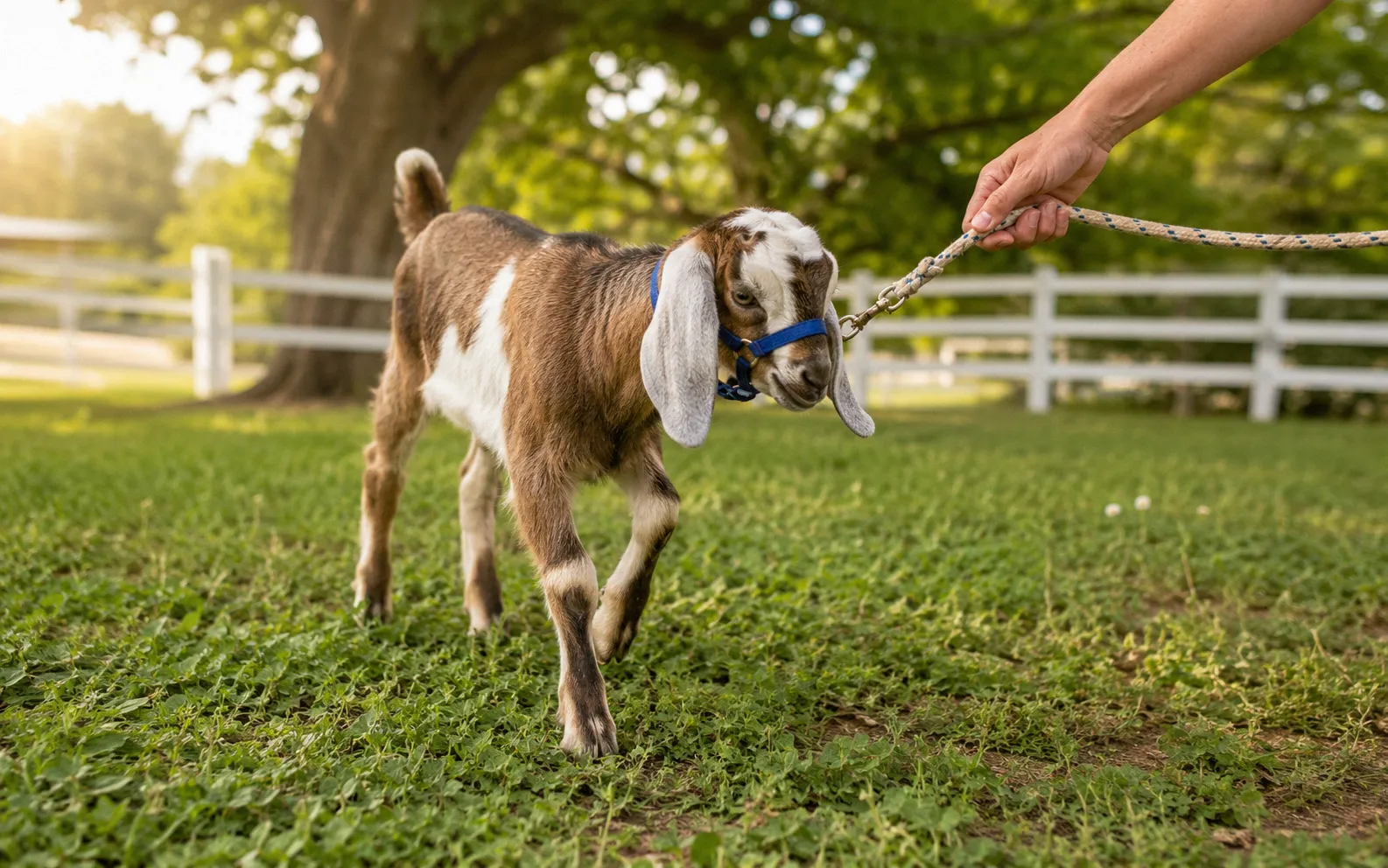
6 to 12 months: harness introduction. Once the goat leads reliably on a halter and responds to basic voice commands, you can begin draping a harness over its back and letting it wear the equipment during feeding time.
Do not attach any pulling apparatus to the harness during this phase. The entire goal is desensitization to the feel, weight, and sound of buckles, straps, and the slight pressure across the chest and barrel.
12 to 18 months: ground driving and light pulling. Most standard breeds reach enough skeletal maturity by 12 months to begin ground driving without a cart and pulling a very light travois or drag object.
Keep loads minimal during this stage. A bundle of sticks or an empty feed sack dragging behind the goat provides enough resistance for early conditioning without stressing developing bones.
This is also the stage where you introduce voice commands for turning, stopping, and backing up from behind the goat rather than beside it.
18 to 24 months: full cart work. Standard and large breeds typically reach structural maturity between 18 and 24 months of age.
This is the stage where you can safely introduce a proper cart and begin adding real weight to training sessions in graduated increments. Miniature breeds like Nigerian Dwarfs and Pygmies may need an extra 3 to 6 months beyond this window before their frames are fully ready for loaded work.
These timelines apply to goats in normal health with adequate nutrition. Goats that dealt with coccidiosis, heavy parasite loads, or poor nutrition as kids may need additional time for skeletal maturity.
Can you train an older goat to pull a cart?
Yes, but expect a longer timeline. Adult goats over 3 years old that lack prior handling experience typically take 8 to 12 months of consistent training rather than the usual 4 to 8.
The main challenge with older goats isn’t physical. It’s behavioral.
An adult goat without early socialization is harder to halter-train and slower to accept the harness. Patience and daily short sessions still produce results, but the handler needs realistic expectations about the pace of progress.
If you have access to a veterinarian, leg radiographs at 18 months can confirm whether growth plates are closed and the goat is ready for loaded work. The American Goat Society also publishes breed-specific maturity guidelines that help owners time training milestones.
Understanding whether goats can be tamed at different ages also helps set realistic training expectations.
Essential equipment for goat cart work
Here is what matters most: a breast-collar harness with a breeching strap, a lightweight two-wheeled cart, and long driving lines for steering from behind.
At minimum, you need a properly fitted goat driving harness with a breeching strap, a lightweight two-wheeled cart, and long driving lines for steering.
Getting the right equipment prevents injuries and makes training progress noticeably faster. Goat-specific gear differs from miniature horse and pony equipment in ways that matter for safety and comfort.
Using the wrong harness or cart is one of the most common reasons new goat drivers struggle with training or hurt their animals before real progress begins.
Choosing the right harness
The harness is the most critical piece of equipment for any cart goat. It spreads the pulling force across the chest and body instead of concentrating it on the throat and neck, where a collar would crush the trachea and potentially kill the animal.
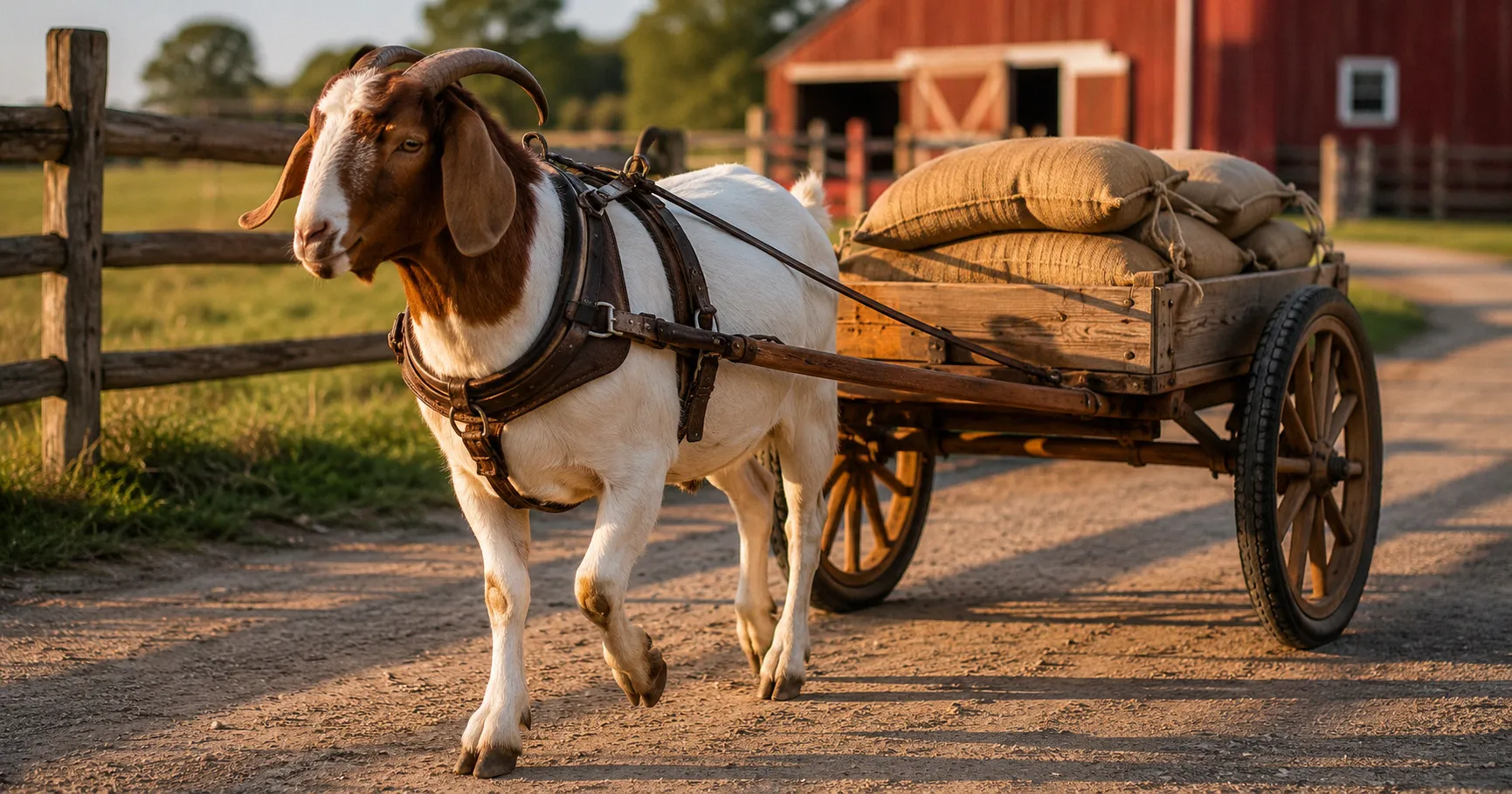
A proper goat cart harness has three key components. The breast strap sits across the chest and bears the primary pulling force.
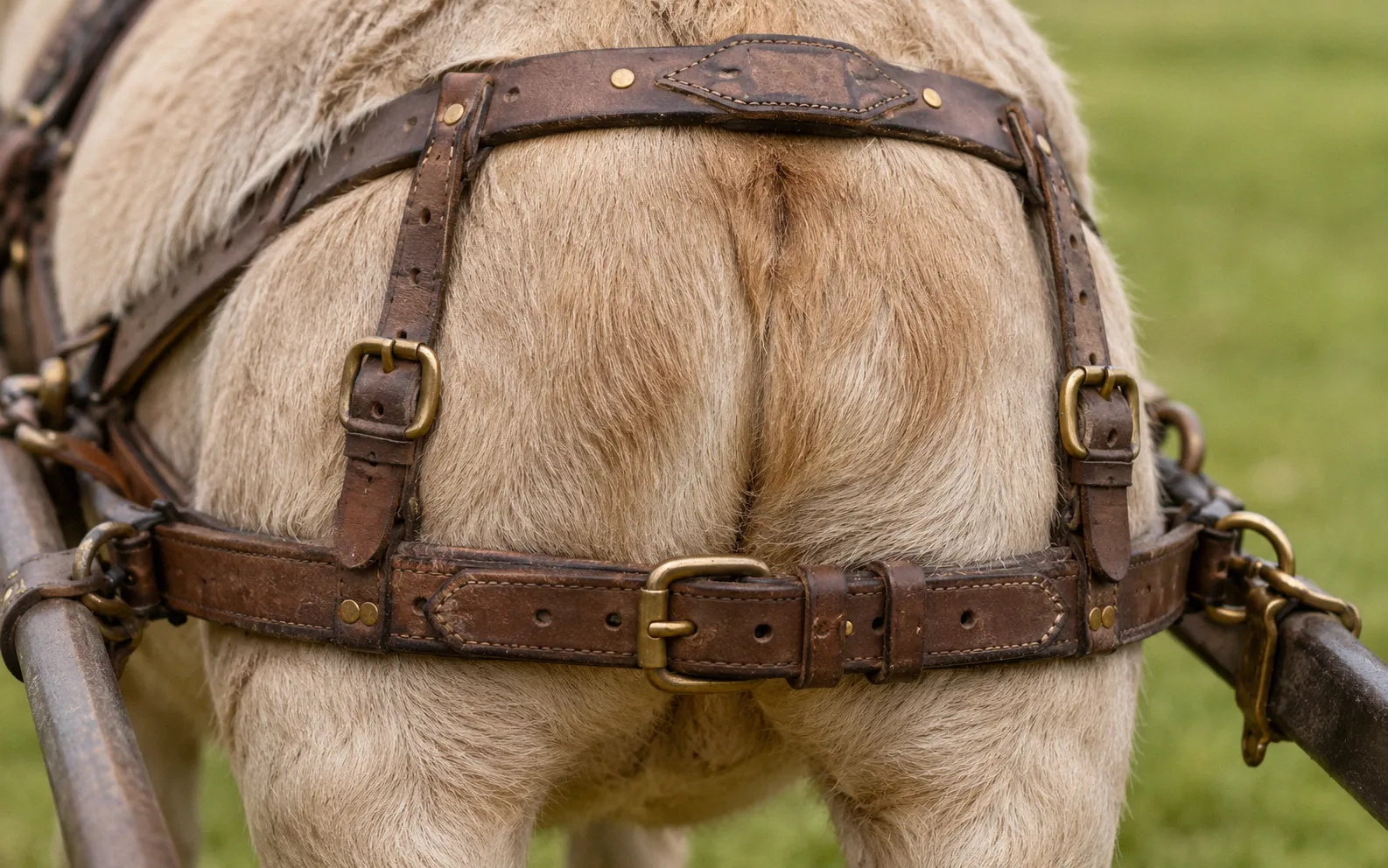
The cinch strap wraps behind the front legs and keeps the harness from shifting. The breeching strap wraps around the hindquarters and acts as a brake on downhill grades.
Never use a harness without a breeching strap. Without it, the cart rolls into the goat’s hind legs on any slope or stop, causing bruising, panic, and potential leg injuries.
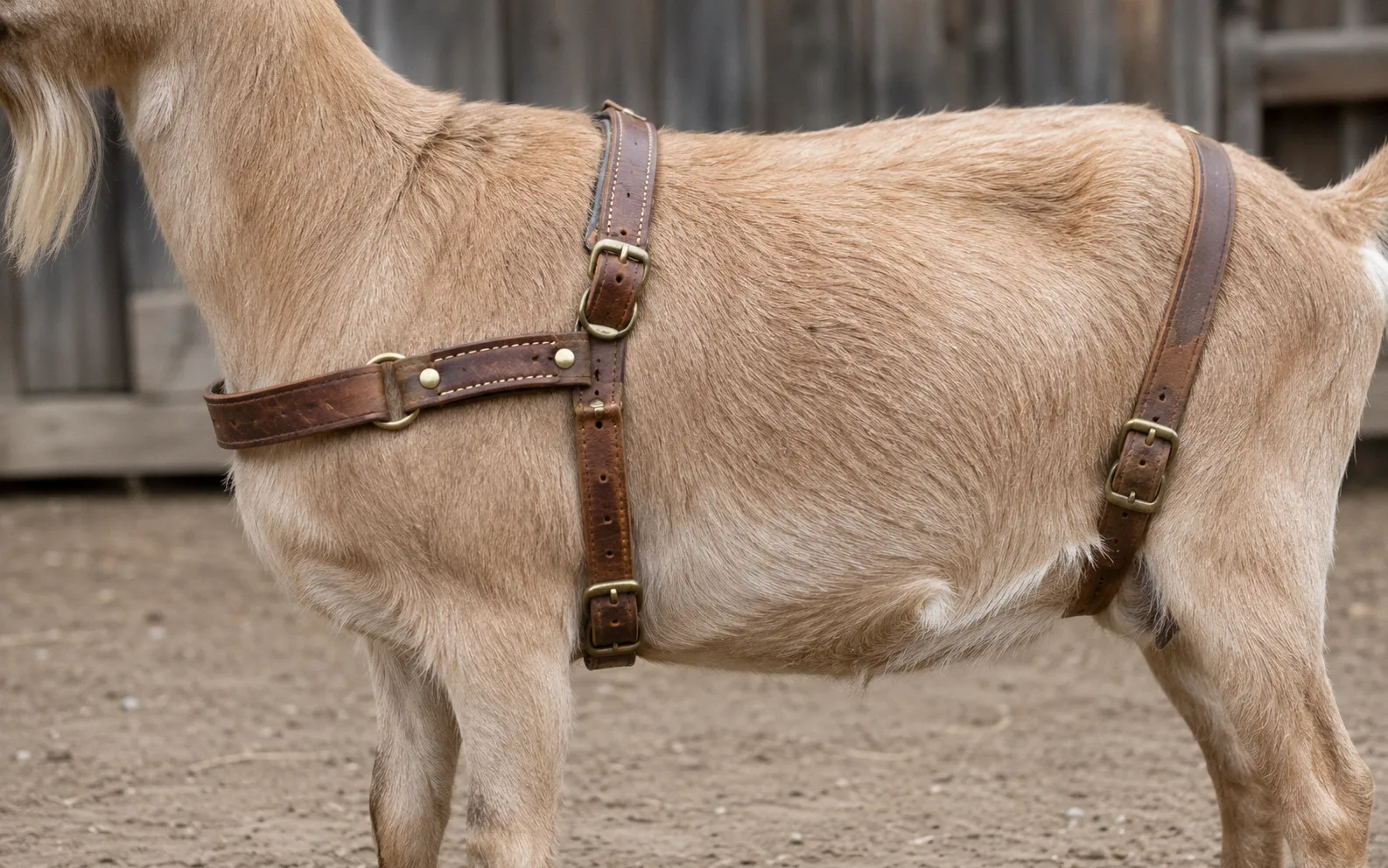
Two main styles dominate the market. Breast-collar harnesses work best for recreational and light-duty use.
D-harnesses distribute force more evenly and handle heavier loads, but cost more and require precise fitting.
Buy from a supplier specializing in goat equipment. Miniature horse harnesses can sometimes be adapted, but the proportions differ enough that poor fit is common.
Ill-fitting harnesses cause rub sores, restrict breathing, and teach the goat to associate cart work with pain.
Types of vehicles: cart, wagon, travois, and sled
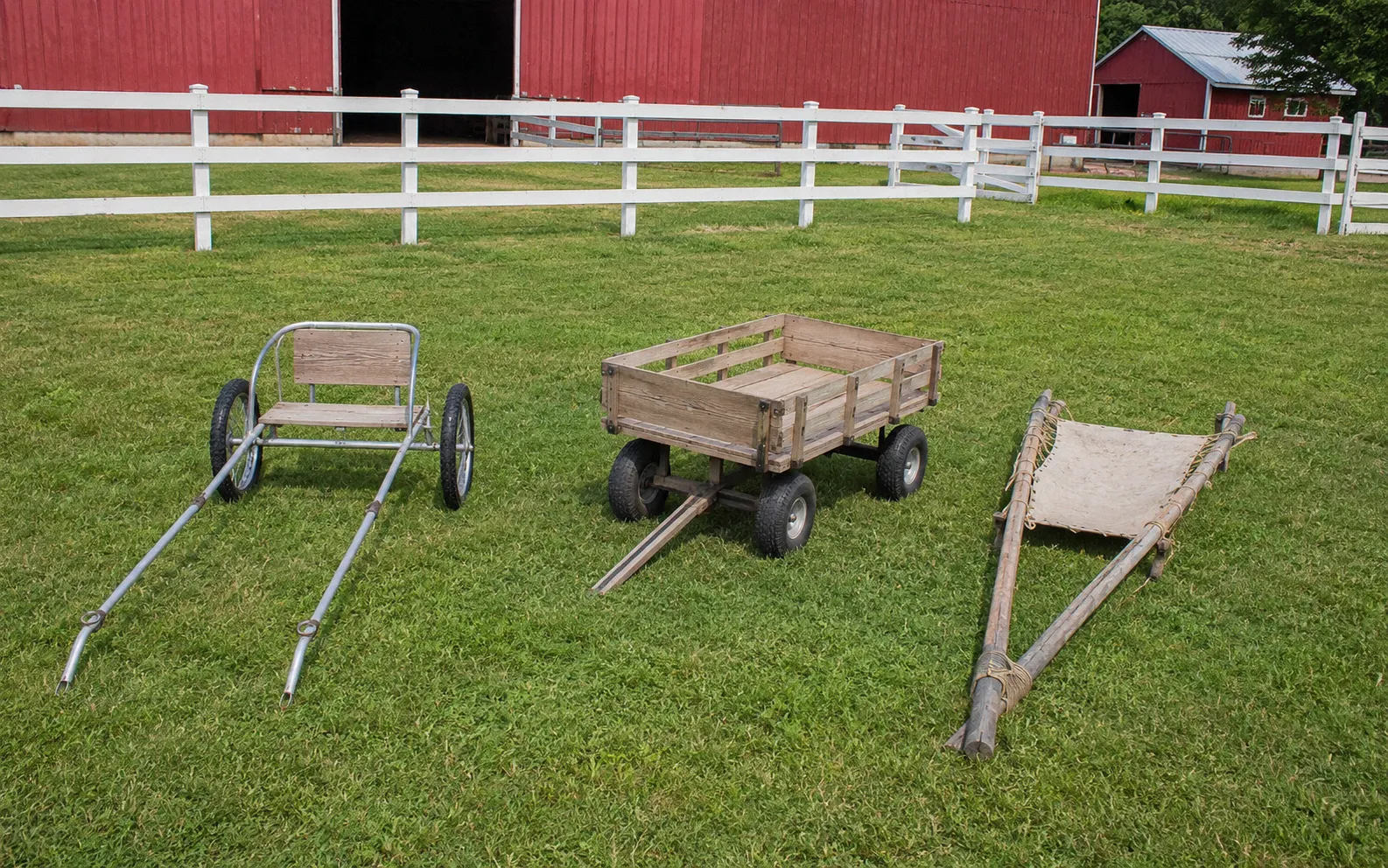
Two-wheeled carts are the most popular choice for goat driving by a wide margin. They balance well on two wheels with the shafts resting on the harness saddle, placing minimal dead weight on the goat’s back between the wheels.
Lightweight carts built from aluminum tubing or thin-wall steel weigh as little as 25 to 30 pounds and can be lifted easily by a single person for storage and transport.
Four-wheeled wagons distribute cargo weight more evenly across a larger platform and hold more volume than carts of similar size. The tradeoff is significantly more rolling weight and a wider turning radius.
Wagons work better for straight-line hauling tasks on homesteads than for maneuvering through tight spaces, around obstacles, or along narrow parade routes.
Travois are the simplest pulling vehicle, originally used by Indigenous peoples of North America, and serve as an excellent bridge between harness work and cart driving. A travois consists of two poles forming a V shape that drag behind the goat, with a platform or netting between them.
You can build a functional training travois from PVC pipe and hay bale twine for under five dollars. The dragging sensation teaches the goat what pulling feels like without the complexity of shafts and wheels.
Sleds work on snow-covered ground during winter. A basic toboggan-style sled lets a goat move firewood and water across a snow-covered barnyard where wheeled vehicles are useless.
Goats also pull scooters and sulky-style rigs in competitive driving events.
Bits, bridles, and halters
Most goat drivers work entirely with a halter and long driving lines. A well-fitted halter provides enough control for steering and stopping without putting hardware in the goat’s mouth.
Bits are optional and controversial in the goat-driving community. Advocates say a bit provides more precise steering in competitive settings.
Critics note that goats have sensitive mouths and bits risk oral injuries. If you try a bit after gaining experience, a French link snaffle in a 3 to 3.5-inch size fits most standard breeds.
For beginners, start with a halter and driving lines. You can always add a bit later if halter control alone does not meet your needs.
How much does goat carting equipment cost?
A basic starter setup runs between $150 and $400 depending on quality. A nylon breast-collar harness costs $50 to $100, a lightweight aluminum two-wheeled cart runs $100 to $250, and driving lines add another $20 to $40.
Premium leather harnesses and custom-built carts can push the total past $800, but most hobby and homestead drivers get started comfortably in the lower range.
How to train a goat to pull a cart step by step
In simple terms, you progress through five stages over 4 to 8 months: halter training, harness desensitization, ground driving, vehicle introduction, and graduated weight loading.
The process takes 4 to 8 months and follows five stages:
- Halter and lead training (2–4 weeks)
- Harness introduction and desensitization (2–4 weeks)
- Ground driving with long lines (3–6 weeks)
- Vehicle familiarization and first hitching (2–3 weeks)
- Graduated weight loading (3–6 months)
Patience matters more than anything else in goat cart training. Rush a stage or skip steps, and you’ll end up with a goat that balks, bolts, or flat-out refuses to work.
A steady, progressive approach produces a working partner that genuinely enjoys time in the cart.
Plan to spend 15 to 30 minutes per training session, twice per day. Sessions longer than 30 minutes frustrate most goats and produce diminishing returns.
Sessions shorter than 15 minutes do not provide enough repetition for lasting habit formation.
Keep treats on hand for every session. Small pieces of animal crackers, raisins, or grain work well.
Reward correct behavior immediately and consistently. Goats are food-motivated learners, and positive reinforcement speeds up progress faster than any other technique.
Stage 1: halter and lead training
If your goat did not receive early halter training as a kid, this stage takes the longest. Start by letting the goat wear a fitted halter in its stall for several days without a lead attached.
Once the goat ignores the halter, clip a lead rope and walk alongside it, matching its natural pace.
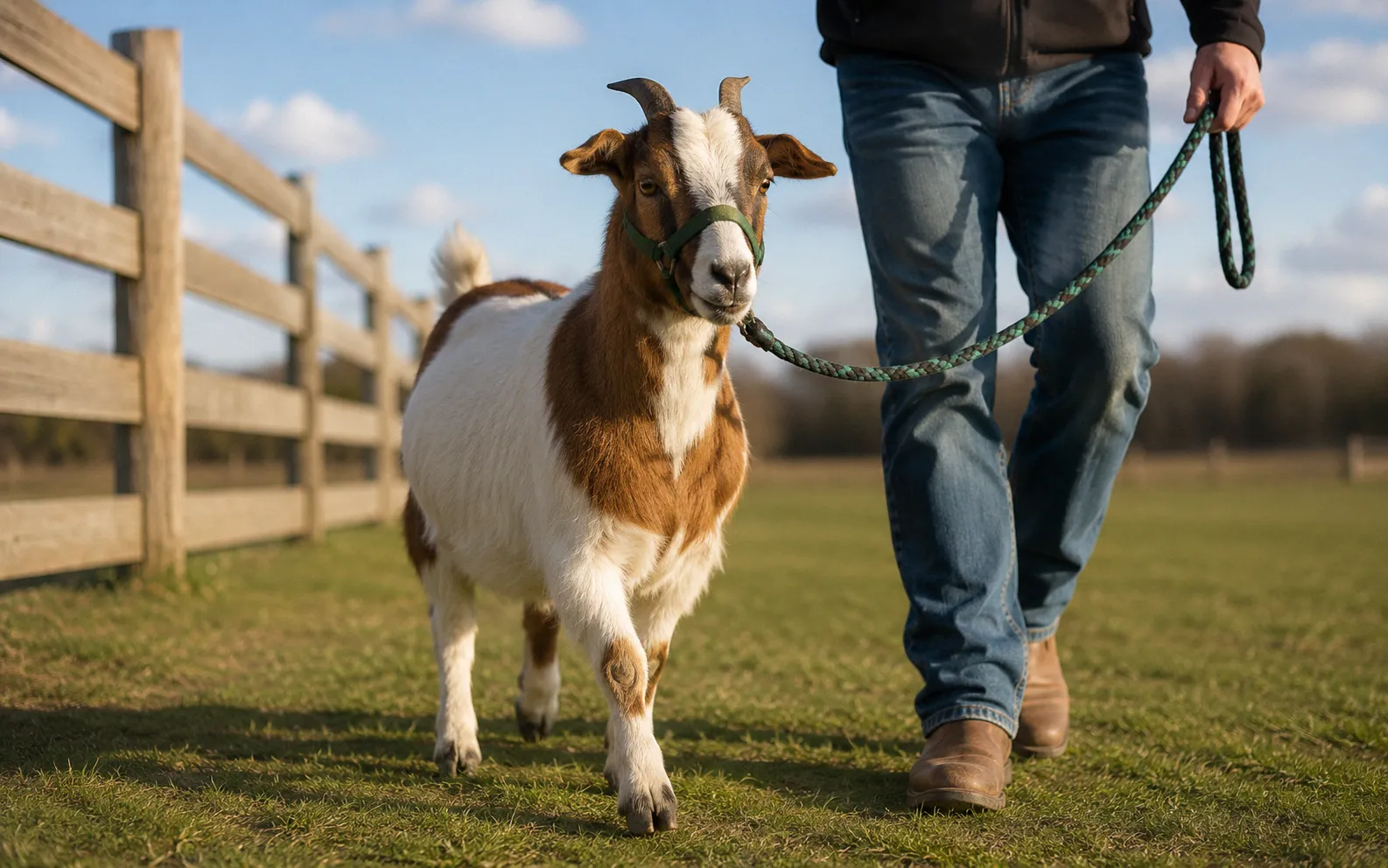
Teach three basic responses: walk forward on a verbal cue, stop when you say “whoa,” and back up with gentle lead pressure and the command “back.” Do not advance past this stage until the goat responds to all three commands reliably at least 90 percent of the time.
Most goats need two to four weeks of twice-daily practice.
Stage 2: harness introduction
Lay the unfastened harness across the goat’s back during feeding time for two to three days without buckling any straps. Once the goat ignores it completely, buckle the cinch strap loosely and tighten gradually over a week.
Then add the breast strap and finally the breeching, giving at least two days between each new component.
Walk the fully harnessed goat on a lead through its normal environment. If the goat pins its ears, hunches its back, or tries to scrape the harness off against a fence, either the fit is wrong or you moved too fast.
Go back one step and give more time.
Stage 3: ground driving
Ground driving, also called long-lining, is the foundation of all cart work. You walk behind the goat and steer using long driving lines attached to the halter, exactly as you will from behind a cart.
Start in a fenced area free from distractions. Thread the driving lines through guide rings on the harness at hip height and hold one line in each hand.
Stand 8 to 10 feet behind the goat and cue forward motion with your voice command.
Use gentle steady pressure on the left line to turn left and the right line to turn right. Keep your hands low and movements smooth.
Jerky corrections teach goats to brace against the lines rather than respond to pressure.
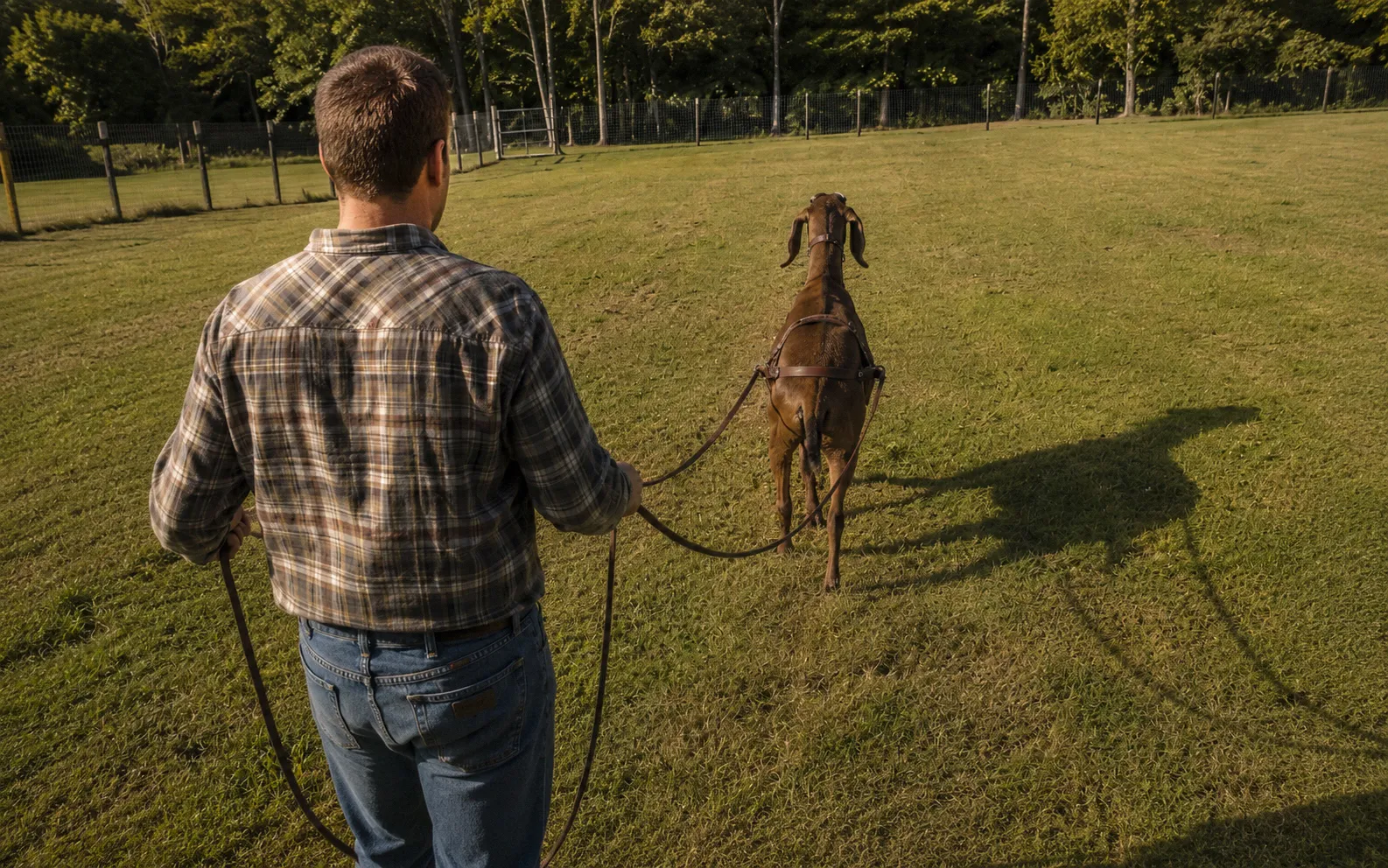
A lightweight driving whip serves as an extension of your arm for directional taps on the shoulder or flank. It should never cause discomfort.
Think of it as a pointer, not a punishment tool.
Practice turns, stops, backing up, and standing still on command. Gradually introduce distractions like other goats, vehicles, barking dogs, and flapping tarps.
The goal is a goat that responds to voice and line pressure regardless of the surrounding environment.
Ground driving typically takes three to six weeks of daily practice. Some experienced trainers spend twice that long on this phase alone.
The time you spend on ground driving pays off in safety and reliability for the goat’s entire working career. A goat that responds instantly to voice and line commands during ground driving will do the same when hitched to a cart carrying real weight.
You really can’t overdo ground-driving work.
Stage 4: introducing the vehicle
Before hitching, walk the empty cart alongside the goat and let it investigate with its nose. Roll the wheels back and forth so the goat hears every sound the cart makes.
Goats startle at unexpected noises, so every rattle, creak, and squeak needs to become familiar and boring before any physical attachment happens.
Next, have a helper pull the empty cart behind the goat while you lead on the halter. Keep the shafts parallel to the goat’s body but not touching the animal.
Let the goat walk forward for several sessions while seeing the cart in its peripheral vision and hearing it roll. Reward calm forward walking generously with treats.
Only after the goat shows zero reaction to the cart following behind should you proceed to hitching. Attach the shafts to the harness and let the goat stand still for several minutes with the cart connected but stationary.
Feed treats generously. Let the goat shift its weight and feel how the cart moves with its body.
Then walk forward with the empty cart hitched, keeping initial walks to 50 to 100 yards with a helper walking beside the goat’s head for reassurance. Gradually increase distance over several sessions as confidence builds.
If the goat panics at any point, disconnect the cart right away. Go back to ground driving for another full week before trying again.
One bad experience during first hitching can set training back by months and create lasting anxiety around the vehicle.
Stage 5: adding weight gradually
Once the goat confidently pulls the empty cart across various surfaces, you can begin adding weight. Start with 5 to 10 pounds and increase by no more than 10 percent per week.
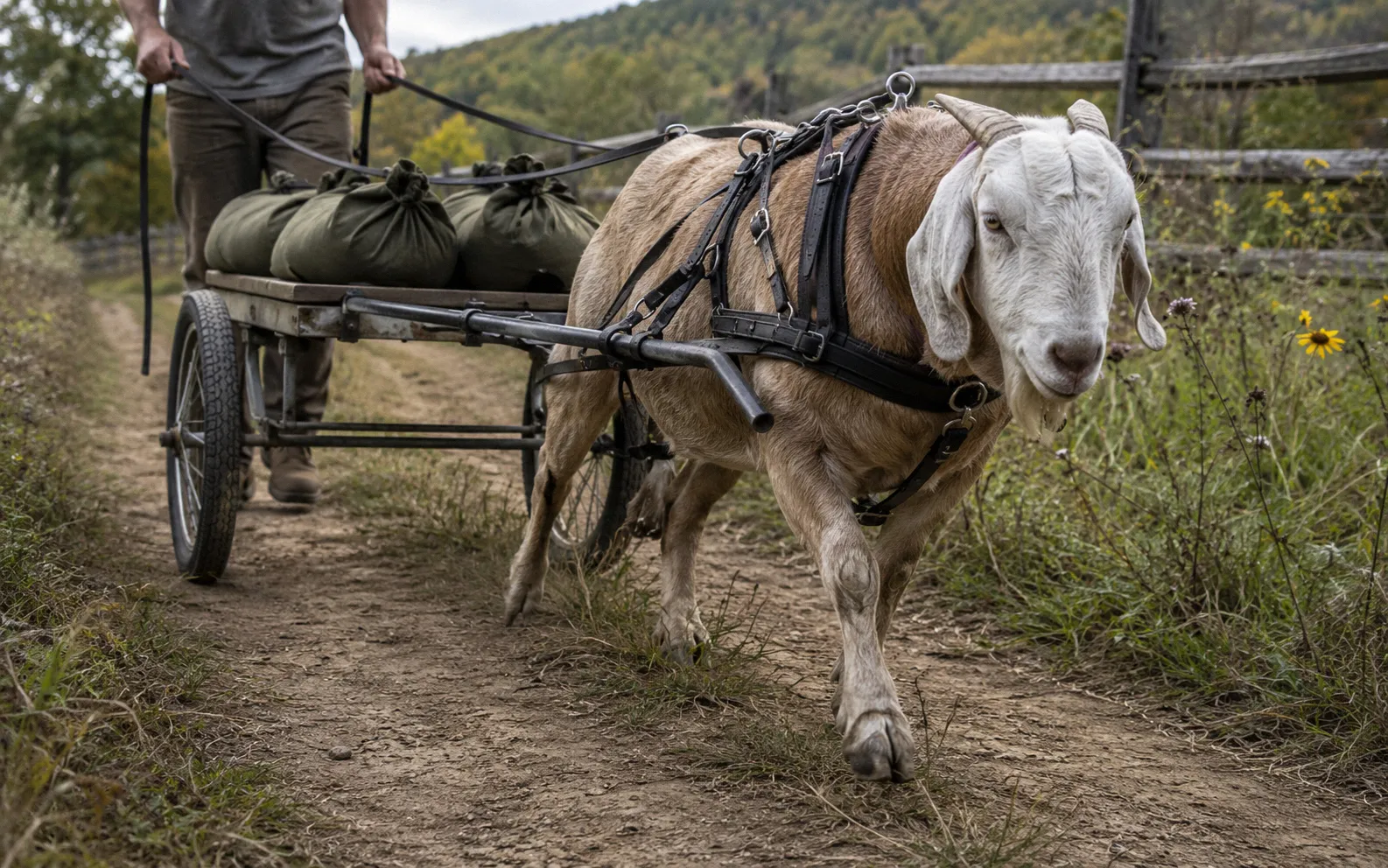
Use sandbags, water jugs, or feed bags as ballast. Distribute weight evenly to prevent tipping.
An unbalanced load feels unstable through the shafts and erodes the confidence you built in earlier stages.
Increase distance before you increase weight. A goat that comfortably pulls 50 pounds for a quarter mile should cover a half mile at that weight before you add more.
Build endurance first, then layer strength on top.
Watch for signs of strain: heavy breathing that does not normalize within five minutes, reluctance to step forward, favoring one leg, or sweating along the shoulders. Drop the load by 20 percent and shorten the distance if you see any of these.
On days above 85 degrees Fahrenheit, cut loads by 25 percent and work early or late in the day.
The full progression from first hitching to maximum capacity takes 3 to 6 months. Let the individual animal set the pace rather than forcing a timeline.
Do goats enjoy pulling carts?
Most well-trained goats seem to enjoy cart work, especially goats that received early socialization and positive-reinforcement training. Goats are intelligent, curious animals that thrive on routine and mental stimulation, and a regular training session provides both.
Signs a goat enjoys the work include walking willingly toward the harness, maintaining a relaxed posture in the shafts, and perking up at verbal cues. A goat that pins its ears, balks repeatedly, or tries to escape the harness after weeks of consistent training may not be a good candidate regardless of breed.
Common mistakes that injure cart goats
Nearly every cart goat injury traces back to one of three preventable errors: wrong equipment, too much weight too soon, or skipping foundational training steps.
The biggest dangers are using a collar instead of a harness, skipping the breeching strap, and adding too much weight too quickly.
Most cart goat injuries are entirely preventable. They happen because the handler skipped a critical step, ignored a warning sign, or used the wrong equipment.
Knowing these common mistakes before you begin training keeps your goat safe and your progress moving forward. Any experienced goat driver has seen at least one of these errors hurt an animal that could’ve been protected with basic knowledge.
Using a collar instead of a harness. This is the most dangerous mistake a beginner can make, full stop.
A collar concentrates all pulling force on the goat’s neck and throat.
Even moderate loads can crush the trachea and restrict breathing. Goats have died from collar-related injuries during cart work.
Always use a properly fitted harness that distributes force across the chest and shoulders.
Skipping the breeching strap. The breeching wraps around the hindquarters and absorbs forward momentum during stops and downhill movement.
Without it, the cart rolls directly into the goat’s rear legs every time the animal slows or stops, causing bruising, panic, bolting, and leg injuries. Every cart harness must include a properly adjusted breeching strap.
Overloading too soon. Excitement pushes many new drivers to pile on weight faster than the goat’s body can safely adapt.
Ligament strains, tendon injuries, and joint inflammation from overloading take months to heal and sometimes never resolve fully. Follow the 10 percent rule: never increase total pulling load by more than 10 percent per week.
Training sessions that run too long. Goats have shorter attention spans and lower heat tolerance than horses.
Sessions exceeding 30 minutes produce fatigue, frustration, and negative associations with cart work. Fifteen to 20 minutes of focused, reward-based work gets more done than an hour of forced compliance.
Skipping ground driving entirely. Beginners who jump from halter training straight to hitching a cart miss the most critical phase in the entire progression.
Ground driving builds the communication system between handler and goat that makes safe cart operation possible. Without it, you have no reliable way to steer, stop, or control the goat once it’s attached to a moving vehicle.
Working on inappropriate surfaces. Pavement, rough concrete, and rocky ground jar a goat’s legs with every step under load, causing hoof bruising, joint inflammation, and chronic soreness.
Train on packed dirt, mowed grass, or groomed paths. Save paved surfaces for short parade outings only, and check hooves for heat afterward.
Ignoring harness fit changes. A harness that fits on day one may not fit three months later.
Goats change body shape seasonally and as muscle develops from cart work. Check fit before every session and look for rub marks or swelling under straps afterward.
Forcing through a panic response. When a goat panics in harness, disconnect the cart immediately and end the session.
A goat in full panic learns nothing except that the harness means fear. Return to the previous stage for at least one week before trying again.
When you should never have a goat pull a cart
Certain conditions make cart work dangerous regardless of the goat’s training level or breed.
Never work pregnant does past 75 days of gestation, lactating does at peak production, kids under 12 months, sick goats, or any goat when temperatures exceed 90 degrees Fahrenheit.
Some conditions make cart work dangerous no matter how well-trained the goat or what breed you’re working with. Knowing these situations protects your goat from injury and long-term health problems.
Pregnant does in the second half of gestation. Pulling diverts blood flow and calories away from developing kids.
Cart work during late pregnancy increases the risk of miscarriage and weak kids at birth. Stop all pulling by the 75-day mark of gestation at the latest.
Lactating does during peak production. A doe producing 6 to 10 pounds of milk daily is already running a caloric deficit.
Adding cart work leads to rapid weight loss, poor milk quality, and metabolic disorders like ketosis. Wait until the doe has dried off completely before resuming work.
Kids under 12 months. Growth plates in a young goat’s legs remain open until at least 12 months in standard breeds and 18 months in slower-maturing lines.
Pulling weight before these plates close causes permanent skeletal damage. Halter training is fine for young kids, but actual pulling must wait.
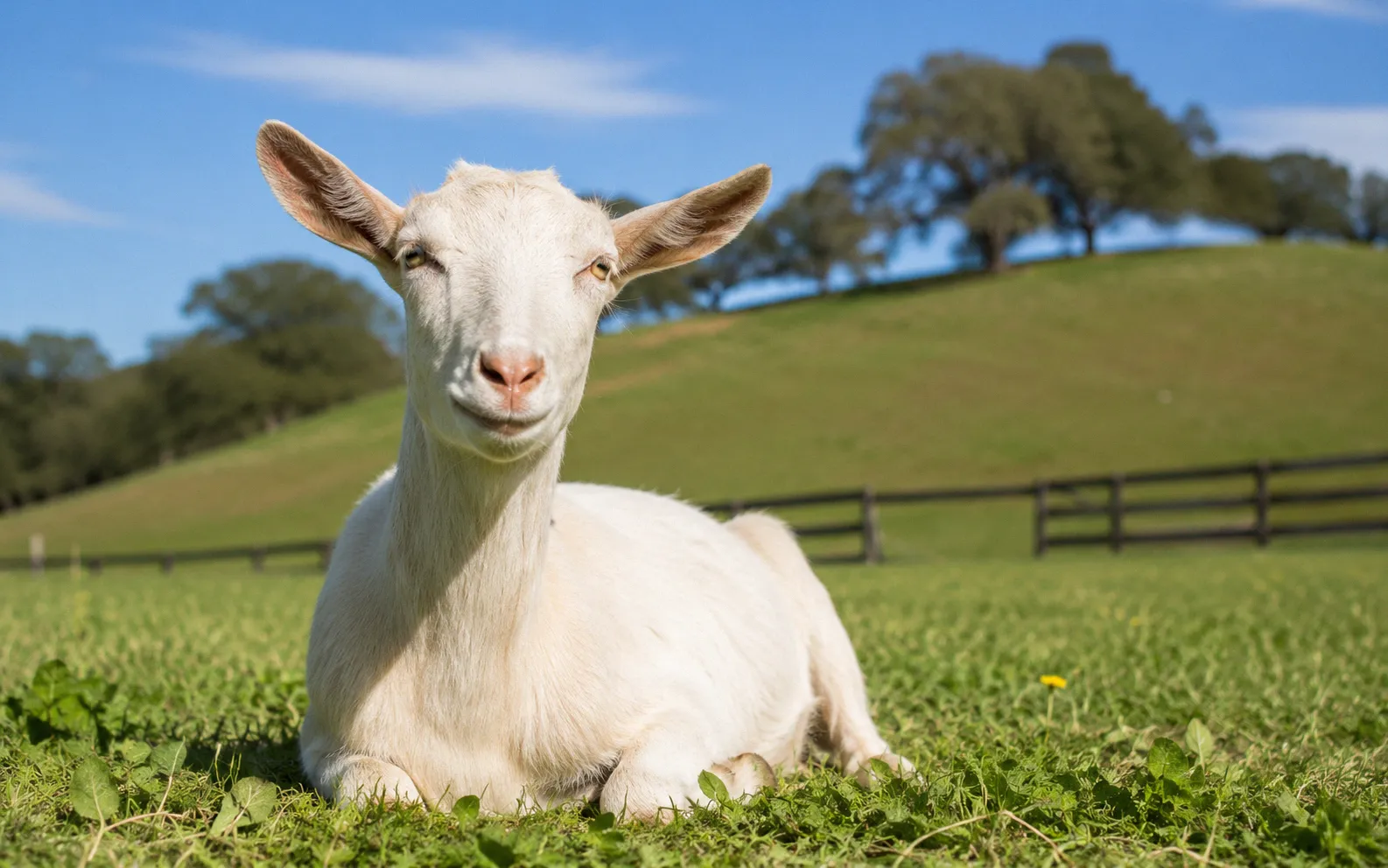
Goats showing signs of illness. Lethargy, nasal discharge, coughing, limping, or anything off from normal behavior means the goat stays in the pasture.
Working a sick goat suppresses immune function and can turn a minor infection into a serious crisis. Wait one full symptom-free week before resuming.
Extreme heat above 90 degrees Fahrenheit. Goats regulate body temperature poorly compared to horses.
Heat stress during pulling can cause organ damage and death. If you can’t hold your hand on a sunlit metal fence rail, it’s too hot for cart work.
Immediately after deworming or vaccination. Give your goat at least 48 to 72 hours of rest after any medical treatment before returning to the harness.
Practical uses for cart goats on the homestead
A trained cart goat replaces dozens of wheelbarrow trips and fills the gap between hand labor and mechanized equipment on small properties.
On a working homestead, cart goats haul firewood, move feed and water, transport garden supplies, and serve as crowd favorites at parades and 4-H competitions.
Cart goats aren’t just charming novelties or parade-day attractions. A well-trained goat paired with a sturdy cart forms a genuinely useful working team on a small to medium homestead where mechanized equipment isn’t practical or costs too much to justify.
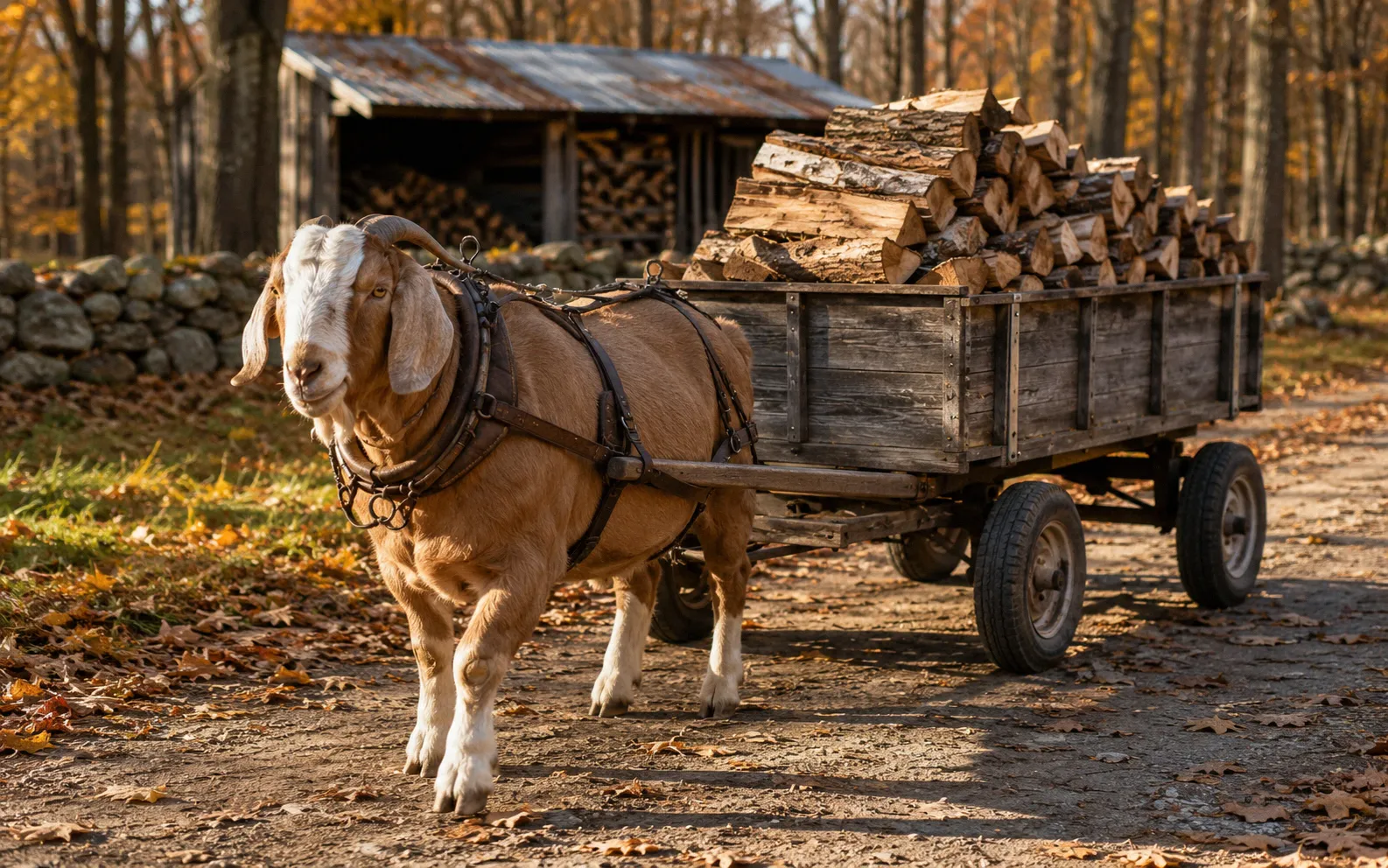
Hauling firewood and lumber. A single Boer or Saanen wether pulling a wagon can move 200 to 300 pounds of split firewood from a woodlot to a storage rack in one trip, eliminating dozens of wheelbarrow loads.
For homesteads that heat with wood, a cart goat saves hours of manual labor every week during fall stacking season.
Moving feed, hay, and water. Daily chores involve moving heavy supplies between storage areas and animal pens.
A goat hitched to a cart loaded with grain bags, hay bales, or water jugs turns a 20-minute hauling routine into a 5-minute drive, twice a day, 365 days a year.
Garden work and composting. Goats excel at pulling lightweight garden carts loaded with compost, mulch, harvested produce, and hand tools.
The narrow profile of a two-wheeled goat cart fits between raised beds and along greenhouse aisles where a truck or ATV cannot go. During fall cleanup, a cart goat moves dead plant material and composted manure between plots without compacting the soil.
Parades and community events. Decorated goat carts are a crowd favorite at Fourth of July parades, county fairs, and holiday festivals.
If you plan parade work, socialize your goat with crowds, loud music, flags, and other animals well before the event date.
4-H and youth education projects. Goat carting teaches children animal husbandry, responsibility, and patience in a hands-on format no classroom can replicate. 4-H clubs across the United States include goat driving as a recognized project area with competitions and judging standards.
Emergency preparedness. During power outages or extreme weather that grounds motorized vehicles, a cart goat keeps essential supplies moving.
Homesteaders have used goat-drawn sleds to haul water and firewood during ice storms that made roads impassable for days.
Trail and woodland work. Goats pulling a cart or travois can haul brush, fence posts, and tools along narrow trails where vehicles cannot access.
This makes them valuable for managing forested acreage and maintaining remote fence lines.
Conditioning and fitness for working goats
Like any working animal, a cart goat needs progressive physical conditioning before it can safely handle loaded work over sustained distances.
A structured fitness program of daily walking, hill work, proper nutrition, and scheduled rest days prepares a goat’s muscles and joints for loaded cart work.
Hitching an unconditioned goat to a loaded cart is like asking someone who hasn’t exercised in years to run a marathon.
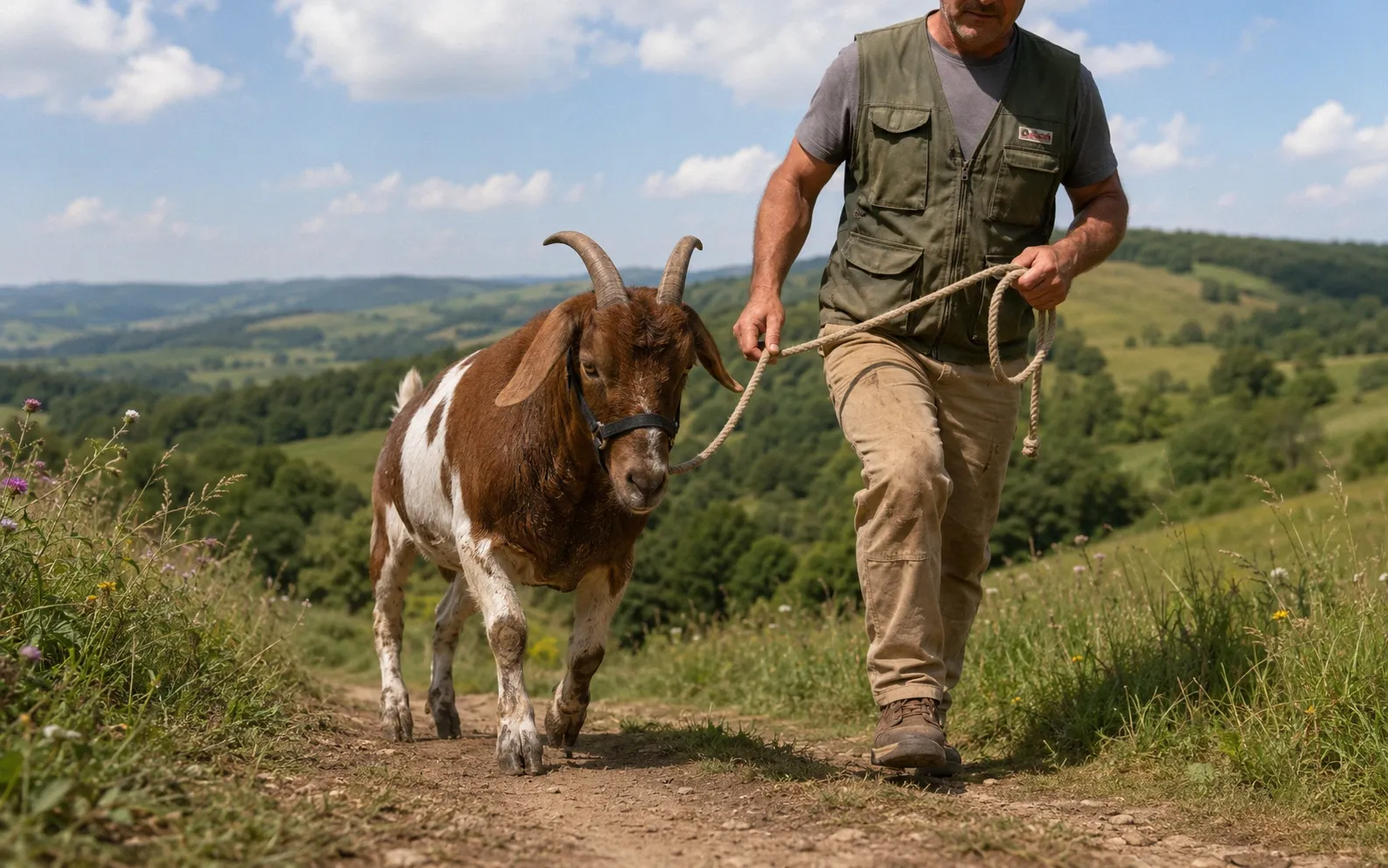
Start with daily walking. Build baseline fitness with structured walks on a lead.
Start at 10 to 15 minutes on flat ground and increase by 5 minutes per week until the goat handles 30 to 45 minutes without heavy breathing or reluctance.
Add inclines gradually. Hills build the shoulder and hindquarter muscles that power cart pulling.
Incorporate gentle slopes once flat-ground endurance is solid. Avoid steep grades until the goat has been hill-training for at least three to four weeks.
Adjust the diet for work demands. Increase grain rations by 15 to 25 percent during active training periods.
Provide grass hay or alfalfa free-choice and ensure access to a loose mineral supplement with copper, selenium, and zinc for muscle and hoof health.
Prioritize hydration. Working goats drink 50 to 100 percent more water than sedentary herd mates.
Offer water before and after every session, and every 10 to 15 minutes during sustained work on warm days.
Monitor body condition. Run your hands over the goat’s ribs weekly.
You should feel them with light pressure but not see them visually. If ribs become prominent, increase feed and reduce workload.
Schedule rest days. Working goats need at least two full rest days per week with no harness and no structured exercise.
Muscles strengthen during recovery, not during the work itself. Chronic overtraining produces a sour, reluctant goat and raises the risk of soft tissue injuries that can sideline an animal for weeks.
Watch for warning signs. Morning stiffness, reluctance to walk downhill, favoring one leg, joint swelling, or personality changes like increased irritability all signal a problem.
Pull the goat from work immediately and consult a veterinarian before resuming any level of training.
Maintain hooves on a strict schedule. Working hooves experience more stress and wear than pasture hooves.
Trim every four to six weeks and inspect for cracks, abscesses, and heat after each session. A goat with sore feet cannot pull safely or willingly.
Some handlers apply hoof hardener products during wet seasons to prevent soft, injury-prone hooves.
Adjust workload with the seasons. Reduce intensity and duration during peak summer heat and deep winter cold.
Goats expend extra energy regulating body temperature in extreme conditions, leaving less available for productive work. Spring and fall are the most productive seasons for cart work in most North American climates.
A well-conditioned cart goat can keep working productively for 8 to 10 years with proper care. The investment in fitness and health management pays off across the animal’s entire working life.
How long can a cart goat work in one session?
Most handlers cap individual work sessions at 15 to 30 minutes for training and 45 to 60 minutes for experienced working goats on moderate terrain. Heat, humidity, and load weight all shorten safe working time.
Always end the session before the goat shows signs of fatigue rather than pushing to a fixed time limit.
Final Thoughts
Goats have pulled carts, wagons, sleds, and travois for thousands of years across dozens of cultures. The practical reasons our ancestors relied on them still apply on modern homesteads.
They eat less than horses, take up less space, and cost far less to maintain. And they bring a personality and intelligence to routine chores that no machine can match.
The path from an untrained goat to a dependable cart partner requires patience, consistency, and respect for the animal’s physical limits. Don’t cut corners on harness quality.
Never skip ground driving. Build strength gradually and let the goat tell you when it’s ready for more.
Whether you are hauling firewood, entertaining a crowd at the county fair, or teaching your children the satisfaction of working alongside an animal they trained themselves, a well-trained cart goat delivers value far beyond what the feed bill suggests. Start with the right breed, invest in proper equipment, and give the training process the time it deserves.
Frequently Asked Questions
Yes. Every domesticated goat breed can learn to pull with proper training and a correctly fitted harness. Larger breeds like Boers, Saanens, and Alpines pull heavier loads, but even Nigerian Dwarf and Pygmy goats pull lightweight carts for parades and small farm chores.
Most goats need 4 to 8 months of consistent daily training to become reliable cart pullers. The timeline depends on the goat's age, temperament, and prior handling experience. Ground driving alone typically takes 3 to 6 weeks of daily practice.
Yes. A Nigerian Dwarf or Pygmy goat can safely pull 1.5 to 2 times its body weight, which translates to roughly 90 to 170 pounds including the cart. That is enough for a small parade cart carrying a child or a lightweight garden hauler.
No. Cart work during pregnancy increases the risk of miscarriage and complications, especially during the second half of gestation. Stop all pulling activity as soon as pregnancy is confirmed and do not resume until the doe has fully recovered after kidding and weaning.
You steer using long driving lines attached to the goat's halter or bit, combined with verbal commands. Gentle pressure on the left line turns left, pressure on the right turns right, and whoa stops forward motion. Most handlers also carry a lightweight driving whip for directional shoulder taps.
A cart has two wheels and balances on shafts attached to the harness. A wagon has four wheels and rolls independently. Carts are lighter, more maneuverable, and better for driving and parade work. Wagons carry more cargo and distribute weight more evenly but are heavier and turn less sharply.