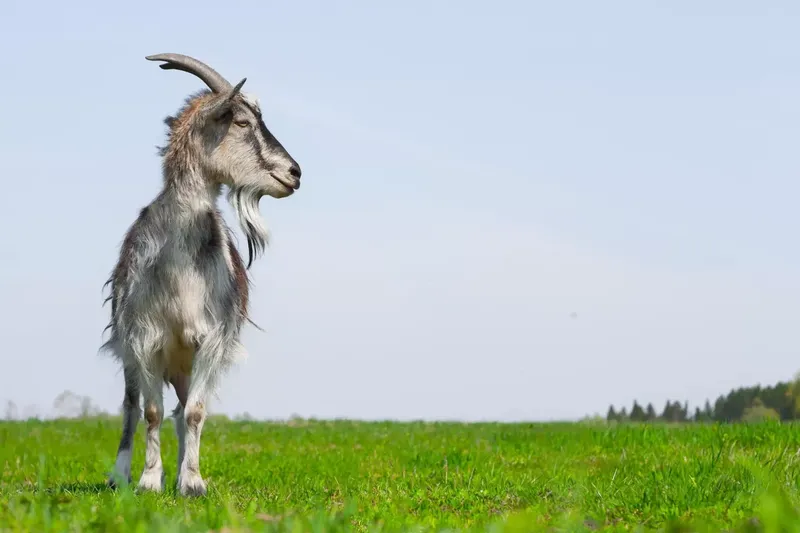
I see this question come up a lot, and the honest answer is no, people shouldn’t ride goats. Even the biggest breeds can’t safely carry a human on their back.
It might look cute in photos, but riding a goat puts real stress on an animal that simply isn’t built for it.
Can people ride goats?
No, goats aren’t riding animals. Even a large Boer buck that weighs 250 to 300 lbs doesn’t have the skeletal structure to support a human rider.
A horse’s spine is designed to bear weight across its back. A goat’s spine isn’t.
The vertebrae are smaller, the muscles along the back are thinner, and the legs are positioned differently. Putting a person on a goat’s back puts pressure in all the wrong places.
Children sometimes sit on large goats for a quick photo at fairs or petting zoos. Even that brief moment of weight can cause discomfort, and repeated riding will lead to back injuries over time.
Why goats can’t support a rider
A healthy adult goat should never carry more than about 25 to 30 lbs on its back. That rules out every adult human and most children over the age of 3 or 4.
The issue isn’t just total weight. A rider’s weight is concentrated in a single point right over the spine.
A pack load, by contrast, is distributed across both sides of the animal in balanced panniers, which spreads the force very differently.
Goats that are ridden regularly develop sway backs, joint problems, and spinal damage that may not show symptoms right away. By the time you notice the goat walking funny, the damage is already done.
Pack goats are the safe alternative
If you want a goat that works alongside you, train one as a pack goat. Breeds like Alpines, Oberhaslis, and large-framed wethers make excellent pack animals.
A well-conditioned pack goat can carry up to 25% of its body weight in a properly fitted pack saddle. Training a pack goat starts with building trust, and understanding whether goats can love humans shows how strong those bonds can be.
For a 200 lb wether, that’s 50 lbs of gear split evenly between two panniers.
Pack goats are popular with backcountry hikers. They’re quieter than horses on the trail, easier to transport in a truck, and can navigate narrow paths that horses can’t handle.
Even mountain goats navigate cliff faces that would stop any horse in its tracks, showing how naturally sure-footed these animals are. Training starts young with an empty saddle around 6 months of age, and most goats are ready for full loads by age 2 or 3.
Goat carts are another option
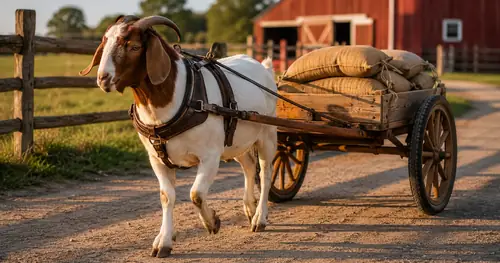
Goats have been pulling carts for centuries, and this is a perfectly safe way for goats to haul weight. Most goats need 4 to 8 months of daily training to become reliable cart pullers.
A properly built goat cart distributes the load through a harness across the chest and shoulders rather than pressing down on the spine.
Medium to large breeds can pull surprisingly heavy loads in a cart. A pair of trained wethers can pull a small cart with a child sitting in it, which is as close to “riding a goat” as you should get.
Cart training takes patience, but most goats take to it well if you start early and keep sessions short and positive.
What to do if you see goats being ridden
If you see goats being ridden at fairs, petting zoos, or on social media, understand that the goat is being subjected to stress and potential injury. It may look harmless, but the animal pays the price.
Responsible goat ownership means finding other ways to interact with these animals. Walking with them on a lead, teaching them tricks, or working them as pack animals are all great options that don’t risk hurting the goat.
Talk to the operator politely if you see goat riding at a public event. Many people genuinely don’t know that it’s harmful.
Final Thoughts
Goats shouldn’t be ridden. Their spine, joints, and skeletal structure simply aren’t designed for it, regardless of breed size.
Use pack saddles or carts if you want a working goat, and enjoy their company on foot.
There are plenty of ways to bond with goats that don’t involve sitting on them. A goat that trusts you and follows you down a trail is a lot more rewarding than one that’s hurting under your weight.
Frequently Asked Questions
No, people shouldn't ride goats. Even a large Boer buck doesn't have the skeletal structure to support a human rider. A healthy adult goat should never carry more than about 25 to 30 lbs on its back.
There are no real benefits to riding a goat, as it causes stress and potential injury to the animal. Instead, train your goat as a pack animal or use a cart, which are safe alternatives that let you work alongside your goat.
Before, goats aren't built to carry the weight of a human. They can easily get injured if you're too heavy or if you're not careful.
The best prevention is simply not riding goats at all. If you want a working goat, train one as a pack goat with a properly fitted pack saddle, or use a goat cart that distributes load through a harness across the chest and shoulders.