| # | Product | Our Rating | ||
|---|---|---|---|---|
| 1 |  | Best OverallWeaver Leather Livestock Goat Collar | ★★★★★ | Check Price |
| 2 |  | Manna Pro Goat Treats | ★★★★☆ | Check Price |
| 3 |  | HoAoOo Pet Training Clicker with Wrist Strap | ★★★★☆ | Check Price |
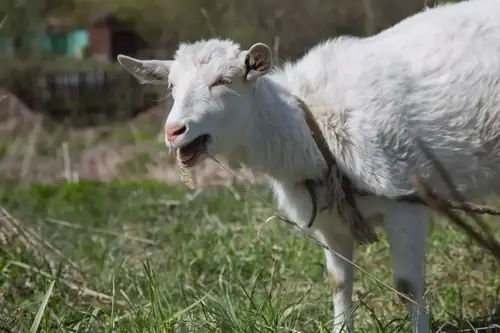
Wethers and billy goats aren’t in the same league and without testosterone driving his behavior, he is generally one of the calmest animals on the farm.
Can wether goats be as mean as billy goats?
In most cases, no. Intact bucks have testosterone fueling territorial behavior, aggression during rut, and that famous buck stink that makes them hard to be around.
Wethers lack those hormones entirely, which is why they tend to be easygoing and friendly.
There are two situations where a wether can develop pushy or aggressive habits. A wether castrated late, after he has already reached sexual maturity, may retain some buck behaviors even without the hormones.
Bottle-raised wethers can also become pushy because they lose their natural wariness of humans.
The difference between pushy and aggressive
A pushy wether that nudges you for treats or tries to climb on you isn’t the same thing as an aggressive buck that charges and slams into you during rut. Knowing whether goats can actually bite hard enough to hurt helps put wether behavior in perspective.
The motivation behind the behavior matters.
Bucks get aggressive because their hormones tell them to defend territory and compete for does. A pushy wether is just being rude because nobody taught him boundaries.
The fix for a pushy wether is consistent training, not fear.
Why timing of castration matters
Wethers castrated at a young age, around 8 to 12 weeks, rarely show any buck-like behavior as adults. Their bodies never developed under the influence of testosterone, so they grow up calm and social.
Wethers castrated after 6 months of age may have already started developing the neural pathways associated with buck behavior. They might still try to mount does, display territorial posturing, or act more aggressive than early-castrated wethers, even though their testosterone levels are near zero.
If you plan to wether a buckling, doing it on the early side produces the friendliest companion animal.
Just be aware that very early castration, before 8 weeks, increases the risk of urinary calculi because the urethra doesn’t fully develop.
Handling a pushy wether
Never play head-butting games with a wether kid, even when it seems cute. What’s funny from a 10-pound kid becomes dangerous from a 150-pound adult that thinks ramming into your legs is a game.
When a wether pushes into your space, push him back firmly and say no. Be consistent every single time.
If you let it slide sometimes and correct it other times, the goat gets confused and the behavior sticks.
Wethers that are part of a herd with other goats tend to be better behaved around humans because they learn social boundaries from the other animals. A lone wether with only human company is the one most likely to develop bad manners.
What wethers are good for
Wethers make excellent companion animals for does that need a buddy, and they’re great for 4-H projects and pack goat training. Their calm temperament makes them easy to handle and safe around children.
Many farmers keep a wether or two as pasture companions for horses, donkeys, or other livestock that need company. They’re also useful for clearing brush since they eat with enthusiasm and don’t bring the smell and breeding complications of an intact buck.
Final thoughts
Wethers are nowhere near as mean as billy goats under normal circumstances. They’re calm, friendly, and one of the easiest goats to keep on a farm.
The rare pushy wether is a training problem, not an aggression problem. Handle it early, set boundaries, and you’ll have a well-mannered goat that’s a pleasure to be around for years.
Frequently Asked Questions
No, wether goats are generally not as mean as billy goats. Wethers are castrated males that lack testosterone, so they tend to be easygoing and friendly. A wether castrated late or bottle-raised without boundaries may become pushy, but that's a training issue, not true aggression.
Goats are members of the Caprae subfamily, which includes all wild and domestic goats. There are around 200 different goat breeds, although most people are familiar with the domesticated variety.
Male goats are called bucks or billies, while female goats are called does or nannies. The easiest way to tell the difference between a male and a female goat is by looking at their horns.
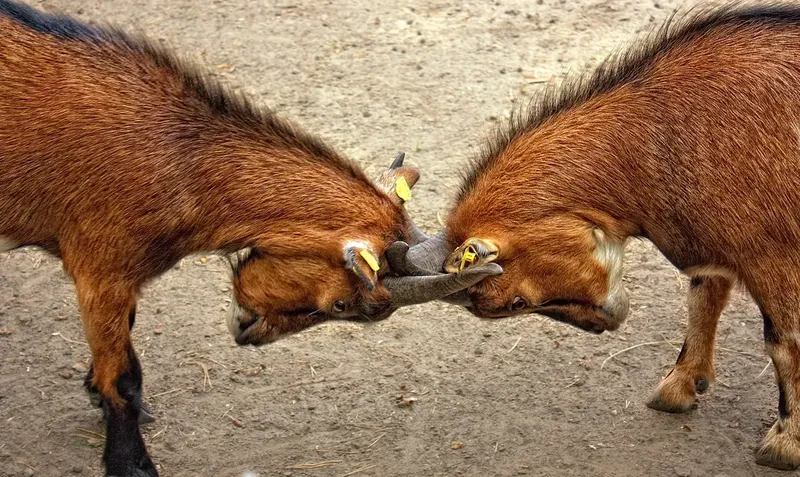
Billy goats are very aggressive compared to wether goats. They'll paw the ground, bare their teeth, and even butt heads with each other.