| # | Product | Our Rating | ||
|---|---|---|---|---|
| 1 | 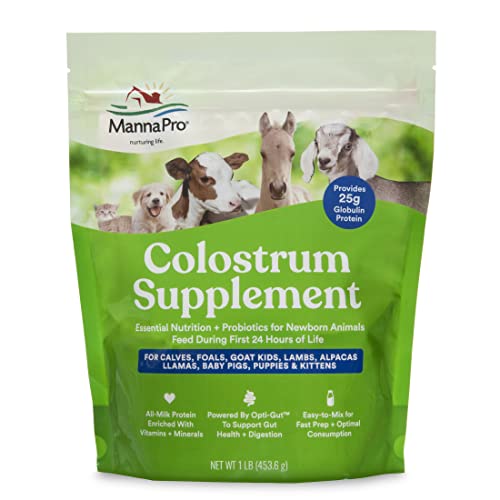 | Best OverallManna Pro Goat Colostrum Supplement | ★★★★★ | Check Price |
| 2 |  | Nutri-Drench Goat & Sheep Supplement | ★★★★☆ | Check Price |
| 3 |  | Thexton Birthing Lube Kit | ★★★★☆ | Check Price |
The vast majority of goats have between one and three kids per pregnancy, with twins being the most common outcome. The exact number depends on the breed, the doe’s age, and how well she’s been fed leading up to breeding season.
Once she’s bred, our goat gestation calculator tells you when to expect them.
Gestation runs about 150 days regardless of how many kids a doe is carrying. Whether she’s got one in there or four, you’re looking at roughly five months of waiting.
How many babies do goats have at a time?
First-time does almost always have singles. Their bodies are still maturing, and a single kid is the norm for that first freshening.
By the second and third pregnancies, twins become the standard. Nigerian Dwarf goats are the overachievers of the goat world and frequently deliver triplets or even quadruplets.
A doe in prime breeding age around 4 years old is most likely to produce strong multiples. Boer goats tend toward twins and triplets as well.
How do you know when your goat is ready to give birth?
Watch for a softening and loosening of the ligaments around the tail head. When those ligaments feel like they’ve disappeared, kidding is usually within 24 hours.
The udder will fill and become tight, and the doe may pace, paw at the ground, or separate herself from the rest of the herd. Some does get vocal and restless, while others go quiet and find a corner to lie down in.
What are some of the birthing complications that can occur in your goats?
Dystocia (a difficult birth) is the most common complication. This happens when a kid is positioned wrong, such as coming out with a leg back or presenting breech.
Pregnancy toxemia (ketosis) can strike does carrying multiples in late pregnancy if they aren’t getting enough calories. Breeding a 6-year-old maiden doe for the first time carries additional risks on top of this.
Symptoms include poor appetite, teeth grinding, and stumbling. If you catch it early, you can treat it with propylene glycol, but prevention through proper nutrition is far better.
How do you care for a nursing goat and her baby?
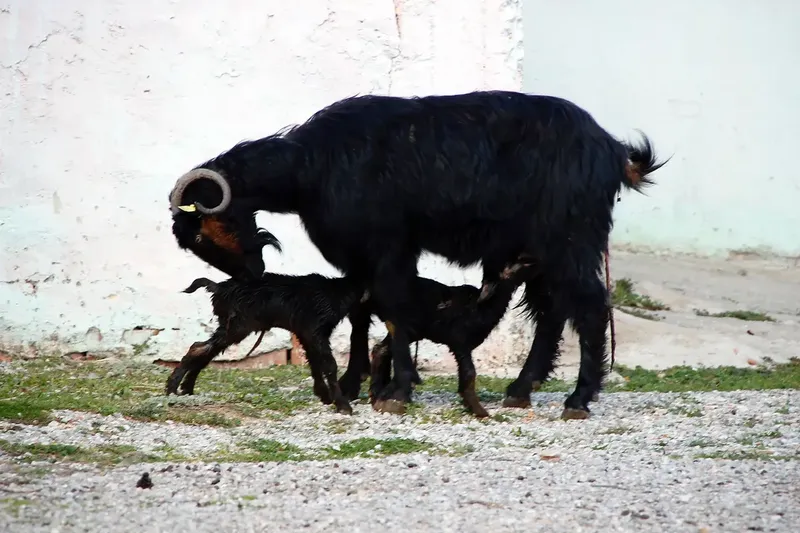
Make sure each kid nurses colostrum within the first two hours of life. If a doe has more kids than she can feed, switching a bottle-fed kid to another nursing doe is worth attempting.
Colostrum provides antibodies the kid can’t get any other way, and the gut’s ability to absorb those antibodies drops off sharply after the first 12 hours.
Dip the navel cord in 7% iodine right after birth to prevent infection. Keep the doe’s water bucket full because she’ll drink heavily while producing milk, and watch to make sure every kid in the litter is getting a turn at the udder.
When do goat kids start to eat solid food and drink water?
Kids will start nibbling hay and grain as early as one to two weeks old. It’s mostly curiosity at that point, but it gets their rumen development started.
Most kids are fully weaned between six and eight weeks of age. By then they should be eating hay, grain, and drinking water on their own with no issues.
What are some common problems that newborn goat kids face?
Hypothermia is the number one killer of newborn kids, especially in cold weather or when a doe has triplets and can’t dry them all off fast enough. Have clean towels ready and a heat lamp available if you’re kidding in winter.
Weak kids that can’t stand or nurse within the first hour need help. A bottle of warm colostrum replacer can save a kid’s life if the doe isn’t cooperating or the kid is too weak to latch on its own.
If you plan to keep bucklings, know that banding at the right age is far easier than dealing with a mature buck later.
How to raise goats from kids to adults?
Have a kidding kit ready at least two weeks before the due date. Stock it with clean towels, iodine, a bulb syringe for clearing airways, dental floss for tying off cords, and a bottle with nipple in case you need to supplement.
Once kids are eating solid food, gradually increase their grain and make sure they have access to good hay and clean water at all times. Goats are social animals, so always raise at least two together.
A single kid raised alone will be stressed and harder to manage. Avoiding inbreeding between siblings starts with good record keeping from birth.
Final Thoughts
Twins are the most common, singles happen with first-timers, and triplets or quads aren’t unusual with breeds like Nigerian Dwarfs. A well-fed, mature doe will generally produce more kids per pregnancy than a young or undernourished one.
Prepare your kidding kit early, know the signs of labor, and make sure every newborn gets colostrum fast. That’s the formula for healthy kids and a smooth kidding season.
Frequently Asked Questions
Most goats have between one and three kids per pregnancy, with twins being the most common. First-time does almost always have singles. By the second and third pregnancies, twins become the standard, and breeds like Nigerian Dwarfs frequently deliver triplets or quadruplets.
The average gestation period for a goat is about 150 days. Despite that, this can vary slightly depending on the breed of goat.
There are a number of birthing complications that can occur in goats. One common complication is dystocia, which occurs when the goat is unable to deliver the baby spontaneously.
Caring for a nursing goat and her baby isn't difficult, but there are a few things you need to do to make sure they're healthy and happy.