| # | Product | Our Rating | ||
|---|---|---|---|---|
| 1 |  | Best OverallMerck Safe-Guard Goat Dewormer (125 ml) | ★★★★★ | Check Price |
| 2 |  | Advanllent Fenbendazole Goat Dewormer (150 ml) | ★★★★☆ | Check Price |
| 3 | 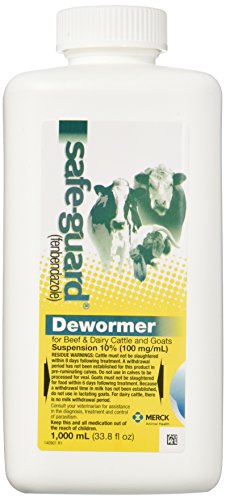 | Safe-Guard Dewormer Suspension (1000 ml) | ★★★★☆ | Check Price |
This is a question that comes up more than you’d expect, and the answer matters because getting it wrong can kill your goat. Don’t give both oral and injectable ivermectin at the same time.
Can you do oral and injection of ivermectin at the same time in goats?
No. Giving both routes simultaneously doubles the dose your goat receives, and ivermectin toxicity is a real and serious risk. One dose through one route is all your goat needs.
Some people think that hitting the parasites from two directions at once will be more effective. It doesn’t work that way.
The drug enters the bloodstream regardless of whether you give it orally or by injection, and two doses means twice the drug circulating through your goat’s system.
Why doubling the dose is dangerous
Ivermectin overdose in goats causes tremors, loss of coordination, difficulty standing, and blindness. In severe cases, goats go down and don’t get back up.
Death from respiratory failure can follow within hours of a significant overdose.
Young kids and small-breed goats are especially vulnerable because the margin between a therapeutic dose and a toxic dose is narrower, much like the risks of penicillin overdose in baby goats. Even in full-sized adults, doubling up on ivermectin is playing with fire.
If you suspect your goat has received too much ivermectin, contact your vet immediately. There’s no antidote, but supportive care including IV fluids can help in some cases if you act fast.
Which route should you use for goats?
Oral dosing is the preferred method for goats. When you give ivermectin orally, it passes through the digestive tract where most internal parasites live, giving it direct contact with the worms you’re trying to kill.
The standard oral dose is 1 ml of 1% ivermectin per 22 pounds of body weight. Always weigh your goats rather than guessing, because underdosing contributes to parasite resistance and overdosing is dangerous.
Proper deworming is especially critical when you need to deworm a pregnant doe safely.
Injectable ivermectin given by injection in goats is actually less effective than oral dosing for internal parasites. Many experienced goat owners use the injectable product but give it orally for better results.
How to give your goat an oral dose of ivermectin
Use a syringe without a needle and draw up the correct amount based on your goat’s weight. Place the tip of the syringe into the corner of the goat’s mouth and slowly squirt the liquid onto the back of the tongue.
Hold the goat’s head up for a few seconds so they swallow rather than spit it out. Some goats fight this, so having a helper hold the goat steady makes the job easier.
One oral dose of ivermectin treats both internal parasites like barber pole worm and external parasites like lice and mites. Healthy teeth and dental structure make oral drenching easier since you can slide the syringe into the gap between the incisors and molars.
You don’t need to add an injection on top of it.
When to follow up with a second treatment
If you’re dealing with a heavy parasite load, a follow-up dose 10 to 14 days after the first treatment can catch any larvae that have since matured into adults. This is standard practice during bad worm seasons.
Run a fecal egg count before the first treatment and again 10 to 14 days after to see if the ivermectin is actually working. The goat’s complex rumen system means oral drugs are absorbed differently than in single-stomach animals, which is why the oral route works better.
If the egg count hasn’t dropped significantly, you may be dealing with resistant parasites and need to switch to a different dewormer class.
Never re-dose sooner than 10 days after the initial treatment. The drug needs time to clear the goat’s system before you add more, and watching for signs of bloat during this period is important since a stressed rumen can develop gas buildup.
Final Thoughts
Stick with one route per treatment, and oral is the best choice for goats. Doubling up on ivermectin doesn’t make it work better.
It just puts your goat in danger.
Weigh your animals, dose accurately, and follow up with fecal testing to confirm the treatment is doing its job. That’s the approach that keeps your goats healthy without unnecessary risk.
Frequently Asked Questions
No, you should never give both oral and injectable ivermectin at the same time. This doubles the dose and creates a serious risk of toxicity that can cause tremors, blindness, and death in goats.
You shouldn't give oral and injectable ivermectin simultaneously. Choose one route only. Oral dosing is the preferred method for goats because it provides better absorption against internal parasites.
Ivermectin is a medication that's used to treat various parasitic infections in goats. It works by killing the parasites that live inside the goat's body.
Oral ivermectin is the preferred route for goats because it offers better bioavailability and is more effective against gastrointestinal parasites. Injectable ivermectin can be used but is generally less effective when given by injection in goats compared to oral dosing.