| # | Product | Our Rating | ||
|---|---|---|---|---|
| 1 | 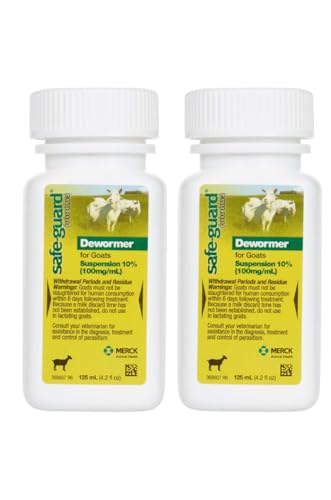 | Best OverallSafe-Guard Goat Dewormer | ★★★★★ | Check Price |
| 2 |  | Durvet Ivermectin Sheep Drench | ★★★★☆ | Check Price |
| 3 |  | Reusable Goat Drench Syringe | ★★★★☆ | Check Price |
This is one of the most common questions I get from goat owners. You can use ivermectin pour-on (Ivomec) in sheep and goats, but not the way you might think.
The pour-on formulation is designed for cattle, and it doesn’t absorb well through goat skin. Most experienced goat farmers give it orally instead of pouring it on the back.
Can I use ivermectin pour on in sheep and goats?
Yes, but with a big catch. Ivermectin pour-on is used off-label in goats, meaning it was never officially approved for them.
The product works great on cattle because their skin absorbs the drug differently. Goat skin is thicker and oilier, so pouring it along the backline results in poor absorption and weak parasite control.
This is also why topical treatments for mites often need to be combined with oral medication in goats.
The smart move is to take that same pour-on product and give it orally. Squirt it into the side of the goat’s mouth using a syringe.
Oral dosing gives you much better absorption and more consistent parasite kills.
Why oral dosing works better than pour-on
Goats metabolize ivermectin faster than cattle and sheep. Their liver processes the drug more quickly, which means the active ingredient doesn’t stay in the system as long.
When you pour the product on their skin, you’re already starting with lower absorption. Combine that with faster metabolism and you end up with a dose that barely touches your parasite load.
Oral dosing bypasses the skin absorption problem entirely. The drug goes straight into the digestive system where it gets picked up quickly and distributed through the bloodstream.
Understanding how many stomachs goats have helps explain why oral medications process so efficiently. That’s why every experienced goat farmer I know gives pour-on products by mouth.
Proper dosing for goats
The standard oral dose for ivermectin pour-on given by mouth to goats is 1ml per 22 lbs of body weight. That’s roughly double what you’d give cattle, and there’s a good reason for it.
Goats need the higher dose because of their faster metabolism. Underdosing is one of the biggest mistakes new goat owners make, and it’s a fast track to building resistant worm populations on your farm.
Weigh your goats before dosing. Guessing weight leads to underdosing almost every time because people tend to underestimate how much a goat actually weighs.
Guessing high isn’t the answer either, since too much dewormer can make a goat sick.
If your doe is expecting, make sure to verify whether you can safely deworm a pregnant goat with ivermectin. A hanging scale or livestock scale pays for itself quickly.
How to tell if ivermectin is working
Run a fecal egg count before treatment and again 10 to 14 days after dosing. If the egg count drops by 95% or more, the ivermectin did its job.
A reduction below 90% means you likely have resistant parasites in your herd. This is becoming more common in areas where ivermectin has been used for years without rotating to other drug classes like SafeGuard (fenbendazole) or levamisole.
Don’t just deworm on a calendar schedule. That’s exactly how resistance problems develop.
Test first, treat based on results, and rotate your dewormer classes each season.
Withdrawal times for meat and milk
If you’re raising meat goats, plan for a 35-day withdrawal period after the last ivermectin dose before slaughter. This isn’t optional if you’re selling meat.
For dairy goats, there’s no officially approved milk withdrawal time in most countries since ivermectin is used off-label. The same milk withdrawal concerns apply with SafeGuard, though the timeframes differ.
Most vets recommend waiting at least 7 to 9 days before using milk from a treated doe for human consumption.
Write down the treatment date, the product name, and the dose for every animal you treat. Good records protect your customers and your reputation as a responsible producer.
Final Thoughts
Ivermectin pour-on works in goats, but give it orally rather than pouring it on their backs. Dose at 1ml per 22 lbs body weight, always weigh your animals, and run fecal egg counts to make sure the product is actually working.
If you’re seeing resistance, talk to your vet about rotating to a different dewormer family. Keeping good treatment records and following proper withdrawal times is just part of being a responsible goat owner.
Frequently Asked Questions
Yes, but give it orally rather than pouring it on their backs. The pour-on formulation doesn't absorb well through goat skin. Dose at 1ml per 22 lbs body weight given by mouth, and always weigh your animals before dosing.
Ivermectin is a broad-spectrum antiparasitic drug that's used to treat various conditions and diseases.
There's no question that Ivermectin is a highly effective treatment option for sheep and goats.
Some of the most common include digestive issues like diarrhea, nausea, and digestive upset, .